
Venezuelans brace for hardship as Trump threatens oil blockade
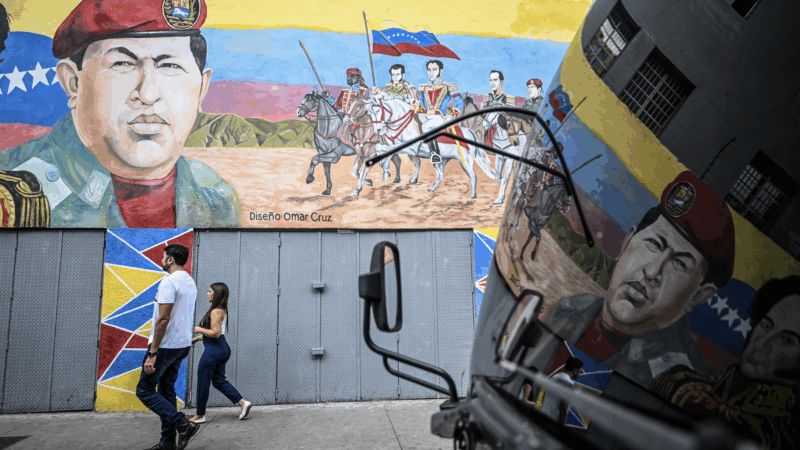
RIO DE JANEIRO, Brazil — Venezuelans are once again bracing for uncertainty as President Donald Trump threatens a blockade that could cut off the country’s ability to sell oil — its main source of revenue.
For many, the rhetoric revives memories of years defined by recession, hyperinflation and chronic shortages. Still, after many years of economic and political turmoil, some Venezuelans say they are coping the only way they know how: by carrying on.
At a strip mall in Caracas, residents line up to buy water. Among them is José, a 74-year-old retired surgeon holding two small gallon jugs. Like others interviewed by NPR, he asked that only his first name be used for fear of government reprisals.
José says he isn’t panicking over the latest standoff between Trump and President Nicolás Maduro. He isn’t stockpiling supplies, either. But he admits his family is taking small precautions.
“We are buying enough food to have a cushion for a few days — just in case,” he says.
Political and economic hardship is nothing new in Venezuela, and many say they have little choice but to endure yet another escalation.
As Christmas music plays in the background at the same mall, 63-year-old Carolina stops to buy a soda. She says the prospect of further economic collapse leaves her feeling helpless
“It’s a lie that the rich will pay the price,” she says of tougher sanctions. “We are the ones who always pay.”
Trump has tried multiple strategies to push Maduro from power, says Javier Corrales, a political scientist at Amherst College. But Corrales doubts that worsening economic conditions will lead to mass rebellion. “I don’t think economic decline, as bad as things are right now, will trigger a widespread uprising,” he says.
Corrales says Venezuelans are exhausted and fearful of government repression. If oil revenues dry up, he believes the Maduro government will turn even more aggressively to illicit activities such as drug trafficking and illegal gold mining to survive — and that more Venezuelans will flee the country.
Maduro denies his government is involved in criminal enterprises. In a lengthy speech to supporters Wednesday night, he accused Trump of revealing his true intentions.
“The U.S. president wants Venezuela’s natural resources,” Maduro said. “That will never happen.”
“Never, ever,” he added, declaring that Venezuela would never be a U.S. colony — remarks met with loud applause from the crowd.
On Tuesday, Trump vowed “a total and complete blockade” of U.S.-sanctioned oil tankers heading to or from Venezuela.
“Venezuela is completely surrounded by the largest armada ever assembled in the history of South America,” Trump wrote on Truth Social. “It will only get bigger, and the shock to them will be like nothing they have ever seen before — until such time as they return to the United States of America all of the oil, land, and other assets that they previously stole from us.”
Enforcing such a blockade would involve U.S. warships in the Caribbean. Of 80 oil tankers in Venezuelan waters, about 30 are on the sanctions list and could be targeted. This comes after U.S. forces last week raided and seized a tanker off Venezuela’s coast carrying about $100 million in oil, some of it bound for Maduro ally Cuba.
Throughout Wednesday , Venezuelan officials condemned Trump’s blockade threat, dismissing U. S. claims that Venezuela stole American land and property as “irrational”.
At Caracas’s main international airport, politics seemed distant from the thoughts of 20-year-old Mariana and her friends as they prepared to leave for a vacation on Margarita Island.
“At this point, we are used to political things happening in this country,” she says. “We decided we can’t stop our lives.”
Mariana says she isn’t especially worried about U.S. military ships operating nearby. But she adds that once her vacation is over, she plans to look for a way out of Venezuela — joining millions who have already left in search of stability elsewhere.
The U.S. and Canada set to square off in Olympic women’s ice hockey gold medal match
Canada was long the top dog of Olympic women's hockey. But with a win Thursday, the Americans could do more than earn a third gold medal — they could prove the sport's balance of power has shifted.
Amazon dethrones Walmart as the world’s biggest company by sales
In a slow-motion race of two retail behemoths, Amazon's trump card was its lucrative cloud-computing business.
A Republican plan to overhaul voting is back. Here’s what’s new in the bill
A Republican voting overhaul is back on Capitol Hill — with an added photo identification provision and an altered name. Opponents say the legislation would disenfranchise millions of voters.
‘Dude, good luck’: the Olympic wit and wisdom of a pioneering African skeleton racer
Who says serious athletes are always serious? Akwasi Frimpong, who's competed for Ghana, is a world-class wisecracker as he reflects on being a Black African athlete in the white world of winter sports.
HUD rule could push families with undocumented immigrants out of their homes
A proposed rule could put nearly 80,000 people at risk of eviction, many of them U.S. citizen children. Undocumented immigrants don't get rental aid but can currently live with family members who do.
1,000 Kenyans were recruited to fight for Russia in Ukraine, intelligence report says
A new Kenyan intelligence report said the Kenyans were recruited to fight for Russia in Ukraine after being misled with false promises of jobs in Russia before being sent to the front lines.
