
Venezuelans brace for hardship as Trump threatens oil blockade
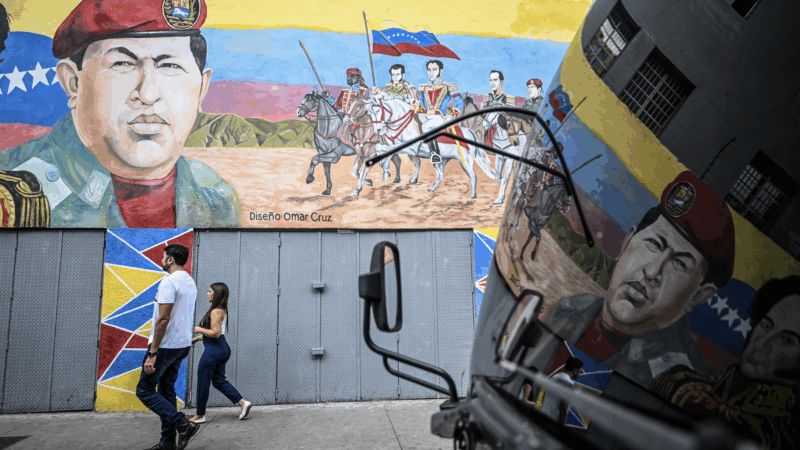
RIO DE JANEIRO, Brazil — Venezuelans are once again bracing for uncertainty as President Donald Trump threatens a blockade that could cut off the country’s ability to sell oil — its main source of revenue.
For many, the rhetoric revives memories of years defined by recession, hyperinflation and chronic shortages. Still, after many years of economic and political turmoil, some Venezuelans say they are coping the only way they know how: by carrying on.
At a strip mall in Caracas, residents line up to buy water. Among them is José, a 74-year-old retired surgeon holding two small gallon jugs. Like others interviewed by NPR, he asked that only his first name be used for fear of government reprisals.
José says he isn’t panicking over the latest standoff between Trump and President Nicolás Maduro. He isn’t stockpiling supplies, either. But he admits his family is taking small precautions.
“We are buying enough food to have a cushion for a few days — just in case,” he says.
Political and economic hardship is nothing new in Venezuela, and many say they have little choice but to endure yet another escalation.
As Christmas music plays in the background at the same mall, 63-year-old Carolina stops to buy a soda. She says the prospect of further economic collapse leaves her feeling helpless
“It’s a lie that the rich will pay the price,” she says of tougher sanctions. “We are the ones who always pay.”
Trump has tried multiple strategies to push Maduro from power, says Javier Corrales, a political scientist at Amherst College. But Corrales doubts that worsening economic conditions will lead to mass rebellion. “I don’t think economic decline, as bad as things are right now, will trigger a widespread uprising,” he says.
Corrales says Venezuelans are exhausted and fearful of government repression. If oil revenues dry up, he believes the Maduro government will turn even more aggressively to illicit activities such as drug trafficking and illegal gold mining to survive — and that more Venezuelans will flee the country.
Maduro denies his government is involved in criminal enterprises. In a lengthy speech to supporters Wednesday night, he accused Trump of revealing his true intentions.
“The U.S. president wants Venezuela’s natural resources,” Maduro said. “That will never happen.”
“Never, ever,” he added, declaring that Venezuela would never be a U.S. colony — remarks met with loud applause from the crowd.
On Tuesday, Trump vowed “a total and complete blockade” of U.S.-sanctioned oil tankers heading to or from Venezuela.
“Venezuela is completely surrounded by the largest armada ever assembled in the history of South America,” Trump wrote on Truth Social. “It will only get bigger, and the shock to them will be like nothing they have ever seen before — until such time as they return to the United States of America all of the oil, land, and other assets that they previously stole from us.”
Enforcing such a blockade would involve U.S. warships in the Caribbean. Of 80 oil tankers in Venezuelan waters, about 30 are on the sanctions list and could be targeted. This comes after U.S. forces last week raided and seized a tanker off Venezuela’s coast carrying about $100 million in oil, some of it bound for Maduro ally Cuba.
Throughout Wednesday , Venezuelan officials condemned Trump’s blockade threat, dismissing U. S. claims that Venezuela stole American land and property as “irrational”.
At Caracas’s main international airport, politics seemed distant from the thoughts of 20-year-old Mariana and her friends as they prepared to leave for a vacation on Margarita Island.
“At this point, we are used to political things happening in this country,” she says. “We decided we can’t stop our lives.”
Mariana says she isn’t especially worried about U.S. military ships operating nearby. But she adds that once her vacation is over, she plans to look for a way out of Venezuela — joining millions who have already left in search of stability elsewhere.
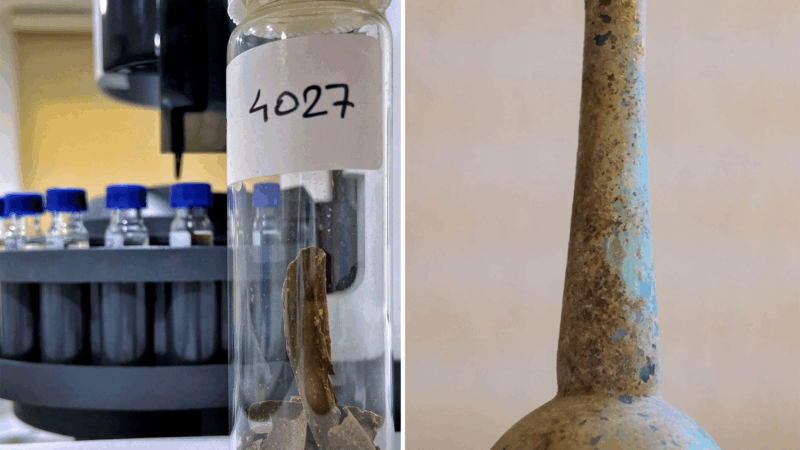
That ain’t perfume! Ancient bottle contained feces, likely used for medicine
Researchers found a tiny bottle from ancient Rome that contained fecal residue and traces of aromatics, offering evidence that poop was used medicinally more than 2,000 years ago.
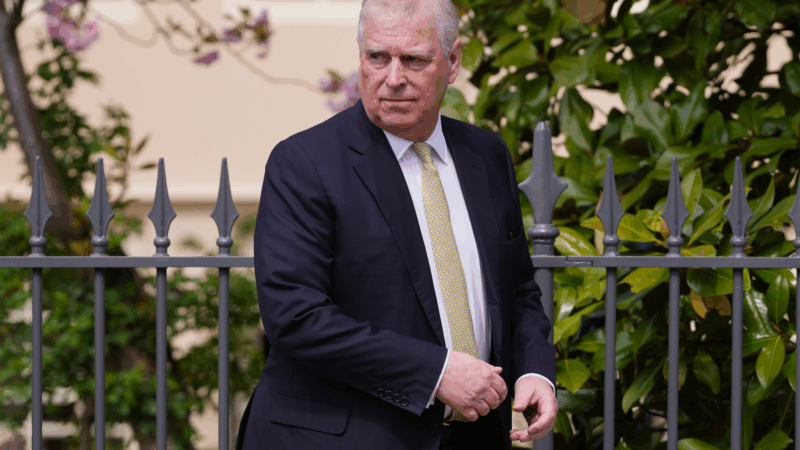
Britain’s former Prince Andrew arrested on suspicion of misconduct in public office
Andrew Mountbatten-Windsor, formerly Prince Andrew, has been arrested on suspicion of misconduct in public office.
Urban sketchers find the sublime in the city block
Sketchers say making art together in urban environments allows them to create a record of a moment and to notice a little bit more about the city they see every day.
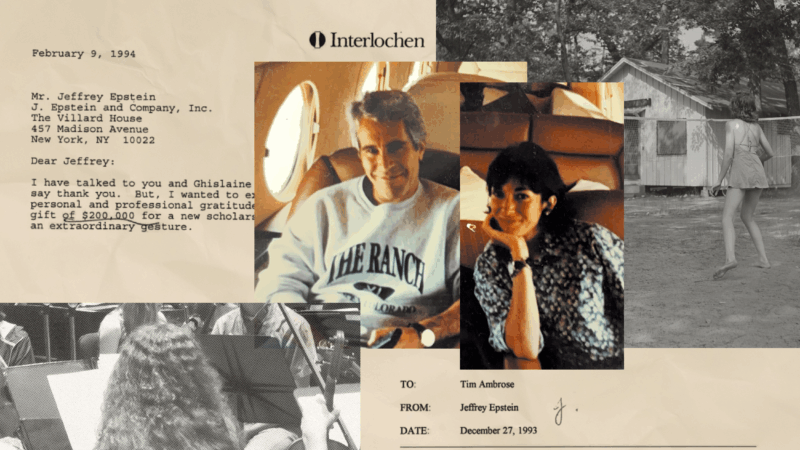
Epstein once attended an elite arts camp. Years later, he used it to find his victims
Jeffrey Epstein and Ghislaine Maxwell lavished money on the Interlochen Center for the Arts to gain access, documents show — even funding an on-campus lodge they stayed in. In the process, two teenagers were pulled into their orbit.
An unsung hero stepped in to help a newly widowed mom in a moment of need
Barbara Alvarez lost her husband in 2017, just before their daughter went off to college. Her unsung hero helped her find the strength to be a single mother to her child at a key moment in their lives.
How a recent shift in DNA sleuthing might help investigators in the Nancy Guthrie case
DNA science has helped solve criminal cases for decades. But increasingly, investigative genetic genealogy — which was first used for cold cases — is helping to solve active cases as well.
