
Venezuela strategy remains ‘vague’ after Trump admin briefing, says Rep. Adam Smith
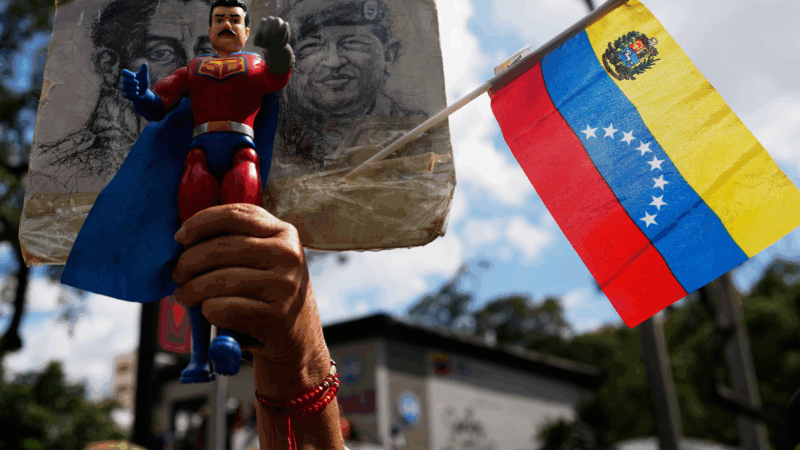
Rep. Adam Smith, a Democrat from Washington, says the Trump administration’s plans for Venezuela after removing sitting President Nicolás Maduro from power are “vague.”
Smith, the top Democrat serving on the House Armed Services Committee, attended a briefing Monday with administration officials, including Secretary of State Marco Rubio and Chairman of the Joint Chiefs of Staff Gen. Dan Caine.
In an interview with Morning Edition, Smith said Congressional leaders learned more about how the operation was carried out, but that the bulk of the briefing focused on the long-term strategy for Venezuela.
“There was a lot of talk about avoiding chaos now that Maduro is gone, vague talk about how the administration is working with the now-president of Venezuela [Delcy] Rodriguez, but not any specifics,” Smith said.
He added that the economic chaos facing Venezuela “runs the risk of it turning into armed gangs fighting with each other in a chaotic situation. It certainly doesn’t improve the very problems that supposedly taking Maduro was supposed to fix.”
Speaking to NPR’s Leila Fadel, Smith discussed the legality of the operation to remove Maduro from Venezuela and concerns about ongoing U.S. involvement in the South American country.
Listen to the full interview by clicking on the blue play button above.
The web copy was written by Obed Manuel and edited by Treye Green.
Transcript:
LEILA FADEL, HOST:
To learn more about Monday’s briefing with top Trump officials and congressional leaders, we’re joined now by Representative Adam Smith of Washington state. Representative Smith is a top Democrat on the House Armed Services Committee. Good morning, Congressman, and thank you for being on the program.
ADAM SMITH: Hello. Good morning. Thanks for having me.
FADEL: So you were in yesterday’s briefing. What did you learn about this operation and the path forward here?
SMITH: Well, we learned a lot of the tactical details about how the operation was carried out. Chairman Caine, chairman of the Joint Chiefs of Staff, gave us a big brief about that. But the bulk of the conversation was, what’s the strategy? What’s the long-term plan? I mean, there’s no question that the collapse of the Venezuelan government – sorry, the collapse of their economy, the economic struggles and the chaos that’s been in Venezuela for a number of years now is destabilizing to the region and a problem going forward. But simply removing Maduro doesn’t fix that problem, and that’s where I think Senator Schumer is correct.
It was very vague as to what they’re going to do going forward to fix it. There was a lot of talk about avoiding chaos now that Maduro is gone, vague talk about how the administration is working with the now-president of Venezuela, Rodriguez, but not any specifics. And then we’re still blockading Venezuelan oil, which is leading to even more economic chaos and runs the risk of, you know, it turning into armed gangs fighting with each other in a chaotic situation that certainly doesn’t improve the very problems that supposedly taking Maduro was supposed to fix.
FADEL: Leaving in place the regime that was under Maduro – does that create stability? Instability?
SMITH: Well, I mean, it depends on how it plays out. Yeah. I mean, there certainly would be a risk, you know, if we tried to airdrop Mrs. Machado back into Venezuela and say, here’s your new leader.
FADEL: Who’s the opposition figure.
SMITH: Correct. Sorry. But, you know, just simply propping up the existing leadership – I mean, there’s not much evidence that the people who have taken over are that different than Maduro. So where are we going with this? And I think that’s the biggest concern, along with the fact that the legality of this is a huge problem, meaning…
FADEL: I do want to ask you about that ’cause you called the arrest of Maduro a violation of international law. Was a legal…
SMITH: Yeah.
FADEL: …Explanation provided in this briefing from the administration?
SMITH: Not really. Now, look. It’s not even debatable. This is a violation of international law. You cannot violate another country’s sovereignty in this way. I mean, you couldn’t send an armed group of people in to snatch anybody off the street without the consent of the country, and certainly not their president. So there’s no question it’s illegal, and the U.S. has signed on to the very U.N. Charters that make that illegal. So it’s also illegal under U.S. law. And the explanation that, well, this was simply enforcing a warrant doesn’t hold up because they – the law contemplates that and says, no, this is not a legal way to enforce that.
Then everyone will say (ph), oh, we’ll get into technical legalities. Maduro was an awful, horrible person. And he was, by the way. The way Chavez first ran the country – Hugo Chavez, who took over in the late ’90s – and then his hand-picked successor, Maduro, has been an utter disaster for Venezuela. No question about that. But there are a lot of countries in the world poorly run. And if the U.S. asserts its right that if we’re strong enough, we can go ahead and do it, regardless of the law, you know, and now we’re threatening Denmark that we’re going to take Greenland by force – whether we do it or not, that undermines the rule of law across the world. And I think we ought to recognize that that is a problem.
FADEL: So it sounds like there was just a lot that you didn’t hear in the briefing.
SMITH: Yeah (ph).
FADEL: I mean, did you – was there anything you heard that did feel reassuring?
SMITH: Well, I mean, they have a vague plan. In the first 48 hours after this, it did not sound like they did. And first of all, the problem is President Trump comes out and says, you know, basically, we did this for the oil and that, you know, we have the right to do whatever we want. You know, and we’re, quote, “running Venezuela.” What does that mean? And remember that the power of Chavez was that he was standing up to U.S. imperialism. And that message resonates in Venezuela and Latin America, that the U.S. and other powers have exploited the resources in Latin America at the expense of the people. That’s what gave rise to this terrible, terrible movement that was Chavismo in Venezuela that’s done so much damage in Venezuela. So President Trump coming out the day after we remove their president by force and saying we are now running Venezuela and we’re here for the oil makes it harder to get to a positive place.
Now, vaguely, you know, Secretary Rubio did say that they are in communication with the new president of Venezuela and with others and that they think that there’s some path forward to getting to stability. But again, with the oil blockade and the sanctions in place, how is this new government going to function as they basically go flat broke because of our actions?
FADEL: Democratic Representative Adam Smith of Washington state. Thank you for joining us.
SMITH: Thanks for the chance.
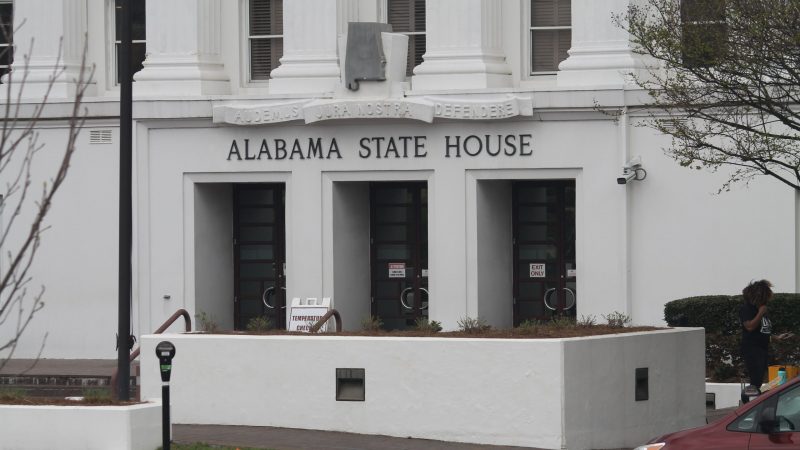
Bill making the Public Service Commission an appointed board is dead for the session
Usually when discussing legislative action, the focus is on what's moving forward. But plenty of bills in a legislature stall or even die. Leaders in the Alabama legislature say a bill involving the Public Service Commission is dead for the session. We get details on that from Todd Stacy, host of Capitol Journal on Alabama Public Television.
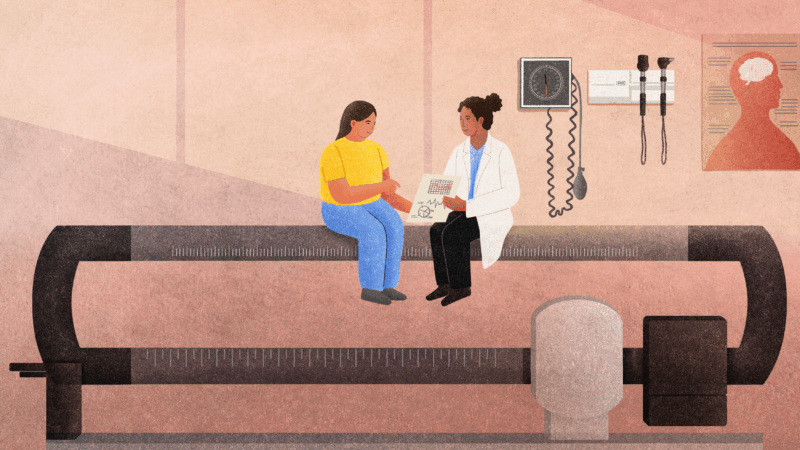
My doctor keeps focusing on my weight. What other health metrics matter more?
Our Real Talk with a Doc columnist explains how to push back if your doctor's obsessed with weight loss. And what other health metrics matter more instead.
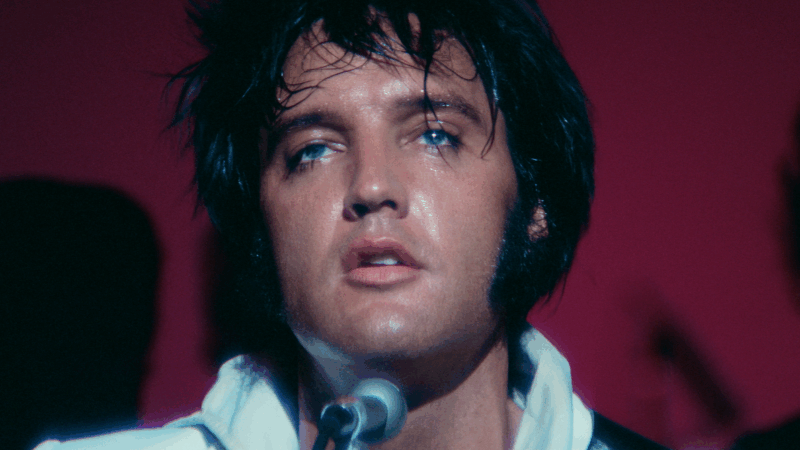
Baz Luhrmann will make you fall in love with Elvis Presley
The new movie is made up of footage originally shot in the early 1970s, which Luhrmann found in storage in a Kansas salt mine.
Forget the State of the Union. What’s the state of your quiz score?
What's the state of your union, quiz-wise? Find out!

A team of midlife cheerleaders in Ukraine refuses to let war defeat them
Ukrainian women in their 50s and 60s say they've embraced cheerleading as a way to cope with the extreme stress and anxiety of four years of Russia's full-scale invasion.
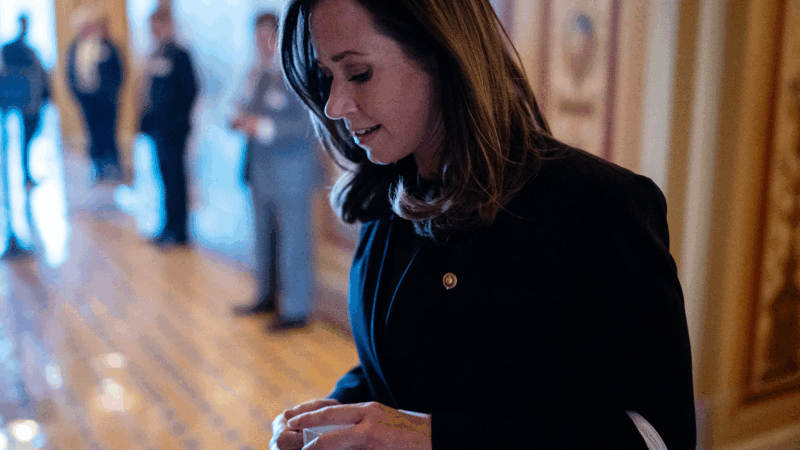
SNL mocked her as a ‘scary mom.’ In the Senate, Katie Britt is an emerging dealmaker
Sen. Katie Britt, Republican of Alabama, is a budding bipartisan dealmaker. Her latest assignment: helping negotiate changes to immigration enforcement tactics.
