
Venezuela: Maduro’s enforcer Cabello still central to power
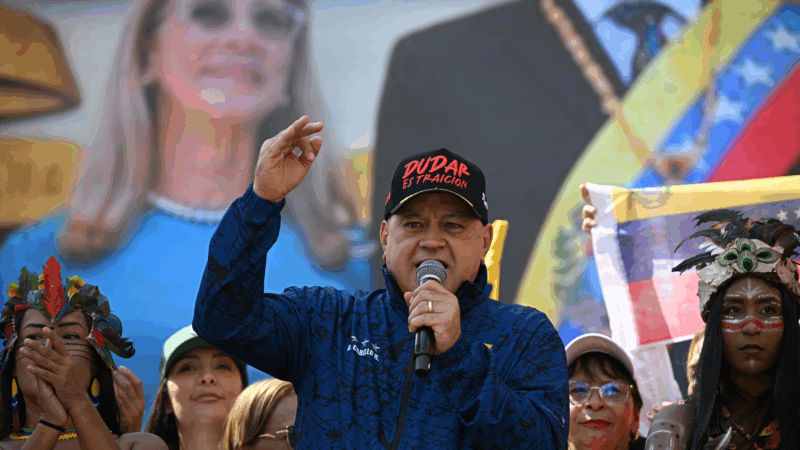
BOGOTA, Colombia — The capture of Venezuelan President Nicolás Maduro by U.S. special forces has raised hopes of a democratic opening in the South American country. But so far, there’s been no “Venezuelan Spring.”
That’s, in part, because Diosdado Cabello, Maduro’s most hardline enforcer, remains in power under interim President Delcy Rodríguez, who took over following Maduro’s capture by U.S. forces.
In the hours after the U.S. operation, Cabello, who is Venezuela’s Interior Minister, appeared on the streets in Caracas wearing a helmet and flak jacket. He condemned the U.S. operation as a “cowardly attack” and urged Venezuelans not to cooperate with what he called a “terrorist enemy.”
Standing alongside armed security forces, Cabello called on supporters to mobilize to defend Venezuela’s sovereignty and warned opponents that those perceived as traitors would face consequences for doubting the Bolivarian revolution.
Like Maduro, Cabello has been indicted in the United States on drug trafficking and narco‑terrorism charges, and named alongside Maduro, his wife Cilia Flores, and other associates in the same indictment.
Washington is offering up to a $25 million reward for information leading to Cabello’s arrest, alleging he was a senior figure in what U.S. authorities have referred to as the Cartel de los Soles, or Cartel of the Sun, a network of Venezuelan officials the U.S. alleges are involved in cocaine shipments to the United States. Cabello has denied the allegations.
But despite the U.S. charges, Cabello remains a central figure in the Venezuelan government, continuing to wield significant power while the administration seeks to improve relations with the Trump administration following Maduro’s removal.
When asked about Cabello at a White House news conference on Wednesday, President Trump didn’t seem to recognize his name. But inside Venezuela, Cabello is notorious.
A stocky figure with a crew cut, Cabello, 62, was a close confidant of Hugo Chávez, the founder of Venezuela’s socialist revolution. As young army officers, the two men took part in a 1992 military coup with Cabello in charge of several tanks that were supposed to attack the presidential palace.
The coup, which was led by Chávez, collapsed and the two men along with dozens of other military officers were imprisoned. But after their release, Chávez was elected president in 1998 with Cabello becoming part of his inner circle.

Cabello served in numerous posts, including head of the telecommunications regulator where he was instrumental in closing TV and radio stations critical of the government. He also served as interim president for about five hours in 2002 when Chávez was ousted in a short-lived coup.
Although Cabello was long viewed as the next in line for President, Chávez made clear before his death in 2013 that Maduro would succeed him. Maduro’s close relationship with Cuban officials — who were deeply involved in advising Chávez — helped cement that choice.
“It was an open secret in Venezuela that Diosdado Cabello saw himself as the rightful successor to Hugo Chávez, not Maduro,” said Geoff Ramsey, a Venezuela analyst at the Atlantic Council.
Instead, Cabello went on to lead Venezuela’s National Assembly and the ruling Socialist Party. But due to their rivalry, he was kept out of Maduro’s cabinet until 2024, when protests erupted over strong evidence that Maduro had stolen that year’s presidential election.
“Maduro needed to have an enforcer on board to crack heads together and put down the protests in the wake of the stolen election,” Ramsey said.
Named interior minister in 2024, Cabello led a crackdown in which 24 people were killed and more than 2,000 arrested, according to Human Rights Watch. Now, under interim President Rodriguez, he continues in that post, controlling Venezuela’s police force as well as armed, pro-government motorcycle gangs known as colectivos.

Zair Mundaray, a former Venezuelan public prosecutor, says the stable business climate sought by the Trump administration to exploit Venezuelan oil won’t happen as long as Cabello remains in the picture.
“How can you have legal stability when you have this guy who has armed thugs in the streets and who can create chaos, and jail or kidnap people whenever he wants?” Mundaray says.
Human rights activists blame Cabello for delays in the release of political prisoners, a government policy announced over a week ago to foment national unity. In addition, Cabello continues to slam dissidents on his weekly TV program, Con el Mazo Dando (“Hitting with the Hammer”). In a recent episode, he branded opposition leader and Nobel Peace Prize recipient Maria Corina Machado as a “fugitive from Venezuelan justice.”
Not surprisingly, opposition figures who fled the country say it will be too dangerous to return as long as Cabello and other hardliners, like Defense Minister Vladimir Padrino López who controls the military, remain in the government.
During a panel discussion sponsored by Harvard University, Venezuelan economist Ricardo Hausmann said: “Right now, I cannot go back. You have the colectivos in the streets. You have Diosdado Cabello as head of the police. So, the government in Venezuela is the same Chavista government we saw before.”
He says this could further delay a transition to democracy that the Trump administration says it is also seeking.
Trump has warned of a second wave of military strikes should Maduro holdovers, like Cabello, step out of line. Cabello could try to cut a deal and go into exile. Another option would be to lie low, cooperate with the interim government and try to outlast Trump.
“If he expects to stay out of prison and avoid Maduro’s fate his best opportunity lies in coordinating with Delcy Rodríguez, at least for now,” Ramsey said. “But that doesn’t mean he’s going to give up his longstanding ambitions.”
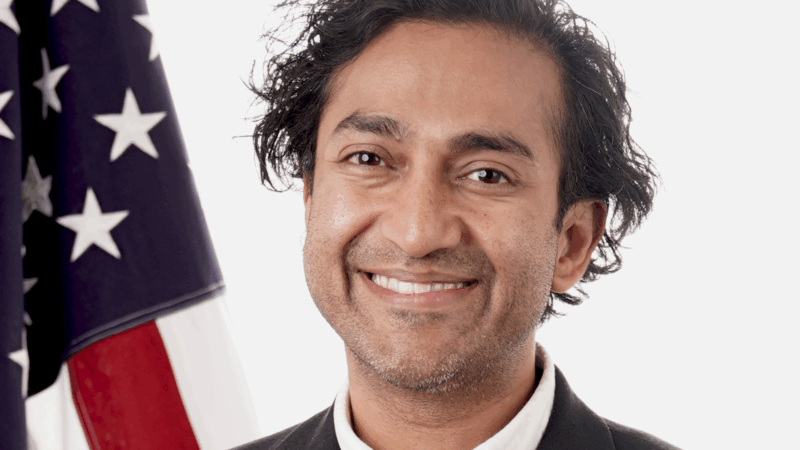
Trump administration’s embattled FDA vaccine chief is leaving for the second time
The FDA's controversial vaccine chief, Dr. Vinay Prasad, is leaving the agency. It's the second time he has abruptly departed following decisions involving the review of vaccinations and specialty drugs.
Family, former presidents and a Hall of Famer give Rev. Jesse Jackson a final sendoff
Several speakers at Jackson's funeral invoked his hallmark catchphrases: "Keep hope alive" and "I am somebody."
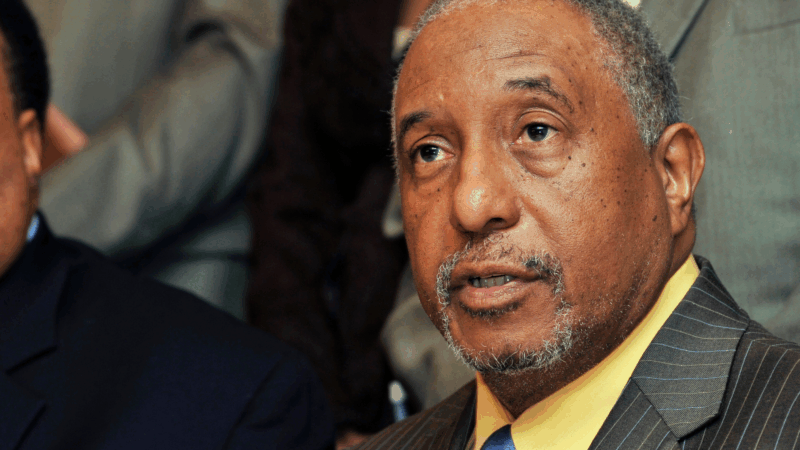
Bernard LaFayette, Selma voting rights organizer, dies at 85
Bernard LaFayette, who died Thursday, laid the foundations of the Selma, Alabama, campaign that culminated in the passage of the Voting Rights Act. He was a Freedom Rider and helped found the Student Nonviolent Coordinating Committee.
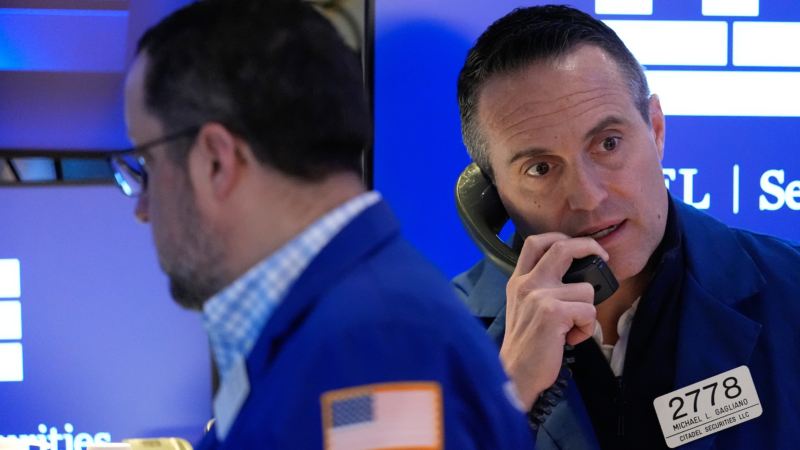
Oil surges to its highest price since 2023, and stocks drop after U.S. jobs report
Stocks fell Friday on worries that the economy could become stuck in a worst-case scenario of stagnating growth and high inflation. Oil prices touched their highest levels since 2023 after surging again because of the Iran war.

No lawsuits required: U.S. Customs is working on a system to refund tariffs
U.S. Customs told the trade court it aims for a streamlined process in 45 days to return importers' money without requiring individual lawsuits.
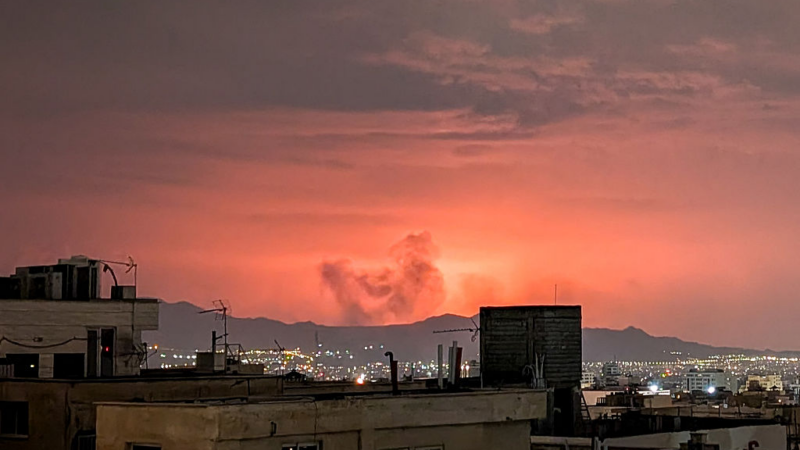
Poll: A majority of Americans opposes U.S. military action in Iran
Most Americans disapprove of President Trump's handling of Iran, and a majority sees Iran as either only a minor threat or no threat at all, an NPR/PBS News/Marist poll finds.
