
Venezuela debates sweeping amnesty for political prisoners
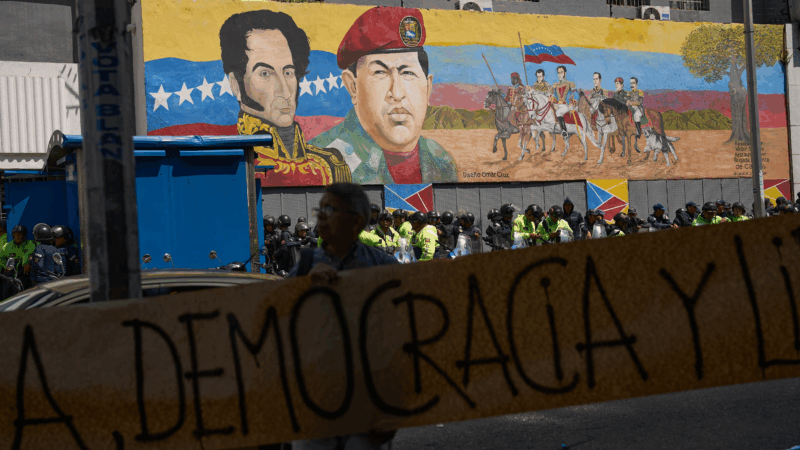
BOGOTA, Colombia — Shortly after the U.S. military operation last month that captured Venezuelan President Nicolás Maduro, political prisoner Nicmer Evans was released from jail. But he’s not off the hook yet.
Evans, a political analyst and journalist, still faces charges of terrorism and hate crimes for criticizing the Maduro regime, and he could eventually be sent back to prison.
“I’m not allowed to leave the country,” he told NPR of his conditional release from prison on Jan. 14. “I have to report to the authorities every 15 days.”
Legions of Venezuelans are in similar legal limbo. The country’s jails hold hundreds of political prisoners, while thousands of former detainees have criminal charges hanging over their heads.
Others were forced into exile, lost government jobs, or saw their properties confiscated for opposing Maduro or his predecessor, Hugo Chávez, who between them ruled Venezuela for the past 27 years.
Under pressure from the Trump administration, which holds significant leverage over the new government, Venezuela’s interim president Delcy Rodríguez – who had been Maduro’s vice president – is starting to make amends. Her government has freed 431 political prisoners since Jan. 8 and pledged to close the notorious El Helicoide, a Caracas prison and center for torture.
Now, Rodríguez is promoting an amnesty law.
“Revenge, retaliation, and hatred must not overwhelm us,” Rodríguez declared in a recent speech. “We offer the chance to live in Venezuela in peace.”
On Thursday, the National Assembly began debating articles of a draft amnesty bill, which is expected to be approved soon, as the ruling Socialist Party holds the majority of seats and is presided over by Jorge Rodríguez, the interim president’s brother.
“We are asking for pardon, and we must be willing to pardon others,” he says.

But already, the bill has come under attack by human rights groups and relatives of political prisoners.
For one thing, government officials have portrayed amnesty as a way to expedite the release of more than 500 dissidents still behind bars. But legal experts say that could be done immediately, without any new legislation.
Although Venezuela has a new head of state, the corrupt and repressive government institutions built up by Maduro, who ruled the country until 2013, remain in place, says opposition lawmaker Antonio Ecarri.
Ecarri, who is on the legislative commission studying the amnesty bill, points out that Venezuelan courts are still packed with pro-regime judges who did Maduro’s bidding and sent thousands of innocent people to prison.
Yet under the current version of the amnesty bill, victims of government repression will have to go before these same judges to request amnesty.
“It makes no sense,” Ecarri says.
Juanita Goebertus, the Americas director for Human Rights Watch, says there are “very serious limitations” in the amnesty bill. For example, to give ex-political prisoners a clean slate and a fresh start, it calls for destroying their prison files. However, some prisoners were sexually abused or tortured.
“We fear that this could lead to the elimination of evidence that could be key in the eventual (prosecution) of human rights violations,” Goebertus says.
Government officials and heavily armed security forces committed the vast majority of abuses over the past quarter-century. However, language in the bill, along with speeches by ruling party legislators, portrays unarmed opposition activists as equally responsible.
Dissidents “are demanding amnesty, but they lack the humility to recognize that the state is prepared to pardon them for all the crimes they committed,” says Iris Varela, a pro-government legislator.
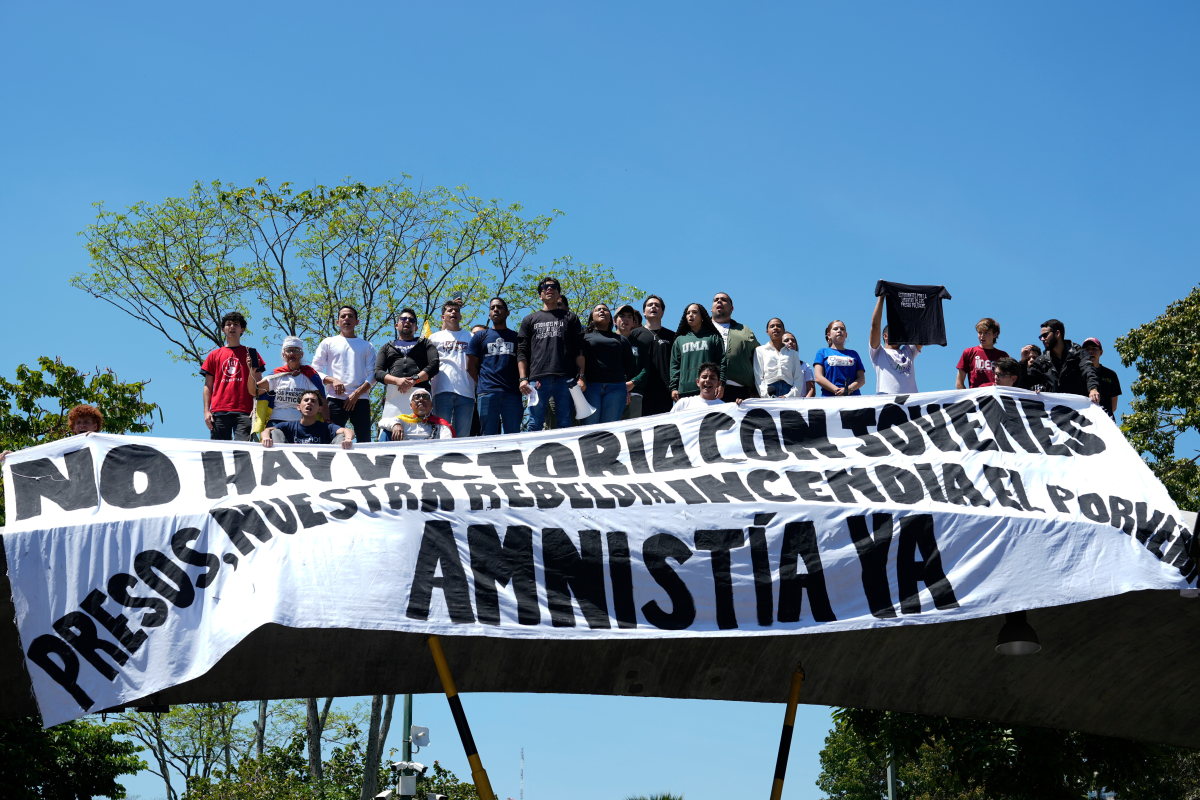
Gonzalo Himiob, vice president of the Venezuelan legal aid group Foro Penal, says government officials refuse to recognize political prisoners as victims of grave human rights violations because that would be tacit recognition of the government’s responsibility in abusing them.
Goebertus adds: “There has to be acknowledgment that there were very serious human rights violations committed by the regime. And there has to be truth-telling about these crimes. And that is certainly not present in this amnesty bill at all.”
Still, the current debate would have been unthinkable just a few months ago, and some view it as the first step toward a democratic opening in Venezuela.
Ecarri, the opposition lawmaker, says: “There are no miraculous solutions, but things are slowly starting to happen.”
Despite his own misgivings about the amnesty bill, Evans, the recently freed political prisoner, was also optimistic.
“We are better off than we were in December,” Evans says. “In December, I was in jail. Today, I’m not.”
Transcript:
AILSA CHANG, HOST:
Following the U.S. military raid last month that ousted Venezuelan President Nicolás Maduro, the new government in Caracas has released about half of the country’s political prisoners. Still hundreds remain behind bars, and thousands of dissidents face criminal charges for opposing Maduro’s authoritarian regime. And that is why Venezuelan lawmakers are now debating an amnesty law. Reporter John Otis has more.
(SOUNDBITE OF ARCHIVED RECORDING)
NICMER EVANS: (Speaking Spanish).
JOHN OTIS, BYLINE: That’s Venezuelan political analyst Nicmer Evans. He’s speaking in a cellphone video he made last year, just as government agents barged into his home to arrest him. Evans was accused of terrorism for criticizing the Maduro regime. But then Maduro was captured, and 11 days later, Evans was released from prison. Back home again, he received a bear hug from his wife.
UNIDENTIFIED PERSON #1: (Speaking Spanish).
EVANS: (Speaking Spanish).
OTIS: But Evans is not off the hook yet. He remains under criminal indictment and could be sent back to prison.
EVANS: (Speaking Spanish).
OTIS: “In the meantime,” he tells NPR, “I’m not allowed to leave the country and have to report to the authorities every 15 days.”
Legions of Venezuelans are in similar legal limbo for opposing Maduro or his predecessor, Hugo Chavez, over the past 27 years. Many were forced into exile, lost their jobs or saw their properties confiscated by the government.
(SOUNDBITE OF ARCHIVED RECORDING)
ACTING PRESIDENT DELCY RODRIGUEZ: (Speaking Spanish).
OTIS: “Revenge, retaliation and hatred must not overwhelm us,” Rodriguez said in a recent speech. “We offer the chance to live in Venezuela in peace.”
But while Venezuela does have a new leader, the corrupt and repressive government institutions built up by Maduro remain in place, says opposition lawmaker Antonio Ecarri.
ANTONIO ECARRI: (Speaking Spanish).
OTIS: He says Venezuelan courts are still packed with pro-regime judges who sent thousands of innocent people to prison.
ECARRI: (Speaking Spanish)
OTIS: Yet under the current version of the amnesty bill, Ecarri says, victims of government repression will have to go before these same judges to plead for amnesty.
ECARRI: (Speaking Spanish).
OTIS: He says, “This doesn’t make any sense.”
JUANITA GOEBERTUS: The law has very serious limitations.
OTIS: Juanita Goebertus is the Americas director for Human Rights Watch. She says that to give ex-political prisoners a clean slate, the bill calls for destroying their prison files. However, some prisoners were sexually abused or tortured.
GOEBERTUS: So we fear that this could lead to the elimination of evidence that could be key in the eventual persecution of human rights violations.
OTIS: Goebertus points out that government officials and heavily armed security forces committed the vast majority of abuses. However, the bill treats unarmed opposition activists as equally responsible for crimes.
GOEBERTUS: There has to be acknowledgment that there were very serious human rights violations committed by the regime, and there has to be truth-telling about these. And that is certainly not present in this amnesty law at all.
(SOUNDBITE OF ARCHIVED RECORDING)
UNIDENTIFIED PERSON #2: (Speaking Spanish).
OTIS: Part of the problem is that the National Assembly, where lawmakers are debating the bill, is controlled by the ruling Socialist Party. Despite his misgivings about the bill, Nicmer Evans, the recently freed political prisoner, is cautiously optimistic.
EVANS: (Speaking Spanish).
OTIS: “We are better off than we were in December,” he says. “In December, I was in jail. Today, I’m not.”
For NPR News, I’m John Otis.
(SOUNDBITE OF ELMIENE AND BADBADNOTGOOD SONG, “MARKING MY TIME”)

Israeli soldiers fire on family car in occupied West Bank, killing 4
Israeli soldiers fired on a car carrying a family in the northern West Bank, killing four people including two children, the Palestinian Authority's Health Ministry said.
U.S. military names six killed in plane crash as Iran war enters third week
The conflict in the Middle East has entered a third week, with Israel announcing a barrage of new strikes on western Iran on Sunday, while the U.S. defense department released the names of six service members who died when their military refueling aircraft crashed.
Alabama poised to drastically overhaul utility regulation. Will it lower electric bills?
The Alabama Senate unanimously voted to expand the public service commission, and create a Secretary of Energy to address rising electricity prices. A bill in the House would go even further, requiring rate case hearings and limiting utility profits.

Sunday Puzzle: BAD!
Ayesha Rascoe plays the puzzle with KCUR listener Justin Marciniak and Weekend Edition Puzzlemaster Will Shortz.

Acclaimed 20th century philosopher Jürgen Habermas dies at 96
Associated with the Frankfurt School, Habermas was a world-renowned thinker on modernity and democracy who helped shape German post-war and post-reunification political discourse.

Why the Chicago Bears could be moving to Indiana
While Illinois is trying to keep the team in Chicago's suburbs, Indiana lawmakers are offering a plan to finance a new stadium
