
Unions say White House plans mass layoff at Interior Department, despite court order
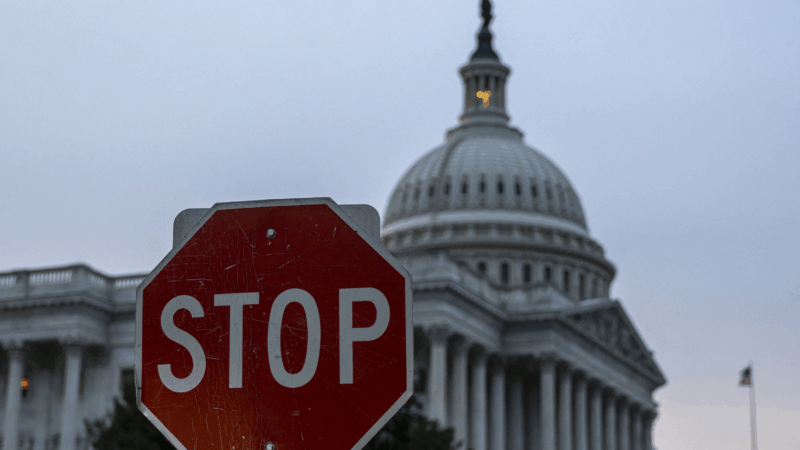
Unions representing federal employees say the Trump administration is planning to conduct mass firings at the Interior Department despite a court order temporarily blocking layoffs during the shutdown.
The disclosure came amid a legal fight between the administration and two federal employee unions — the American Federation of Government Employees and the American Federation of State, County and Municipal Employees — which sued to block what they call “politically driven RIFs,” or reductions in force.
In a declaration filed with the court late Thursday, the plaintiffs’ attorney Danielle Leonard wrote that “multiple credible sources” said that the Interior Department was actively preparing to lay off thousands of employees starting Monday.
“This immediately raised concerns regarding compliance with this Court’s order,” Leonard wrote in a declaration. When the plaintiffs asked government lawyers about the claim Thursday afternoon, a Justice Department attorney responded that “consistent with the Court’s order, we will produce the required information tomorrow.”
In response, U.S. District Judge Susan Illston agreed to move up the deadline she had imposed on the government to provide the court with “an accounting of all RIFs, actual or imminent, that are enjoined by this [temporary restraining order].”
Illston has now asked the government to provide, by 2 p.m. ET Friday, details on the number of employees affected and a description of the programs and activities targeted for cuts.
Earlier this week, the Trump administration had informed the court that federal agencies had begun the RIF process at eight different agencies, affecting just over 4,000 people. The slight downward revision from what the administration had provided last Friday included the disclosure that roughly 800 employees within the Department of Health and Human Services were erroneously issued layoff notices.

The declaration, from Office of Management and Budget senior advisor Stephen Billy, emphasized that “the situation… is fluid and rapidly evolving.”
After a hearing on Wednesday, Illston granted the unions a temporary restraining order, halting the Oct. 10 layoff notices and preventing new firings until a hearing on a permanent injunction, scheduled for Oct. 28.Illston characterized the Trump administration’s approach to the RIFs as “ready, fire, aim” in the Wednesday hearing and said the administration was seeking to take advantage of the lapse in funding “to assume that that all bets are off, that the laws don’t apply to them anymore, and that they can impose the structures that they like on a government situation that they don’t like.”
In response, White House press secretary Karoline Leavitt called Illston “another far left, partisan judge.”
Speaking to reporters on Thursday, Leavitt added that the White House is confident their actions are legal and called the layoffs “an unfortunate consequence” of the government shutdown.
Team USA faces tough Canadian squad in Olympic gold medal hockey game
In the first Olympics with stars of the NHL competing in over a decade, a talent-packed Team USA faces a tough test against Canada.

PHOTOS: Your car has a lot to say about who you are
Photographer Martin Roemer visited 22 countries — from the U.S. to Senegal to India — to show how our identities are connected to our mode of transportation.

Looking for life purpose? Start with building social ties
Research shows that having a sense of purpose can lower stress levels and boost our mental health. Finding meaning may not have to be an ambitious project.

Sunday Puzzle: TransformeR
NPR's Ayesha Rascoe plays the puzzle with listener Joan Suits and Weekend Edition Puzzlemaster Will Shortz.
Danish military evacuates US submariner who needed urgent medical care off Greenland
Denmark's military says its arctic command forces evacuated a crew member of a U.S. submarine off the coast of Greenland for urgent medical treatment.
Only a fraction of House seats are competitive. Redistricting is driving that lower
Primary voters in a small number of districts play an outsized role in deciding who wins Congress. The Trump-initiated mid-decade redistricting is driving that number of competitive seats even lower.
