
U.S. Supreme Court allows — for now — third-country deportations

The Supreme Court on Monday stayed a lower court order that required people set to be deported to countries other than their own to be allowed to challenge their deportation orders.
The order focused on a flight carrying several men from various countries — including Myanmar, Laos, Vietnam, Cuba and Mexico — which was initially headed to South Sudan but ended up in the East African country of Djibouti in order to give the men time to dispute their final destination. The U.S. government says the men are violent criminals, convicted of crimes including murder, sexual assault, kidnapping and robbery, and said they don’t deserve to stay in the U.S.
But Judge Brian Murphy of the U.S. District Court for the District of Massachusetts last month said people must still get a so-called “credible fear” interview in their native language to be able to dispute being sent to a country they’re not originally from. He said people must get at least 15 days to challenge their deportations.
Monday’s unsigned order puts Murphy’s ruling on hold while the legal process continues in the lower courts. The court’s three liberals — Justices Sonia Sotomayor, Elena Kagan and Ketanji Brown Jackson — dissented.
“In matters of life and death, it is best to proceed with caution,” the dissenters wrote. “In this case, the Government took the opposite approach.”
The order is the latest example of the Supreme Court becoming the final arbiter in President Trump’s efforts to accelerate deportations and minimize due process.
Several migrants and U.S. detention officers awaited the court ruling while living in a converted shipping container at a U.S. military base in Djibouti, beset by high temperatures, exposure to malaria, and close proximity to “burn pits,” which emit throat-clogging smog from burning trash and human waste.
The Supreme Court’s liberal justices argued that the government’s haste in deporting people to countries like South Sudan put them at risk of torture or other unsafe conditions.
“This Court now intervenes to grant the Government emergency relief from an order it has repeatedly defied,” Sotomayor wrote in the dissenting opinion, which Kagan and Jackson joined. “I cannot join so gross an abuse of the Court’s equitable discretion.”
Accusations of ‘wreaking havoc’
U.S. Solicitor General John Sauer on May 27 asked the Supreme Court for an immediate stay of Murphy’s order, saying it is “wreaking havoc on the third country removal process.”
“The United States is facing a crisis of illegal immigration, in no small part because many aliens most deserving of removal are often the hardest to remove,” he wrote. Through “sensitive diplomacy,” the U.S. had convinced third countries to accept the men after their own countries refused, he said, but Murphy’s order prevents that “unless DHS first satisfies an onerous set of procedures invented by the district court” to assess whether the men might be tortured or persecuted in the country to which they’re sent.
Immigration lawyers told the Supreme Court that even criminals deserve meaningful notice and an opportunity to be heard before they’re sent to a country with dangerous conditions where they could be tortured.
Lawyers from the Northwest Immigrant Rights Project, Human Rights First, and the National Immigration Litigation Alliance say the men set to end up in South Sudan only got notification the night before their flight.
They also say Mexico, for example, had previously accepted its own citizens deported from the U.S., suggesting that the Trump administration’s process of removing people to third countries is “intentionally punitive.” South Sudan is a politically unstable country in Africa and one of the poorest in the world.
Prioritizing deportations
The strategy to rely on other countries to take in U.S. deportees is not new. But the Trump administration has prioritized getting more countries to repatriate their citizens, including from China, Venezuela and Cuba, in order to more quickly deport people from the U.S.
“And the further away the better, so they can’t come back across the border,” Secretary of State Marco Rubio said during an April cabinet meeting.
DHS policy requires any deportee to get notice of what country they’re being sent to, “and an opportunity for a prompt screening of any asserted fear of being tortured there.”
The arguments in court have centered on how long migrants should have to contest their removal to a country. DHS says this process takes “minutes,” not weeks. In the case of the flight to South Sudan, the men got less than 24 hours’ notice. Immigration lawyers say such little time means deportees’ have little hope of arguing against a removal, especially if they don’t speak English.
Whether the government agrees with the amount of notice or not, the Supreme Court’s liberal justices argued that it defied the Massachusetts district court’s order to provide due process for migrants set to be deported to third countries.
“Even if the orders in question had been mistaken, the Government had a duty to obey them,” the court’s liberal justices wrote on Monday. “That principle is a bedrock of the rule of law. The Government’s misconduct threatens it to its core.”
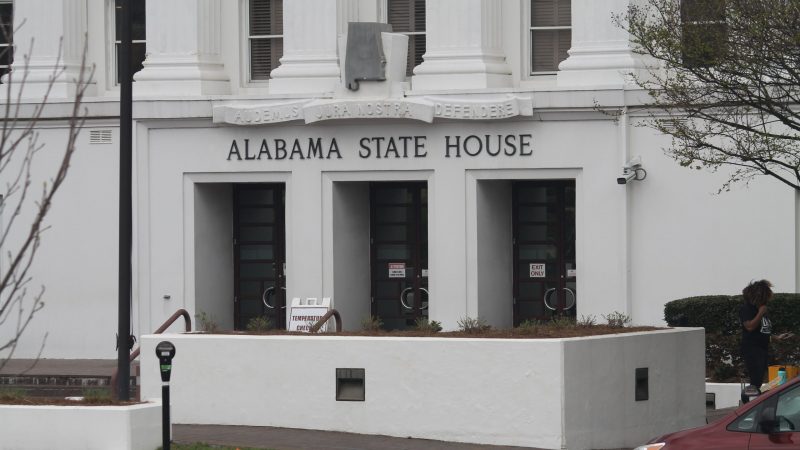
Bill making the Public Service Commission an appointed board is dead for the session
Usually when discussing legislative action, the focus is on what's moving forward. But plenty of bills in a legislature stall or even die. Leaders in the Alabama legislature say a bill involving the Public Service Commission is dead for the session. We get details on that from Todd Stacy, host of Capitol Journal on Alabama Public Television.

My doctor keeps focusing on my weight. What other health metrics matter more?
Our Real Talk with a Doc columnist explains how to push back if your doctor's obsessed with weight loss. And what other health metrics matter more instead.

Baz Luhrmann will make you fall in love with Elvis Presley
The new movie is made up of footage originally shot in the early 1970s, which Luhrmann found in storage in a Kansas salt mine.

Forget the State of the Union. What’s the state of your quiz score?
What's the state of your union, quiz-wise? Find out!

A team of midlife cheerleaders in Ukraine refuses to let war defeat them
Ukrainian women in their 50s and 60s say they've embraced cheerleading as a way to cope with the extreme stress and anxiety of four years of Russia's full-scale invasion.

As the U.S. celebrates its 250th birthday, many Latinos question whether they belong
Many U.S.-born Latinos feel afraid and anxious amid the political rhetoric. Still, others wouldn't miss celebrating their country
