
U.S. military members fear personal legal blowback tied to boat strikes
U.S. service members — including staff officers and at least one drone pilot — are seeking advice from outside groups, fearing they could face legal consequences for any involvement in the Trump administration’s lethal strikes on suspected drug boats.
Over the past three months, the U.S. has blown up more than 20 vessels in the Caribbean and Eastern Pacific that the administration says were running illicit narcotics. More than 80 people have been killed in the strikes.
The administration says it is taking action to stop the flow of drugs into the U.S. It says the strikes are legal and are being conducted under the laws of war, and that President Trump ordered them under his Article II powers as commander-in-chief and in self-defense.
Many legal experts, however, including former military lawyers, contend the strikes against the alleged civilian narcotraffickers are unlawful and amount to murder.
The vast gulf between those two legal views has left some members of the U.S. military in the lurch, worried about potential legal blowback for themselves for taking part in the campaign.
“It’s hard to be a soldier and make determinations in any situation, but it’s especially hard in a situation like this — where most people don’t see an imminent threat — to be sent to do something that you’re really worried about, could I go to prison for this?” said Steve Woolford, a resource counselor with Quaker House in North Carolina and the GI Rights Hotline.
His organization — one of several that make up the GI Rights Hotline, which provides confidential counseling and information for members of the American military — has received calls from service members since the administration began blasting suspected narcotrafficking boats in September.
Quaker House has been contacted so far by two service members who Woolford said were “very concerned” about their own involvement in the campaign.
“Their calls were both about the legality of what they were participating in and what that might mean for them in terms of being subject to punishment for doing something that they weren’t supposed to do and were supposed to know better than to do,” he said. “Both of them also had moral concerns because they are people who are willing to be part of defense but they don’t want to be part of doing something illegal, or I don’t think they feel right killing people outside of the laws of war.”
Woolford, who is not an attorney, said in both instances the service members were put in touch with lawyers who could provide more guidance on the legal issues.
“A lot more calls”
Military personnel have also reached out to attorneys at the Orders Project, which is a non-partisan group that serves as a reference for service members who have questions about lawful and unlawful orders.
“We’re receiving a lot more calls in the last three months than we did before,” said Frank Rosenblatt, a former military lawyer with the Orders Project.
He declined to provide numbers, but he said some of the individuals are staff officers with legal, intelligence or targeting expertise.
“What we’re finding out is that they’re being told that there are these political appointees who really want to be able to talk about this and … say everybody in the military who looked at this said it was ‘green light, A-OK, good to go,'” said Rosenblatt, who is a former lieutenant colonel in the U.S. Army Judge Advocate General Corps.
Pressure from above
When some of those career officers don’t sign off, instead indicating ‘non-concur,’ they are coming under pressure from higher-ups, he said.
“So much pressure, in some cases, that they’re giving us a call to say, ‘What are my options? I want to do the right thing but I also don’t want to torpedo my career unnecessarily.'”
The Orders Project’s attorneys who speak with service members are not giving “grand decrees” about whether an order is lawful or unlawful, Rosenblatt said. Instead, the guidance they provide is focused on what’s in the caller’s best interest.
“Generically, the advice that we might give might vary from how you can document the pressure you are receiving, to what kind of questions you can ask or clarification you can seek,” he added.
Rosenblatt said his group has received calls from at least one drone pilot, but both he and Woolford at Quaker House said generally the service members who are reaching out are not the people pulling the trigger. Instead, they say, the callers are more on the operational planning side.
While the number of callers may not be large at this point, the fact that service members are reaching out at all reflects the confusion and worry some of them feel about what they are being ordered to do.
Woolford said that many people have voiced a concern that any future consequences for service members should be based on the law but they worry it may end up being driven by politics instead.
“And then it just becomes this complicated guessing game of who’s going to be in charge and what are they going to say is right as opposed to maybe the more solid foundation of ‘we have accepted rules we can just go by,'” he said. “So that’s just a really hard thing for people in the military to try to be guessing.”
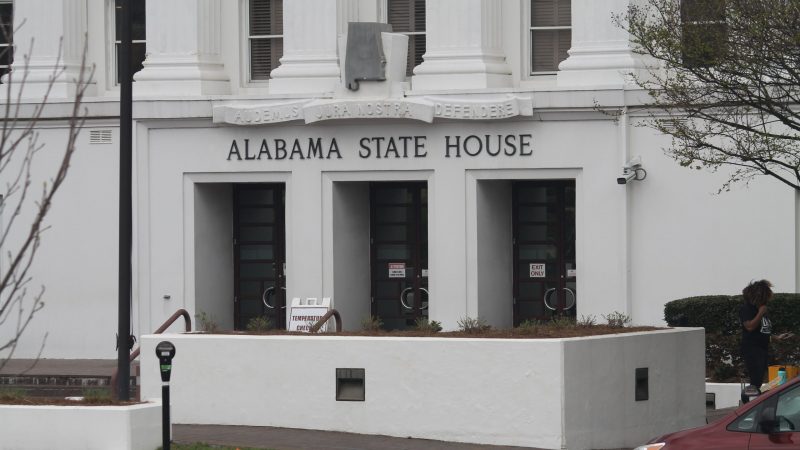
Bill making the Public Service Commission an appointed board is dead for the session
Usually when discussing legislative action, the focus is on what's moving forward. But plenty of bills in a legislature stall or even die. Leaders in the Alabama legislature say a bill involving the Public Service Commission is dead for the session. We get details on that from Todd Stacy, host of Capitol Journal on Alabama Public Television.

Baz Luhrmann will make you fall in love with Elvis Presley
The new movie is made up of footage originally shot in the early 1970s, which Luhrmann found in storage in a Kansas salt mine.

My doctor keeps focusing on my weight. What other health metrics matter more?
Our Real Talk with a Doc columnist explains how to push back if your doctor's obsessed with weight loss. And what other health metrics matter more instead.

Forget the State of the Union. What’s the state of your quiz score?
What's the state of your union, quiz-wise? Find out!

As the U.S. celebrates its 250th birthday, many Latinos question whether they belong
Many U.S.-born Latinos feel afraid and anxious amid the political rhetoric. Still, others wouldn't miss celebrating their country

A team of midlife cheerleaders in Ukraine refuses to let war defeat them
Ukrainian women in their 50s and 60s say they've embraced cheerleading as a way to cope with the extreme stress and anxiety of four years of Russia's full-scale invasion.
