
U.K. High Court slams MI5 over informant deception and lack of transparency
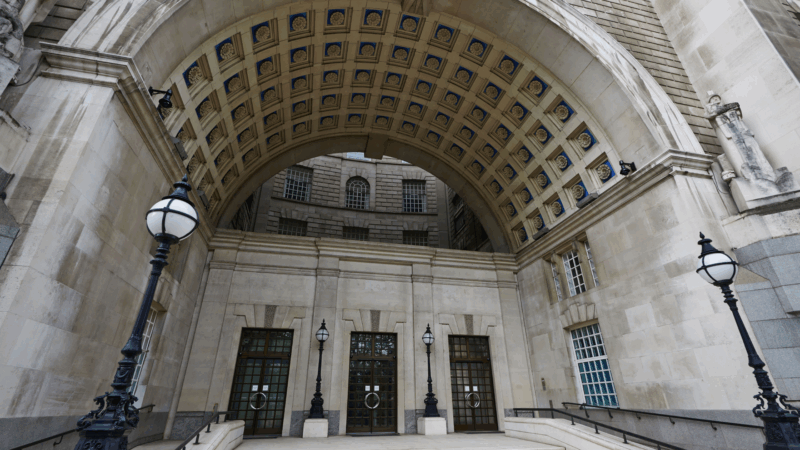
LONDON — A High Court ruling in London Wednesday has cast a critical spotlight on Britain’s MI5 domestic intelligence agency.
A ruling by a three-judge panel at London’s High Court cited the agency’s failure to adequately explain why representatives had repeatedly misled U.K. courts about an informant accused of violence against women.
Ken McCallum, the head of the agency, apologized during proceedings for the false evidence given previously in other courts by an agent. But the ruling raises serious questions about the agency, which focuses on counterespionage, terrorism and sabotage.
The case centers on a woman identified as “Beth,” who alleges severe domestic abuse by her former partner, known in legal filings as “X.”
The court’s ruling raises significant questions about the agency’s recent conduct as well as its long-held policy of secrecy.
The alleged abuser had frequently cited his connections to MI5, according to Beth’s lawyer, Kate Ellis, who oversees litigation at the Center for Women’s Justice, a legal nonprofit focused on making the British government accountable for violence against women.
“One of the features of the abuse in that relationship was that this man, X, boasted to her that he was an MI5 informant, or that he was working for security services in the UK, was essentially saying that he’d been given a guarantee of immunity and he could do what he liked,” says Ellis. “This clearly gave him a real sense of entitlement and empowerment.”
Her client’s experiences first gained public attention in 2022, when the BBC reported on X’s behavior and his apparent criminal immunity thanks to his ties with MI5.
Beth felt “too trapped to immediately exit the relationship” and became “extremely unwell” due to the abuse, according to Ellis. She filed a legal complaint and made a separate claim that the agency had infringed upon her human rights. Her case is still ongoing, three years later.
A senior MI5 officer had confirmed X’s status as an MI5 agent to the BBC, in a conversation that was revealed to have been recorded. But the agency subsequently denied this for years to several judges, as part of its longstanding convention known as “Neither Confirm Nor Deny” or NCND.
“MI5 is very controlling about what it allows to come out,” says Gordon Corera, who now hosts a podcast called “The Rest is Classified,” after two decades spent reporting on Britain’s security services for the BBC.
“With this case, MI5 have really gone into the fight over what they call ‘NCND,'” says Corera. “The point of them doing that, they say, is that if they can’t protect the identities of agents, then they won’t be able to recruit anymore … and therefore considerable harm will come to national security.”
MI5 claimed it never knowingly lied about X’s role, and instead attributed the discrepancies in the accounts given to internal mix-ups. But the High Court heavily criticized the agency’s internal investigations into these failures, recommending a “robust and independent” third inquiry.
This is not the first time MI5’s oversight has been questioned, according to Caroline Wilson Palow, the general counsel of the nonprofit Privacy International, which has previously clashed with the agency over surveillance activities.
“MI5 right now has a variety of oversight bodies overseeing it in the U.K., and yet there’s still a huge amount of trust placed in the agency to self-report when errors happen, when there are privacy violations, and that trust isn’t always well-founded,” Wilson Palow says.
While British citizens traditionally show slightly higher trust levels in their intelligence agencies compared to the American citizens, that paradoxically doesn’t always extend to other areas of government that are more transparent about information. The links between trust and transparency are complex, says Ben Worthy, a public policy researcher at the University of London’s Birkbeck College.
“It seems logical that if you’re more open about something, you’ll be more trusted,” Worthy says. “People will not be suspicious that you’re keeping back from them. They’ll be more informed about what you’re doing. But it’s tricky, because it depends what you’re being open about, and it depends on people’s kind of preconceived notions of who you are and what you’re doing.”
Ellis says her client wants lessons to be learned from her case in any future investigation. She’s also still seeking honest answers about her abuser’s role and apparent impunity.
“When it’s been argued, ‘Well, what about the rights of women to know and be able to identify this man who may pose a risk to them?’ That risk has sort of been seen as lesser as the general risk to national security or the risk to this individual of making his identity known,” says Ellis. “I’m not sure that that’s the right balance.”
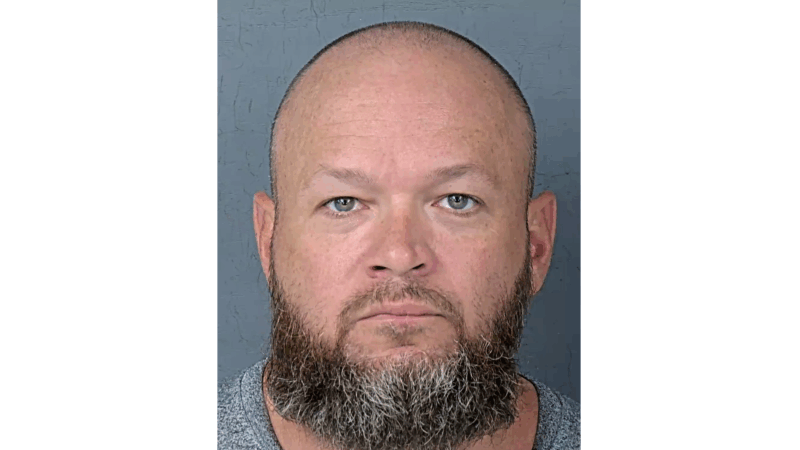
A Jan. 6 rioter pardoned by Trump was sentenced to life in prison for child sex abuse
Since receiving presidential pardons, dozens of former Capitol rioters have gotten into more legal trouble. In Florida, Andrew Paul Johnson was sentenced to life in prison for child sex abuse.

President Trump, Pam Bondi sued over sale of TikTok assets
The case, filed in a federal court in Washington, D.C., accuses the Trump administration of ignoring legislation designed to stop the spread of Chinese propaganda — and instead helping to broker a partial sale to businessmen close to Trump.
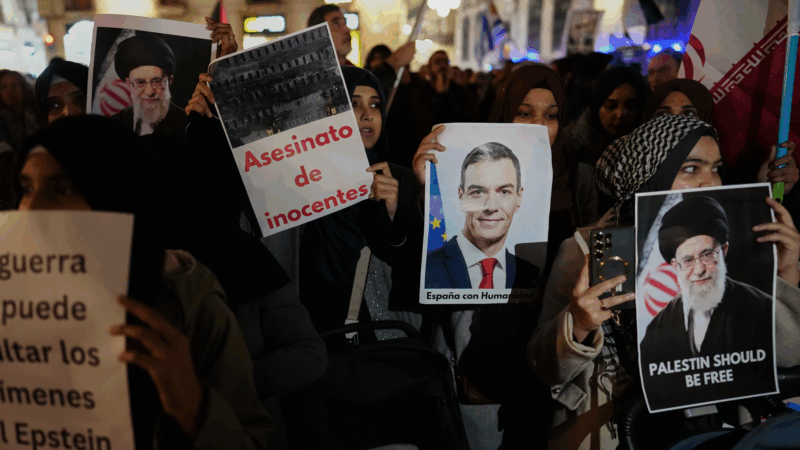
A rift between Spain and Trump widens over Spanish opposition to the Iran war
The Spanish government reiterated it would not let U.S. forces use two joint military bases in Spain as the U.S.-Israeli war in Iran escalates, widening a rift with the Trump administration.
Blackpink, modern K-pop’s trailblazing group, tries to find its way home
A new mini-album finds the world's biggest girl group in a tight spot: competing with its own legacy.
If you loved ‘Sinners,’ here’s what to watch next
So you loved best picture nominee Sinners. What should you watch next? We asked our audience to share their recommendations. They suggested Near Dark, The Wailing and other vampire horror films.

U.S-Israeli strikes continue across Iran, Iranian drones hit Azerbaijan
The U.S. and Israel said they conducted new strikes inside Iran overnight, targeting ballistic missile launchers. Iran claimed it struck a U.S. oil tanker in the northern Persian Gulf.
