
Twenty years later, the REAL ID deadline is here. Here’s why it took so long
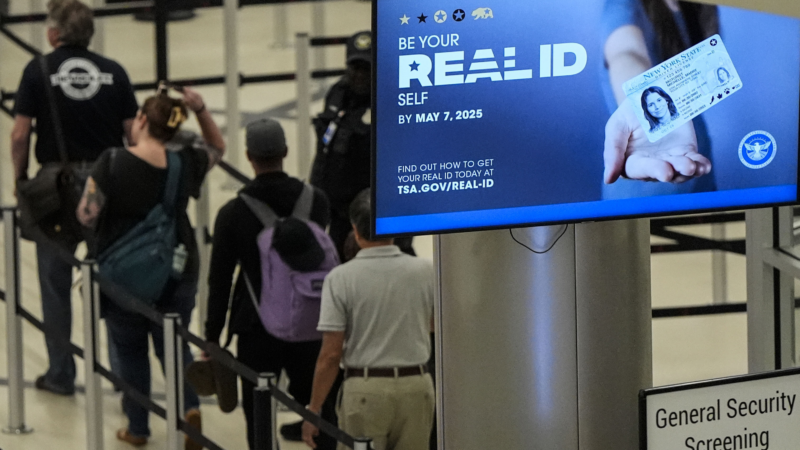
It’s often assumed the 2005 REAL ID law was a result of the terror attacks of 2001 and the 9/11 Commission’s recommendation that the federal government “set standards” for state-issued ID’s. But Brian Zimmer says Congress’ concerns about ID’s date back earlier, to at least 1995.
“Because the Oklahoma City bombers bought their fertilizer [for the bomb] using a counterfeit ID made by a wife of one of them on an ironing board,” says Zimmer, who was a researcher for the House Judiciary Committee.
Fake ID’s didn’t come into play during the 9/11 attacks, and the attackers were in the country legally. Still, 9/11 added momentum to Congress’ actions.
“I wrote the REAL ID act,” Zimmer says, but he says credit for the name goes to his boss at the time, former House Judiciary Committee Chairman Jim Sensenbrenner, R-Wis.
“Sensenbrenner wanted something that everybody would get. You know, common language,” Zimmer recalls. So Sensenbrenner asked staffers fresh out of college for suggestions.
“‘What do the kids call it when you have to bring their actual state driver’s licenses to a concert where the cops are gonna check?'” And Sensenbrenner was told, ‘Well you bring your real I.D.’ And that’s where the name came from.”
The law had two big goals: have states issue ID’s that are harder to counterfeit, and require states to do more to check the veracity of the information they put on those cards. The law was designed to avoid the politically controversial step of creating a national ID card, by working through the states.
But even this decentralized approach quickly ran into resistance.
“It was probably more complicated than I ever thought it would be,” says Faith Bradley, professor of information systems technology at George Washington University. She wrote her doctoral dissertation on the implementation of the REAL ID Act – back when the law was merely 10 years old.
“When I wrote my dissertation, I was thinking ‘It’s just a requirement — people fulfill their requirement and get their ID.’ But then it comes with ideology, view of the world, technology, your identity, how much information you share.”
She says about half the states resisted REAL ID at first, citing cost, privacy, and the burden for some people of providing the extra documentation. The federal government repeatedly delayed the deadline as it negotiated compliance details with states.
The result, 20 years on, is a variety of “flavors” of REAL ID. Most states use a star, a star inside a circle or — in the case of California — a star inside a bear to indicate which of their IDs are compliant with the federal standard. One state, Washington, still does not offer a REAL ID per se, but its “Enhanced Driver License,” originally meant for land border crossings and available only to U.S. citizens, is considered “REAL ID-compliant.” It’s marked with a flag, not a star.
Millions of people have yet to apply for the REAL ID versions of their states’ driver licenses, which often cost more and require more documentation. At a licensing bureau north of Seattle, Lucia Orozco says she and her family are sticking with the non-REAL ID version — even though it soon won’t work in airports.
“We don’t travel much, it won’t be a problem,” she says. “Because we just work here, and my kids are in school and we’re fine.”
For people who travel by air and don’t have legal status in the U.S., the REAL ID compliance deadline matters.
“It will make it more difficult for people to come up with acceptable ID,” says Tanya Broder, senior counsel at the National Immigration Law Center.
Nineteen states, the District of Columbia and Puerto Rico offer driver licenses to residents regardless of immigration status. As of May 7, those ID’s will no longer work in airports. Broder says that model of a two-tier system of state licenses — those that meet federal standards and those that don’t — was built into the 2005 REAL ID Act, and is something migrants understand.
“Before and after REAL ID implementation, there were always risks to traveling while undocumented,” Broder says.
But this two-tier system of state ID’s is now coming under attack from the Trump Administration. In late April, Transportation Secretary Sean P. Duffy sent a letter to all state and local recipients of federal transportation funding which hinted at penalties for jurisdictions that continue to issue licenses to residents without checking immigration status.
The letter called out the states that “have issued driver’s licenses to individuals present in the United States in violation of Federal immigration law,” though it does not specify consequences.
Critics of illegal immigration welcome the new pressure on the states that issue such licenses.
“Drivers’ licenses unlock access to a lot of privileges and benefits that shouldn’t be available to people here illegally, including employment and welfare benefits,” says Jessica Vaughan, with the Center for Immigration Studies. She’s especially critical of states that have made their REAL ID licenses look similar to the licenses available to people without legal status, such as Massachusetts.
“So it’s sending the signal that they can stay here easily and hide in plain sight,” Vaughan says.
While the deadline in airports is finally upon us, the system is still getting pushback. Just last week, officials in Maine asked for another delay in the federal deadline, because only about a quarter of the state’s licenses are compliant.
The federal government is also still reviewing how well states have done. Brian Zimmer, who since his retirement from his job in Congress has worked as a consultant on REAL-ID laws, says the Transportation Safety Administration is now auditing compliance, and it’s starting with the states it thinks have done the best job. He says that should allow a little more time for those states that may have yet to fully catch up to the federal standard.
A new Nepali party, led by an ex-rapper, is set for a landslide win in parliamentary election
A Nepali political party led by an ex-rapper is set for a landslide victory in the country's first parliamentary election since Gen Z protests ousted the old leadership that has ruled the Himalayan nation for decades.
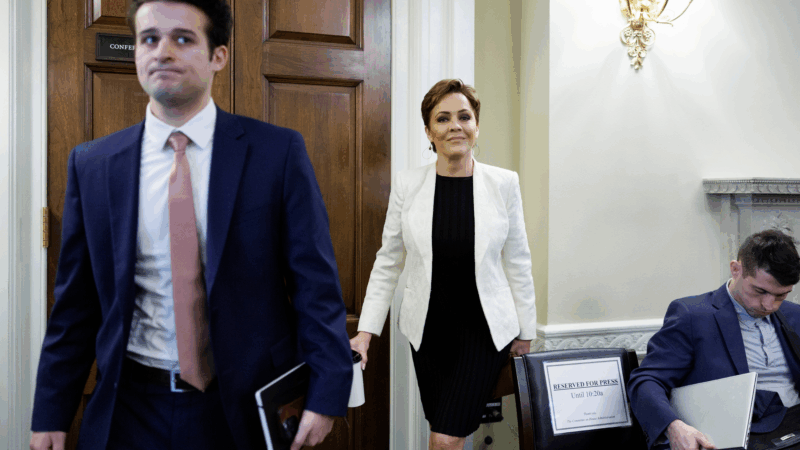
U.S. Judge says Kari Lake broke law in overseeing Voice of America
He declared all of Lake's actions over the past year to be null and void, including the layoffs of more than 1,000 journalists and staffers.
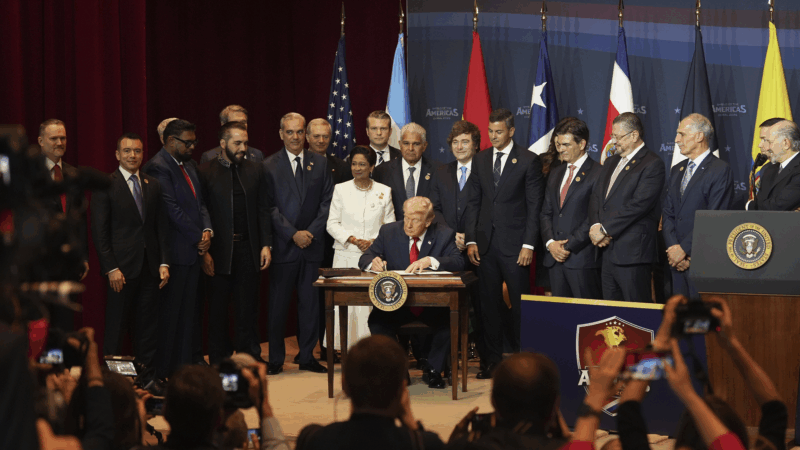
Trump vows to ‘take care of Cuba,’ praises Venezuela cooperation at summit
Trump made the promise in front of an assembled meeting of Latin American leaders.
British Columbia to make daylight saving time permanent
The Canadian province is permanently ending the biannual time shifts for more light at the day's end. But research shows daylight saving increases health risks.
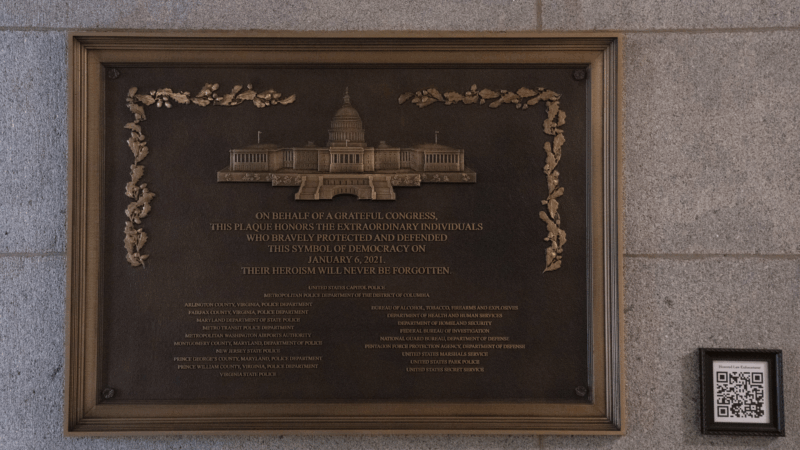
Jan. 6 plaque honoring police officers is now displayed at the Capitol after a 3-year delay
Visitors to the Capitol in Washington now have a visible reminder of the siege there on Jan. 6, 2021, and the officers who fought and were injured that day.
Authorities searching debris after suspected tornadoes kill 6 in Michigan, Oklahoma
A 12-year-old boy is reported to be among the dead following powerful storms that stretched across the middle of the country.
