
Trump’s EPA issues record low legal actions against polluters, watchdog group finds
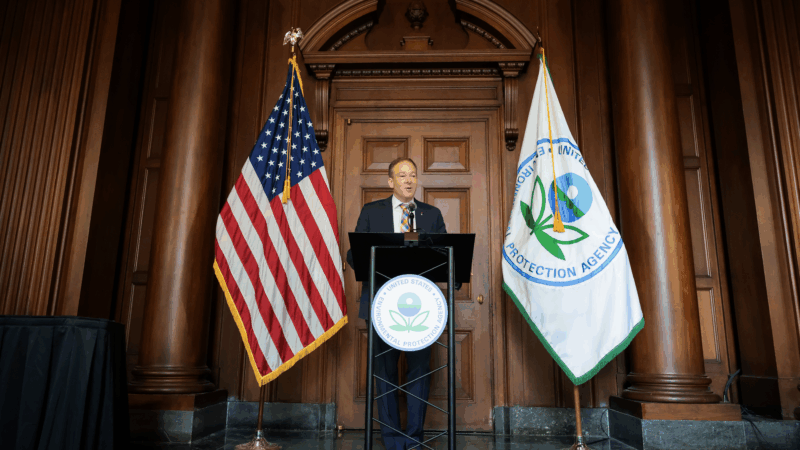
The Environmental Protection Agency enforces the country’s environmental laws. But a new report shows the Trump EPA has initiated a record low number of actions against polluters, compared to past administrations. That’s according to the watchdog group Environmental Integrity Project (EIP), which says the numbers were lower in 2025, even compared to Trump’s first term in office.
By examining court records, the group found that only 16 legal actions were taken against alleged polluters on the EPA’s behalf by the Department of Justice. That’s 87% lower than Obama’s first year of his second term and 76% lower than Biden’s first year. And that’s 81% lower than even the first year of Trump’s first term in 2017.
Part of the problem is that the EPA relies on the U.S. Department of Justice to file lawsuits, and there have been fewer government attorneys available to do so. A recent E&E News analysis found that at least a third of lawyers in the Justice Department’s environment division have left in the past year.
In an emailed statement to NPR, EPA press secretary Brigit Hirsch says the agency is committed to its core mission of providing clean air, land, and water.
“Unlike the last administration, we are focused on achieving swift compliance and not just overzealous enforcement intended to cripple industry based on climate zealotry,” Hirsch wrote.
She called the EIP report “erroneous” and said the agency will soon publish numbers showing that the “EPA has concluded more cases in the first year of the Trump administration than the Biden administration had in its last year.”
Pollution penalties are also down
The EIP also found that administrative penalties against polluters were down. It says the EPA imposed $41 million in penalties through September. That’s $8 million less, adjusted for inflation, than the same period in Biden’s first year, and $5 million less than the first Trump administration.
“Our nation’s environmental laws are meaningless when EPA does not enforce the rules,” says Jen Duggan, EIP executive director. “Failing to enforce our environmental laws means Americans across the country are more likely to be exposed to illegal air and water pollution that threatens their health and their quality of life.”
EIP acknowledges in its analysis that measuring enforcement efforts during the first year of an administration can be challenging, in part because some cases can take more than a year to resolve. The group also found a few instances, such as standards for drinking water, where the current Trump administration enforcement numbers are higher than previous administrations.
Focused on deregulation
EIP’s analysis of the EPA’s enforcement record is happening in an environment where the Trump administration has placed a premium on deregulation, reorganizing the government, and encouraging workers to leave their jobs, including at the EPA.
Last March, EPA Administrator Lee Zeldin announced plans to target more than two dozen rules and policies, calling it the “most consequential day of deregulation in U.S. history.” Such announcements are usually made in economic terms rather than public health ones, as Trump seeks to reverse former President Biden’s climate agenda while boosting domestic fossil fuels.
In September, Trump called climate change a “con job” while speaking at the United Nations. He withdrew the U.S. from the 2015 Paris Agreement, which aims to avoid the worst consequences of a hotter climate by reducing greenhouse gas emissions dramatically in the coming decades.
“We are driving a dagger straight into the heart of the climate change religion to drive down cost of living for American families, unleash American energy, bring auto jobs back to the U.S. and more,” Zeldin said during the announcement last March.
The Trump administration plans to repeal power plant climate pollution limits, overturn a 2009 finding that underpins much of the government’s actions to rein in climate change, and end climate pollution rules for vehicles. Those efforts are underway as climate scientists say the past three years have been the hottest on record and may indicate warming could be speeding up.

Searching for dinosaur secrets in crocodile bones
Until now, estimating how old a dinosaur was when it died has been a fairly simple process: Count up the growth rings in the fossilized bones. But new research into some of dinosaurs' living relatives, like crocodiles, suggests that this method may not always work.

How the new dietary guidelines could impact school meals
Cutting back on ready-to-eat meals won't be easy, and whole milk may make a comeback. One thing that's certain: It'll be a while before the new guidelines trickle down to schools.

Nike faces federal probe over allegations of discrimination against white workers
The federal agency for protecting workers' civil rights revealed Wednesday that it is investigating sportswear giant Nike for allegedly discriminating against white employees.
ICE can’t make warrantless arrests in Oregon unless there’s risk of escape, judge rules
U.S. immigration agents in Oregon must stop arresting people without warrants unless there's a likelihood of escape, a federal judge ruled Wednesday.

Researchers say no evidence of TikTok censorship, but they remain wary
Posts have been going viral on social media accusing TikTok's new owners of suppressing content, but eight academics examined the issue and found no evidence to support the claims.
Newly released court records reveal misconduct inquiry into federal judge
A federal judge said he retired to speak out about threats to the rule of law. Newly released court orders suggest his exit coincided with a misconduct inquiry that ended when he stepped down.
