
Trump’s EEOC strikes harassment guidance amid debate over transgender protections
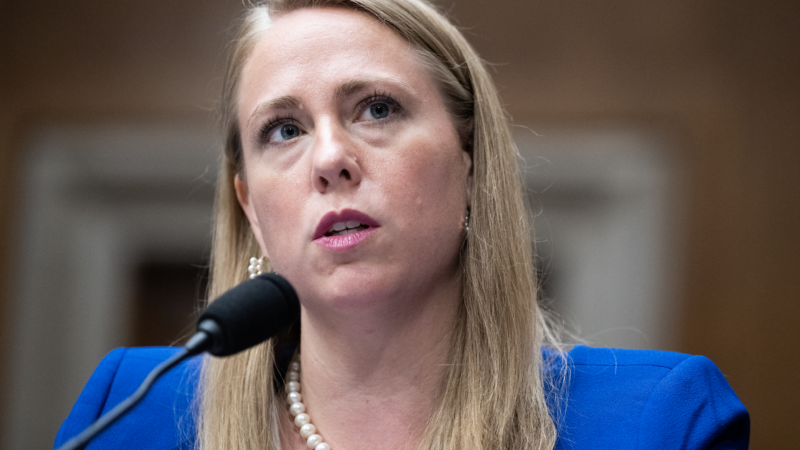
For decades, employers have turned to the U.S. Equal Employment Opportunity Commission for guidance on what constitutes unlawful harassment and how to deal with it.
That task became harder on Thursday.
The commission voted 2-to-1 to rescind the latest version of its harassment guidance, skipping the standard notice and comment period, typically 30 days or longer.
Approved in 2024 during the Biden administration, the nearly 200-page document describes how harassment based on protected characteristics such as race, sex, religion, age, and disability is defined under federal law. It includes more than 70 examples, describing scenarios that employers might encounter.
While much of that guidance wasn’t new, one addition that rankled many conservatives was a section on gender identity and sexual orientation. Citing the 2020 Supreme Court decision Bostock vs. Clayton County and other cases, the guidance included examples of prohibited conduct, such as repeated and intentional use of a name or pronoun the individual no longer uses, and denial of access to a bathroom consistent with their gender identity.
The current EEOC chair, Andrea Lucas, was a commissioner in 2024 and voted against the guidance. She took the view that the Bostock decision only covers hiring and firing decisions, not other conditions of the workplace.
“Biological sex is real, and it matters. Sex is binary (male and female) and is immutable,” she wrote in her dissent. “It is not harassment to acknowledge these truths — or to use language like pronouns that flow from these realities, even repeatedly.”
Yet critics say Thursday’s vote was unnecessary. Last May, a federal court in Texas vacated the section of the 2024 guidance pertaining to sexual orientation and gender identity, finding the EEOC had exceeded its authority. A notice was appended to the guidance online, and the paragraphs were greyed out on the website.
But in late December, Lucas sent a final rule rescinding the entire document to the White House Office of Management and Budget for approval, and received the green light early this year.
On Thursday, Lucas sought to minimize the impact of the vote, saying it “will not leave a void where employers are free to harass wherever they see fit, leaving a trail of victims in their wake.”
Commissioner Brittany Panuccio, a Trump appointee who was confirmed to the commission last October, joined Lucas in voting to rescind the guidance.
The dissenting vote came from Commissioner Kalpana Kotagal.
“There’s no reason to rescind the harassment guidance in its entirety,” Kotagal said on Thursday. “Instead of adopting a thoughtful and surgical approach to excise the sections the majority disagrees with or suggest an alternative, the commission is throwing out the baby with the bathwater. Worse, it is doing so without public input.”
Kotagal has been the EEOC’s sole Democrat following President Trump’s firing of former Chair Charlotte Burrows, who oversaw the issuance of the 2024 guidance, and Commissioner Jocelyn Samuels in late January 2025.
Where this leaves employers
The EEOC will continue to protect employees against workplace harassment, Lucas said on Thursday before the vote.
“Let me be perfectly clear: The EEOC will not tolerate unlawful harassment, as was the case before the guidance document was issued and will remain so even after the guidance document is rescinded,” she said.
Indeed, nothing about the federal laws that protect workers of all backgrounds from discrimination in the workplace has changed. Yet the EEOC — for now — will no longer serve as the guide to how that law applies to real-world situations. Employees who experience discrimination in the workplace must first bring their complaints to the EEOC before going to federal court. In 2024, the agency received 88,531 new charges of discrimination, 40% of which included allegations of harassment.
Craig Leen, a partner with the employment law firm K&L Gates, says employers — especially smaller ones that don’t have their own legal departments — depend on the EEOC not just for guidance on how to deal with incidents but also for training.
But he adds that it’s important that whatever is in the guidance reflects the EEOC’s actual position.
“So if the EEOC position has changed, then the guidance is not so helpful because… employers want to know that if they follow this guidance that they’re going to be good, that that’s the right thing to do, that they’re not going to then have a violation potentially found by the EEOC or by a court,” he says. “They look to guidance as a safe harbor.”
Now, he hopes the EEOC will reissue guidance covering topics where there is broad and longstanding agreement, such as harassment based on sex, race, age, religion, and other protected characteristics, which he estimates to be 95% of it.
“We should be able to have guidance on that 95%,” says Leen, who served in the Labor Department during Trump’s first term. “And then the 5%, maybe you just be honest and say there’s disagreement here and it’s going to depend on which administration is in power.”

Burrows, the former Democratic commission chair, also worries that without EEOC guidance, employers will now be left guessing where the government stands.
“There is no public transparency as to how the commission is going to look at these issues, some of which can be quite complicated,” she says.
She notes that the now-rescinded 2024 harassment guidance took into consideration around 38,000 public comments as well as experiences such as the widespread sexual harassment revealed during the #MeToo movement and the surge in online harassment during the COVID pandemic.
“It is not only shocking to have the entire document rescinded, but to have it rescinded without any public comment — it is a shocking and very radical statement from this administration,” she says.

Suspect in attack at Michigan synagogue is dead, officials say
Security officers at Temple Israel had "engaged the threat" that apparently started with a vehicle ramming into the building, according to Oakland County Sheriff Mike Bouchard.
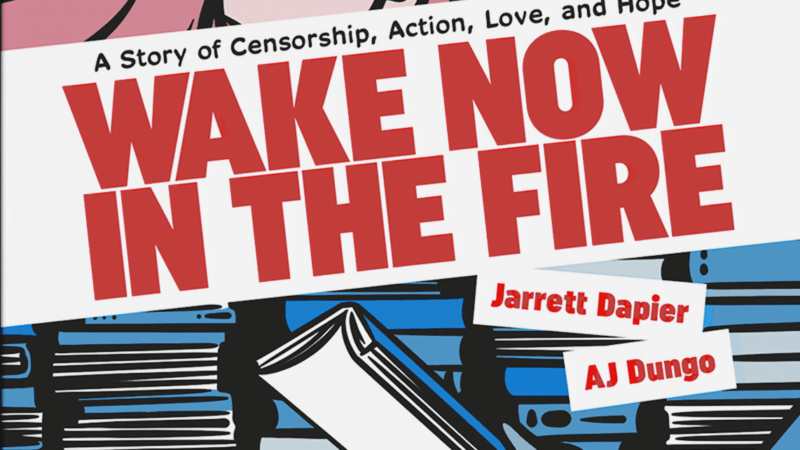
This tale of a Chicago school book ban was inspired by true events
Librarian Jarrett Dapier's graphic novel tells a fictionalized account of real-life events in 2013 that restricted access to Marjane Satrapi's memoir Persepolis in Chicago Public Schools.
Senate passes bipartisan housing bill targeting large investors and easing regulations
The 21st Century ROAD to Housing Act would ban large investors from buying up single-family homes.

Chilean Smiljan Radić Clarke wins architecture’s highest honor
The Pritzker Prize was awarded Thursday. "In every work, he is able to answer with radical originality, making the unobvious obvious," said fellow Chilean architect and prize chair Alejandro Aravena.

El Niño is set to take hold this summer, driving up global temperatures
A potentially strong El Niño weather pattern will likely emerge this summer and persist through the rest of the year. The hottest years on record generally occur in years when El Niño is active.

‘Songs from the Hole’: The story behind JJ’88’s documentary and visual album
The visual album and documentary Songs from the Hole tells the story of James Jacobs, the hip-hop artist JJ'88, as he reflects on his coming-of-age within California's state prison system.
