
Trump said he’d send 30,000 migrants to Guantánamo. He’s sent about 500
It’s been several months since President Trump said he would send up to 30,000 migrants to Guantánamo Bay, Cuba — a proposal that skeptics said would face major hurdles, including high costs, limited bed space, and the complicated logistics of flying all those people to a Caribbean island.
So how many migrants have been sent to Guantánamo since that January announcement?
The government is sharing few details publicly. When NPR sent the Trump administration a list of 13 questions asking how it’s using Guantánamo for its migrant removal efforts, the Department of Homeland Security emailed a brief reply saying, “This story is Fake News.”
However, a congressional delegation that toured Guantánamo in March has supplied glimpses of what’s happening there. According to several delegates who made that trip, as well as recent court filings and government documents, here’s what we know:
- The U.S. spent more than $40 million on holding migrants at Guantánamo in about the first two months of that operation. That figure does not include transportation costs.
- The Trump administration has used both military cargo planes and more expensive charter flights to transport migrants to and from Guantánamo.
- Some of the charter flights can cost about $27,000 per hour to operate.
- As of March, about 400 migrants had been sent to and from Guantánamo, usually a few dozen at a time. By June that number had risen to about 500.
- At any given time, Guantánamo can only accommodate about 200 migrants.
- The average daily cost of holding a migrant at Guantánamo is about $100,000. For comparison, it costs about $165 a day to keep a migrant in ICE detention in the U.S.
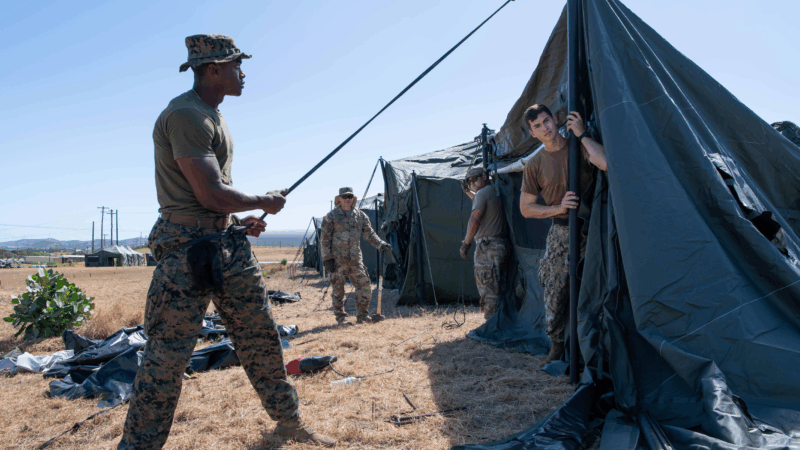
- The U.S. military erected several hundred tents to house migrants at Guantánamo. So far, none of them have been used.
“I think that’s kind of outrageous,” said one of the delegates who toured Guantánamo, Democratic Michigan Sen. Gary Peters, speaking at a congressional hearing in May. “And we fly them down there, we keep them there a while, then we fly them back to the United States. Man, this is like ripe for DOGE. Why is DOGE not down there?”
Peters also said that, “on the day that I visited, there were 87 people in custody, and my understanding is that’s a pretty normal number.”
Following the trip, Peters and Democratic California Sen. Alex Padilla sent a letter to President Trump decrying the “egregious use of taxpayer dollars” being spent on holding migrants at Guantánamo and requesting a breakdown of costs, among other information.
Defense Secretary Pete Hegseth said in January that Guantánamo would be used for “temporary transit” of migrants. In a June court filing, the Trump administration stated that the site was being used for “staging for final removal” of migrants from the U.S. It also asserted that “DHS has broad discretion to decide where to house immigration detainees when staging, finalizing and implementing a removal operation.”

But the government has not explained why it is sending some migrants to Guantánamo for as little as a few days, only to return them to the United States. It has also not explained why it is temporarily sending some migrants to Guantánamo before deporting them to a third country, rather than deporting them directly to their final destination.
American Civil Liberties Union attorney Lee Gelernt, deputy director of the ACLU’s Immigrants’ Rights Project, said he thinks the government is trying to frighten migrants into self-deporting.
“There is no rational reason, from a policy standpoint, to send people to Guantánamo for a day, two days, even for a few weeks, unless your sole objective is to scare immigrants and create this theater,” said Gelernt, the lead counsel in a lawsuit that is trying to stop the U.S. from sending migrants to Guantánamo. “But has it convinced some people to give up? For sure. They’re giving up and they’re going back to countries where they fled.”
NPR contacted several Republicans who were part of the congressional delegation that toured Guantánamo and all of them declined to comment or did not reply. But Republican Congressman Mike Collins of Georgia posted a video of himself talking about the trip.
“Hey, listen, just got back from Guantánamo Bay,” Collins said on his Instagram account. “I want to tell you something. I can’t think of a better place than Gitmo to send these thugs, these rapists, these murderers, drug dealers, human traffickers that Joe Biden and the Democrats let flood into our country.”
Court records show that many of the migrants sent to Guantánamo had no criminal records, but Congressman Collins also said that “no matter what it’s going to take, we need to make sure that we spend it so that we get President Trump’s mission accomplished, and that’s securing our border and taking our country back.”
“Next time I go down there,” he added in the video, “I want to make sure that I see that place full of those criminals heading out of our country and heading home.”
Still, whether Guantánamo will ever hold anywhere close to 30,000 migrants remains doubtful, just as skeptics predicted when the plan was unveiled.
Opinion: The immorality of betting on war
Traders on prediction markets bet on nearly anything. One made more than half a million dollars betting on the U.S. strike against Iran. But should people wager on human suffering?
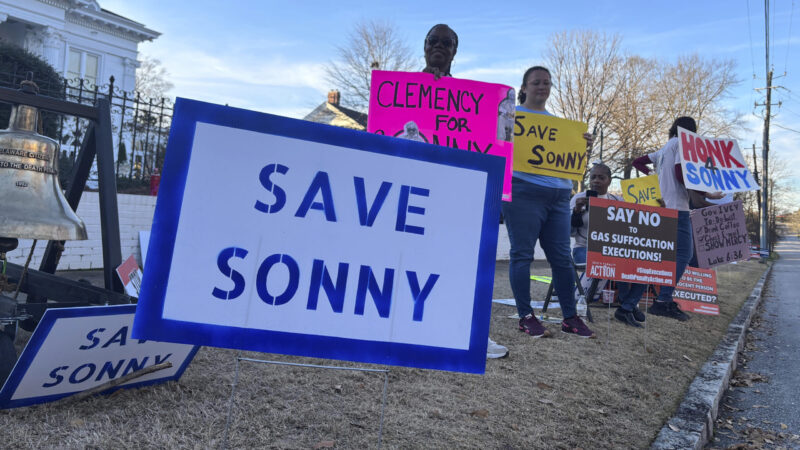
Alabama man facing execution for deadly robbery asks for clemency as he didn’t kill victim
Charles “Sonny” Burton is scheduled to be executed March 12 for his role in a 1991 robbery in which a man was fatally shot. His supporters and attorney are asking the governor for clemency, arguing that his life should be spared because Burton didn’t fire the gun or witness the killing.
One week into the Iran war, the fallout is global
The war is no longer just about the U.S., Israel and Iran. More countries are getting caught in the political crossfire or being drawn into the fighting themselves.

Curling had its moment at the Olympics and now Paralympics. It sparked a curling bonanza in America
Hundreds of people become interested in curling every four years and the 2026 numbers already show that boom.
Iran’s president defies U.S. demands while apologizing for strikes on neighbors
President Masoud Pezeshkian said Saturday that a demand by the U.S. for an unconditional surrender is a "dream that they should take to their grave." He also apologized for Iran's attacks on regional countries.
What the Trump administration says about why it went to war with Iran
The Trump administration says it is "laser focused" and mission driven, but the messaging has been varied. The range of cited motivations for striking Iran now are sometimes at odds with each other.
