
Trump is trying to preempt state AI laws via an executive order. It may not be legal
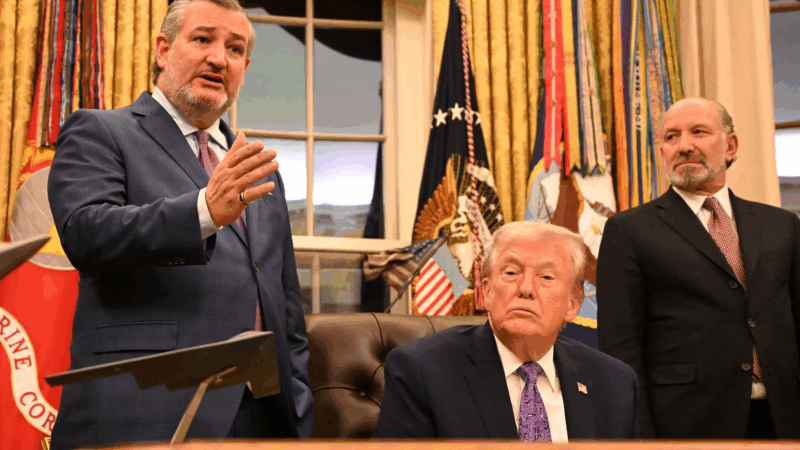
The Trump administration is seeking to challenge state laws regulating the artificial intelligence industry, according to an executive order the president signed on Thursday,
The order directs the Justice Department to set up an “AI Litigation Task Force” to sue states over their AI-related laws and also directs the the Federal Trade Commission and the Federal Communications Commission to work with the DOJ to follow the White House’s AI action plan to circumvent “onerous” state and local regulations.
The order also directs Commerce Secretary Howard Lutnick to study whether the department can withhold federal rural broadband funding from states with unfavorable AI laws.
“We have to be unified.,” said Trump, “China is unified because they have one vote, that’s President Xi. He says do it, and that’s the end of that.”
Trump’s AI advisor, venture capitalist David Sacks, said the administration will not push back on all state laws, “Kid safety, we’re going to protect. We’re not pushing back on that, but we’re going to push back on the most onerous examples of state regulations”
The executive order is almost certain to be challenged in court and tech policy researchers say the Trump administration cannot restrict state regulation in this way without Congress passing a law. The order also directs Sacks to work with Congress to help draft legislation.
Trump’s executive order drew criticism from some of his supporters, including organizations that are part of a bipartisan effort to pass laws protecting children from AI harms.
“This is a huge lost opportunity by the Trump administration to lead the Republican Party into a broadly consultative process,” said Michael Toscano, director of the Family First Technology Initiative at the Institute for Family Studies, a conservative think tank. “It doesn’t make sense for a populist movement to cut out the people on the most critical issue of our day. But nonetheless, that is what they are vigorously trying to do.”
“Even if everything is overturned in the executive order, the chilling effect on states’ willingness to protect their residents is going to be huge because they’re all now going to fear getting attacked directly by the Trump administration,” said Adam Billen, vice president of Encode, a nonprofit focused on child safety and threats posed by AI. “That is the point of all of this – it is to create massive legal uncertainty and gray areas and give the companies the chance to do whatever they want.”
Sacks can recommend some state laws, such as around child safety, to not be challenged if Congress does come up with a national policy for AI.
While Congress has stalled on passing AI regulation, dozens of states have passed laws related to AI, which include banning creating nonconsensual nude images using AI technology, mandating government agencies and businesses to disclose AI usage, requiring checks for algorithmic discrimination and protecting whistleblowers.
The Trump administration has pushed for less regulation of the AI industry, citing competitive pressure with China. But Trump has also recently allowed chipmaker Nvidia to sell its second-most advanced AI chips to China. Depending on the quantity, said Michael Sobolik, a senior fellow at Hudson Institute who studies U.S.-China competition, the export could end up “diluting what is our most significant advantage in the AI race.”
Trump and some of his allies have attempted multiple times this year to halt state-level AI regulation. Earlier this month, GOP lawmakers tried and failed to insert AI preemption into the annual defense spending bill. An earlier version of the executive order signed Thursday leaked last month, sparked a round of opposition from across the political spectrum. In July, the Senate dropped an AI moratorium from the reconciliation bill it was debating.
While Democrats broadly support more AI regulation, the issue has divided Republicans. A faction of the party, including the president, welcome the support of tech billionaires, though others continue to view them with distrust.
Sen. Ted Cruz of Texas, an industry ally, introduced the failed AI moratorium during the reconciliation bill debate and stood next to Trump at a signing ceremony for the order on Thursday. After the effort to slip a similar measure in the defense spending bill failed last week, Sen. Josh Hawley of Missouri posted on X, “This is a terrible provision and should remain OUT.”
Many Republican governors are also opposed to the move. Earlier in the day, Utah Gov. Spencer Cox posted on X that he preferred an alternative executive order that did not include barring state laws. “States must help protect children and families while America accelerates its leadership in AI,” he wrote.
“An executive order doesn’t/can’t preempt state legislative action,” posted Florida Gov. Ron DeSantis on X Monday in response to Trump’s Truth Social post announcing the upcoming order, “Congress could, theoretically, preempt states through legislation.” DeSantis has recently proposed a series of AI-related measures.
John Bergmayer, the legal director of the nonprofit advocacy group Public Knowledge, agreed. “They’re trying to find a way to bypass Congress with these various theories in the executive order. Legally, I don’t think they work very well.”
In a post on X on Tuesday, Sacks suggested that the federal government can override state AI laws because it has the power to regulate interstate commerce.
Bergmayer disagreed, “States are, in fact, allowed to regulate interstate commerce. They do it all the time. And the Supreme Court just recently said it was fine.”
Bergmayer cited a 2023 Supreme Court decision where the court supported California’s power to regulate its pork industry even though the regulations affected farmers in other states.
NPR’s Bobby Allyn contributed reporting.

Iran’s supreme leader warns any US attack would spark ‘regional war’
Iran's supreme leader warned Sunday that any attack by the United States would spark a "regional war" in the Mideast, further escalating tensions as President Donald Trump has threatened to militarily strike the Islamic Republic.
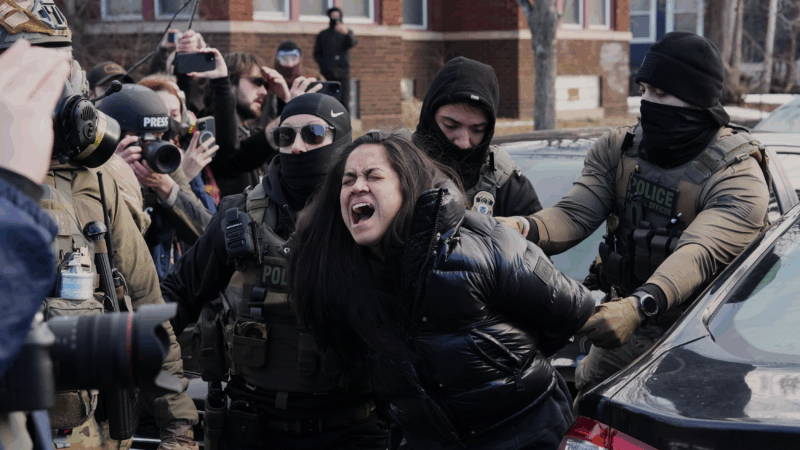
Minnesota citizens detained by ICE are left rattled, even weeks later
The number of immigration agents in Minnesota may be reduced, but they'll leave leave behind a changed community, including many U.S. citizens questioned and detained in recent weeks.

Gaza border crossing buzzes with activity after years of near-complete closure
Reopening the border crossing is a key step as the Israel-Hamas ceasefire moves ahead.
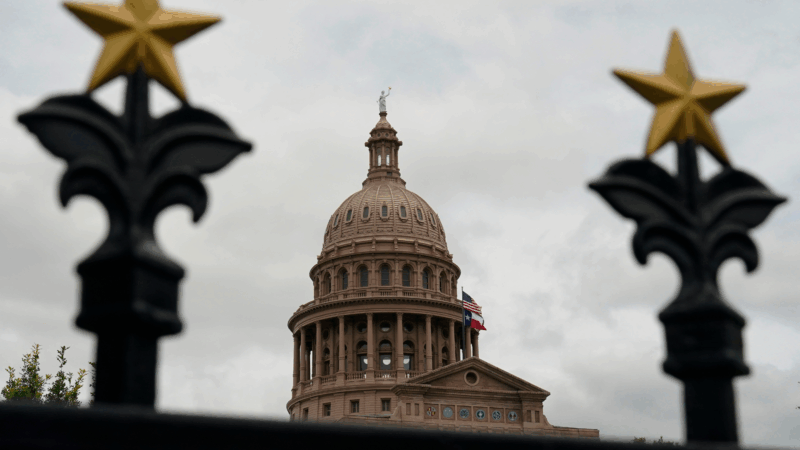
Democrat Taylor Rehmet wins a reliably Republican Texas state Senate seat, stunning GOP
Democrat Taylor Rehmet won a special election for the Texas state Senate on Saturday, flipping a reliably Republican district that President Donald Trump won by 17 points in 2024.
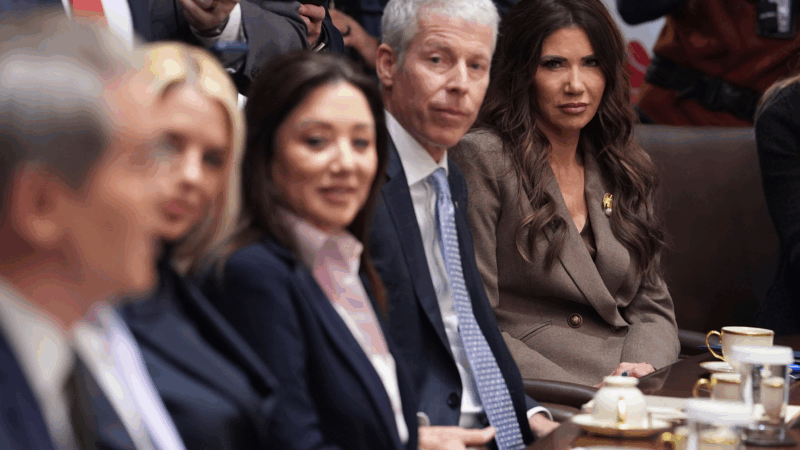
Trump says feds won’t intervene during protests in Democratic-led cities unless asked to do so
President Donald Trump said Saturday that he has instructed Homeland Security Secretary Kristi Noem not to intervene in protests occurring in cities led by Democrats unless local authorities ask for federal help.

U.S. intervention in Venezuela divides Houston
In nearly two dozen interviews, Houstonians expressed everything from admiration and relief to skepticism and dread following the seizure of leader Nicolás Maduro.
