
Trump grants tariff breaks to ‘politically connected’ companies, Senate Dems say
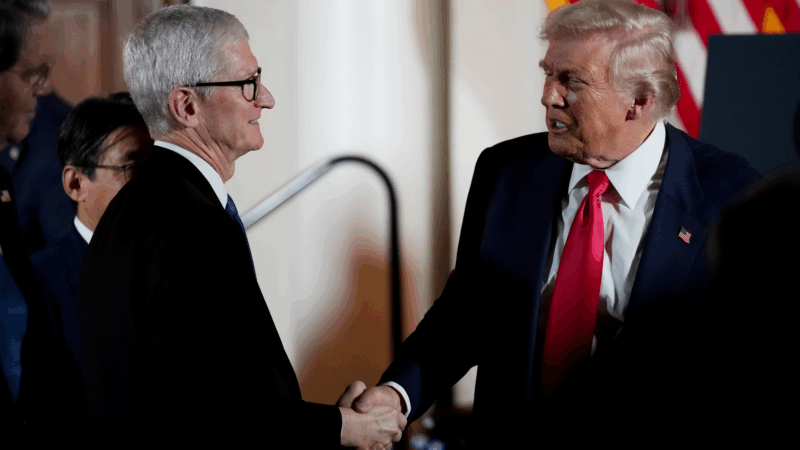
Two top-ranking Democrats are blasting the Trump administration for playing favorites with tariffs — by giving trade relief to the big companies whose CEOs are cozying up to the president.
In a letter to the White House made public Wednesday morning, Sen. Ron Wyden, D-Ore., and Sen. Chris Van Hollen, D-Md., criticized the administration for relaxing some tariffs “through an opaque process that appears to favor the politically connected” and that “has opened the door to corruption and economic harm.”
Wyden is the top-ranking Democrat on the Senate Finance Committee; Van Hollen sits on the Senate Appropriations Committee, and is the top-ranking Democrat on its commerce subcommittee.
Now they’re raising “significant concerns that the Trump Administration appears to have created a closed-door tariff exclusion process allowing relief largely for those with political connections,” according to the letter addressed to U.S. Trade Representative Jamieson Greer and Commerce Secretary Howard Lutnick.
The tariff exemption process “has lacked transparency and procedural fairness for American stakeholders, especially small businesses and family farms,” Wyden and Van Hollen added in the letter. An advance copy of the letter was seen by NPR.
The letter comes at a time when President Trump is visibly favoring some companies and investors, some of whom have publicly courted him with personal gifts — like the gold-plated desk clock recently presented by Rolex’s CEO — and donations to his controversial plans to build a White House ballroom.
This blurring of the lines between business and government has led political commentators and business leaders across the political spectrum to warn that the United States is tipping into “crony capitalism.”
A White House spokesperson did not immediately respond to a request for comment, but the administration has previously dismissed claims of crony capitalism and defended the tariffs. A White House official recently speaking to NPR on condition of anonymity defended Trump’s policies as “the traditional free-market policymaking that you would expect coming out of a Republican administration.” The official also said that there are U.S. companies benefiting from Trump’s policies “whether or not they have a good relationship with the administration.”
Since the beginning of his second term, Trump has imposed sweeping tariffs on many U.S. imports through executive orders, in a stop-and-start process that continues today. The Supreme Court is now set to rule on a court case challenging his authority to do so — but the tariffs are already being paid by millions of businesses.
Adding to the chaos, Trump has also reversed course on various tariffs, including for pharmaceutical companies and on beef, coffee and other agricultural products. The senators’ letter takes issue with the administration’s “opaque” and seemingly “ad hoc” process for making these exemptions, through amendments to Trump’s executive orders.
Wyden and Van Hollen do not name specific companies. But they do note that, for example, smartphones are among the imports that the Trump administration added to an April list of goods that are exempt from the tariffs.
Smartphone maker Apple is among the companies whose CEOs have personally courted Trump in the past year. CEO Tim Cook last summer presented Trump with a glass-and-gold plaque as his company promised to invest $600 billion in the United States.
Wyden and Van Hollen wrote that the administration’s apparent process for granting exemptions benefits companies that “find themselves in favor with the White House.”
“The Administration has considered and granted tariff exclusions behind closed doors, through an opaque and unaccountable process,” they wrote.
Wyden and Van Hollen asked Greer and Lutnick to answer several questions about the administration’s process for exempting imports from tariffs and how it will engage with small businesses and other U.S. companies “that lack a presence in Washington, D.C. or an existing relationship with your agencies.” They have asked for a response by March 4.
5 takeaways from Trump’s State of the Union address
President Trump hit familiar notes on immigration and culture in his speech Tuesday night, but he largely underplayed the economic problems that voters say they are most concerned about.
China restricts exports to 40 Japanese entities with ties to military
China on Tuesday restricted exports to 40 Japanese entities it says are contributing to Japan's "remilitarization," in the latest escalation of tensions with Tokyo.
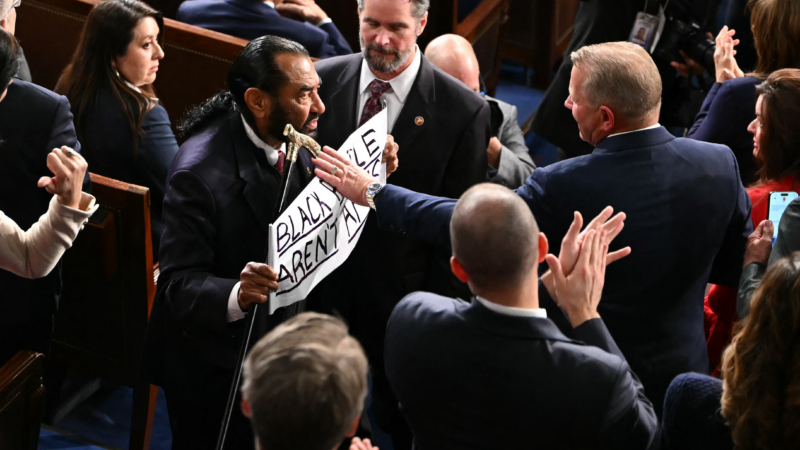
Signs, silence, and skipping: How Democrats protested Trump’s State of the Union
The pushback comes as Democrats enter a midterm year where they hope to make gains in the House and Senate.
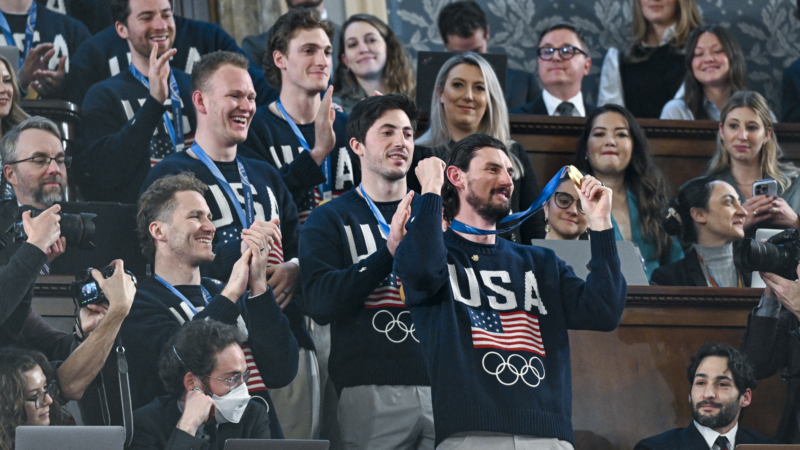
Trump honors gold medal-winning men’s hockey team at State of the Union amid controversy
The celebration of the men's team comes after FBI Director Kash Patel's trip to the Games in Milan, and the president's comments about the U.S. women's team, have drawn scrutiny.
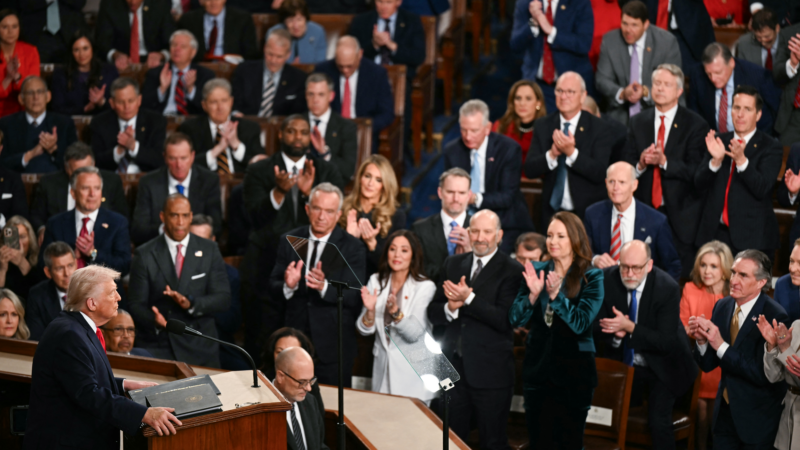
Read NPR’s annotated fact check of President Trump’s State of the Union
As President Trump delivers his State of the Union address, reporters from across NPR's newsroom will fact check his speech and offer context.
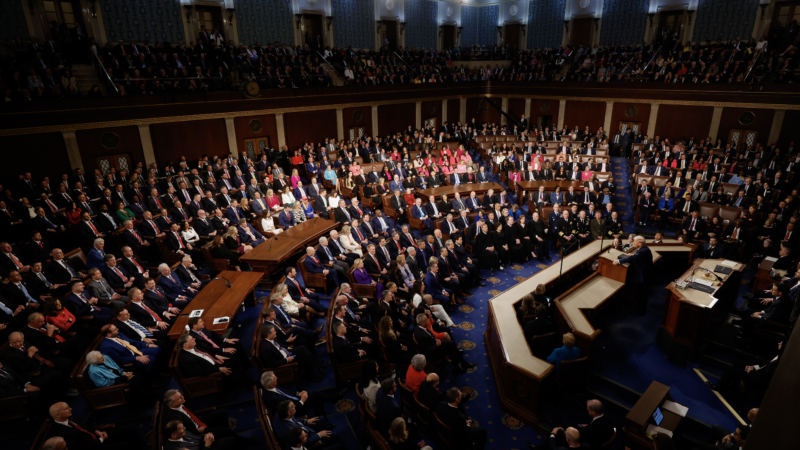
President Trump set to deliver first State of the Union address of his second term
Facing low approval ratings and ahead of midterm elections in November, President Trump delivers the first State of the Union address of his second term as president Tuesday night.
