
Trump cuts demolish agency focused on toxic chemicals and workplace hazards
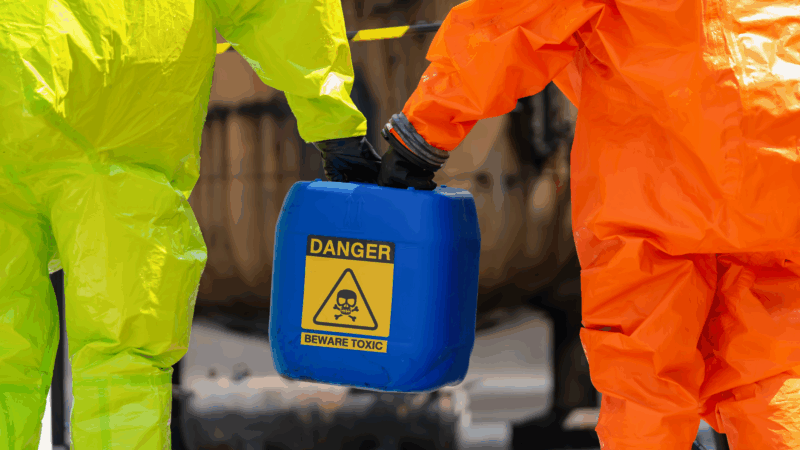
Studies on how workplace exposure to chemicals like formaldehyde and phthalates may harm reproductive health, an investigation into a possible cancer cluster at a state university, the only national program tracking blood lead levels in adults.
These are among the many casualties of the Trump administration’s decision to level a research agency that has devoted much of its energy over the past five decades to reducing people’s exposure to harmful chemicals and other dangerous conditions in the workplace.
The National Institute for Occupational Safety and Health, or NIOSH, is expected to lose upwards of 900 employees — the vast majority of its staff — by the end of June as a result of the mass firings carried out by Secretary of Health and Human Services Robert F. Kennedy Jr.
“It’s been almost destroyed,” says Dr. Robert Harrison, who directs the Occupational Health Services at the University of California San Francisco.
NIOSH, part of the Centers for Disease Control and Prevention, has a broad mandate to prevent injury, illness and death in the workplace, which touches on many industries and potential hazards.
Only a few pieces of the agency will be left, including the World Trade Center Health Program, and even those may be hampered by the personnel cuts. The impact on firefighters and coal miners has already provoked strong backlash, even from some within the Republican party, leading to a small number of employees being told to return to work, at least temporarily.
But the fallout will extend well beyond a few industries.
A focus on toxins
NPR interviewed a dozen NIOSH staff whose positions are being eliminated. NPR is not using their names because they are still employed and not authorized to speak to the press.
They stress the agency is instrumental in funding and advancing research on carcinogens and other dangerous substances — a concern that Secretary Kennedy and President Trump have brought up repeatedly in their pitch to “Make America Healthy Again.”
“The irony is what we do at NIOSH is focus on preventing chronic disease and getting rid of toxins,” said one senior scientist. “It makes no sense.”
Industrial hygienists, toxicologists, physicians and others at the agency work directly with industries in which people can be exposed to high levels of pollutants and other hazards, identifying substances that may also pose a risk to the general public.
“If we are not evaluating emerging chemicals, if we are pretending they don’t exist, we are going to see the health consequences, maybe 10 or 20 years from now,” another scientist told NPR.
A statement from the Department of Health and Human Services explains that NIOSH will eventually join the newly created Administration for a Healthy America and that “critical initiatives under NIOSH will remain intact” as the “agency continues to streamline its operations.”
Abrupt cuts undermine agency’s work
That’s far from what staff at NIOSH describe, though.
They say the wholesale elimination of entire teams and programs has brought many key functions to a standstill and will be difficult to revive.
A database that tracks cancer in firefighters has stopped enrollment. The team that approves respirators — which assures the equipment can protect against everything from asbestos to airborne pathogens — has been shut down. The staff who green light funding for local health departments and research centers are gone.
The agency is no longer responding to requests to conduct on-the-ground investigations of health hazards if there are reports of illness within a workplace or other emerging threats.
In just one division, a NIOSH scientist tells NPR that about 30 of these “health hazard evaluations” will never be completed because of the sudden layoffs — investigations related to concerns about public and worker exposure to mycobacteria, asthma linked to the use of chemical disinfectants in a hospital, and silica in home construction, to name a few.
“It’s all well and good to talk about streamlining the government,” says Dr. Philip Landrigan, an epidemiologist and occupational physician at Boston College. “But there’s no way in the world that Mr. Kennedy’s new agency is going to be able to protect workers’ health after they’ve let 90% of the subject matter experts go,” he says.
While most NIOSH employees were notified in early April that they would lose their jobs, some were immediately placed on administrative leave, while others are still waiting to receive the official notices.
Chaos and lost data
Catherine Blackwood had spent the past three years investigating potential cardiac and pulmonary consequences of prolonged mold exposure — part of a broader effort to pinpoint signs of mold exposure in contaminated buildings.
Then, in less than 24 hours, she had to abandon all her studies.
“Everything had to stop,” says Blackwood, who worked at the NIOSH facility in Morgantown, W.Va., “We don’t have access to any of the data. We don’t have access to anything.”
Blackwood and other scientists at the agency describe a chaotic shuttering of their research, with seemingly no thought for how to salvage the data or preserve biological samples. Some research animals were donated to other labs. In other cases, they were euthanized if experiments were already underway.
“There wasn’t a shutdown — a shutdown implies an orderly procedure,” says Kyle Mandler, a pulmonary toxicologist at the Morgantown location.
Mandler had been running a laboratory study focused on a spike in lung disease linked to silica dust in the countertop industry.
“We were in the middle of working to try and understand what is inherent in the material that was potentially so deadly for these workers,” he said.
Over the years, the agency has been a driving force in uncovering what are now well-known hazards, such as asbestos, vinyl chloride and benzene. It advanced research on the dangers of particulate matter in air pollution and has crafted key guidance on hundreds of chemical hazards found in the workplace.
Last year, the Environmental Protection Agency passed a ban on the solvent trichlorethylene, based on research by NIOSH showing a link with liver cancer.
“The list goes on and on,” says Harrison at UCSF, “I think this will be a devastating loss to our opportunity to prevent cancers in the United States.”
Long-running studies halted
And many in the field now fear what will happen to the troves of data amassed by the agency.
In the 1980s, Kyle Steenland led a large cohort study on ethylene oxide, a carcinogen that’s produced at some chemical manufacturing plants, which is still yielding new data about exposure risks.
He says it’s just one example of the decades-long studies that have tracked death and illness in thousands of workers exposed to contaminants.
“I don’t know where this data will end up, whether they’ll disappear altogether,” says Steenland, an epidemiologist who’s now retired from NIOSH. “This is taking a scalpel to a very useful and relatively cheap agency.”
The cuts also represent a crisis for the broader field.
University centers are bracing to lose their funding, which could sever the pipeline of scientists and physicians who specialize in occupational health and environmental toxicology.
State health departments have the same fears.
They depend on federal dollars from the agency to track and respond to workplace hazards like lead poisoning, pesticide injury and respiratory disease.
“In my state and a lot of others, there’s no backstop,” one state health official who’s not authorized to speak with the media told NPR. “Everything we do would just shut down, close up shop.”
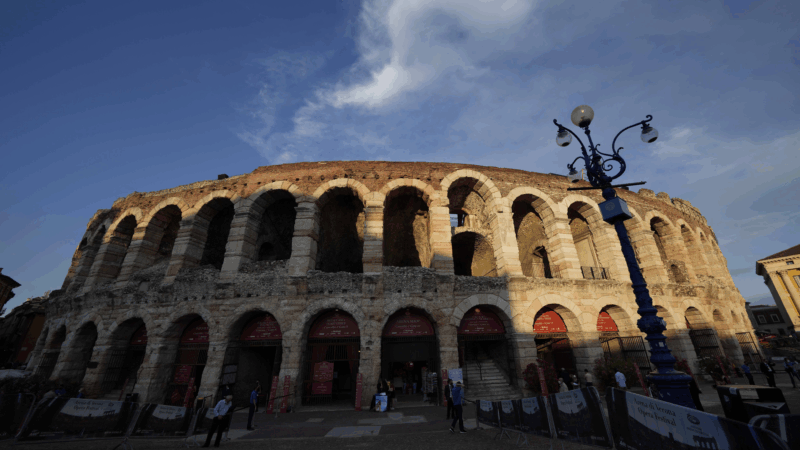
Mideast clashes breach Olympic truce as athletes gather for Winter Paralympic Games
Fighting intensified in the Middle East during the Olympic truce, in effect through March 15. Flights are being disrupted as athletes and families converge on Italy for the Winter Paralympics.

A U.S. scholarship thrills a teacher in India. Then came the soul-crushing questions
She was thrilled to become the first teacher from a government-sponsored school in India to get a Fulbright exchange award to learn from U.S. schools. People asked two questions that clouded her joy.

Sunday Puzzle: Sandwiched
NPR's Ayesha Rascoe plays the puzzle with WXXI listener Jonathan Black and Weekend Edition Puzzlemaster Will Shortz.
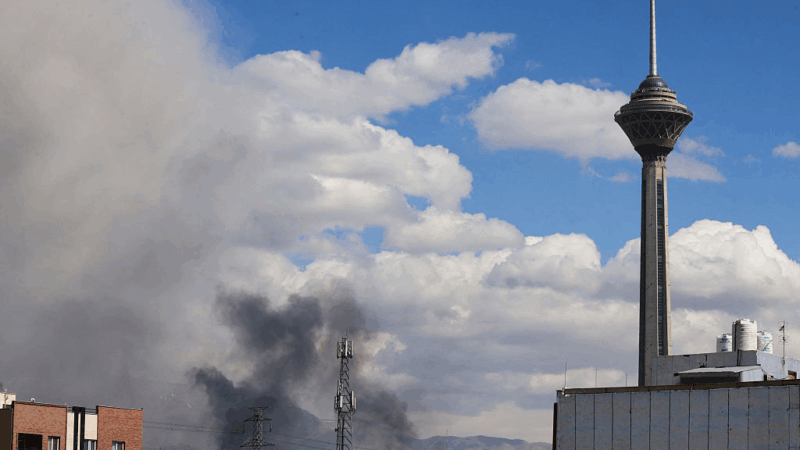
U.S.-Israeli strikes in Iran continue into 2nd day, as the region faces turmoil
Israel said on Sunday it had launched more attacks on Iran, while the Iranian government continued strikes on Israel and on U.S. targets in Gulf states, Iraq and Jordan.

Trump warns Iran not to retaliate after Ayatollah Ali Khamenei is killed
The Iranian government has announced 40 days of mourning. The country's supreme leader was killed following an attack launched by the U.S. and Israel on Saturday against Iran.

Iran fires missiles at Israel and Gulf states after U.S.-Israeli strike kills Khamenei
Iran fired missiles at targets in Israel and Gulf Arab states Sunday after vowing massive retaliation for the killing of Supreme Leader Ayatollah Ali Khamenei by the United States and Israel.
