
Trump calls affordability crisis a “hoax,” touts the economy ahead of midterms
In the spring of last year, then-President Joe Biden tried to convince skeptical voters that the struggling economy was healthy. Then-candidate Donald Trump seized on the moment and vowed to lower prices for American consumers, beating his eventual Democratic rival Kamala Harris in part with a winning economic message.
Now it’s President Trump who’s trying to persuade the public that the state of the economy is sound, after prices rose 3% in the 12 months ending in September and with consumers spending less on big-ticket items.
Betsey Stevenson, a professor of economics at the University of Michigan, says making that argument could be a tall order in the face of rising costs for a number of goods and services.
“My personal takeaway from the experience we had [in 2024] was that you can’t tell people that prices aren’t up when they’re up,” she said.
While the prices of some items such as gasoline have fallen on Trump’s watch, the overall cost of living has continued to climb. For example, grocery costs are up 2.7% for the year ending in September and electricity costs have jumped more than 5%, according to the Bureau of Labor Statistics.
“Trump’s claims about inflation are false,” Stevenson said, “and you can go to the grocery store and see it yourself.”
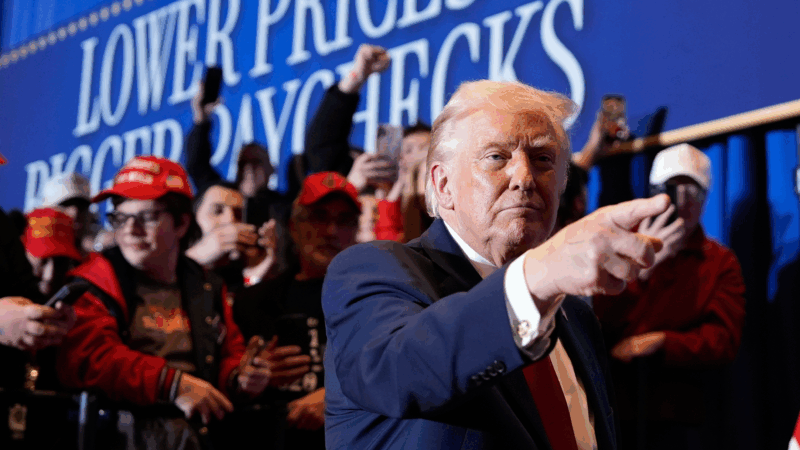
But, in a wide-ranging speech to supporters on Tuesday, Trump both defended his administration’s track record on the economy and said that talk of affordability was overblown. Trump told the crowd in Mount Pocono, Pa., that he believed the term “affordability” was a “hoax” perpetrated by Democrats. Trump’s recent assertions dismissing inflation are not backed by official government economic data.
Consumers are feeling high prices firsthand
While it’s true that inflation hit a 9% high during the summer of 2022 under the Biden administration, that was during the pandemic and it dropped significantly after that. Inflation dipped to an annual rate of 3% in January during Biden’s final month in office, the same rate it was in September under Trump.
Now many voters are questioning how well Trump is tackling the stubbornly high costs of everyday items. Some 57% of voters said in a Harvard CAPS/Harris poll released this week that Trump was “losing the battle against inflation,” while 68% of respondents to a AP-NORC Center for Public Affairs Research poll from October said the economy was poor or very poor.
Voters’ souring attitudes on the Trump administration’s handling of the economy come less than a year before the U.S. midterm elections, in which Republicans will aim to maintain their majorities in both houses of Congress. But in a warning sign for the GOP, November’s odd-year races saw Democrats who campaigned on affordability win major contests in New York City, Virginia and New Jersey.
Political consultant and pollster Frank Luntz says Trump risks appearing out of touch if he continues to claim that affordability is a “hoax” when Americans feel like they’re paying more — and actually do pay more.
“When you talk about affordability, it is all perception,” Luntz told NPR’s Morning Edition. “The greatest danger is if you tell people happy days are here again, and it’s 1929,” he added, referencing the beginning of the Great Depression.
Luntz added that Trump blaming Biden for the failures of the economy may have worked during the campaign season and even for some time after.
“That said, it’s now a year since the election, and the public does expect this administration to take charge. At a certain point, they will not accept the blame game,” he said.
Trump’s tariffs are contributing to inflation
But getting inflation to slow down or prices to drop will be easier said than done for the Trump administration, which has embraced economic policies such as tariffs that force prices upward, according to Stevenson. Trump and other administration officials have argued that tariffs are necessary to correct past global trade policies that have been unfair to the U.S. and to bring back domestic manufacturing.
Although tariffs are raising about $30 billion per month in revenue for U.S. coffers, the new import taxes levied by the Trump administration have increased prices on a number of items, from food to clothing to furniture.
“What I find surprising is that he’s out there telling people: ‘This isn’t happening. This is a con job. There’s no affordability problem,'” Stevenson said. “At the same time, he’s pursuing policies that are purposefully restricting supply, which every person who has taken even an introductory economics course knows will push up prices.”
Still, the administration has taken several steps recently to ease the negative effects of tariffs on U.S. consumers and producers. Last month, Trump scrapped the tariffs on certain products that aren’t widely produced in the U.S., such as bananas and coffee. And on Monday the administration announced that it was making $12 billion in one-time payments to U.S. farmers to offset their rising business costs.
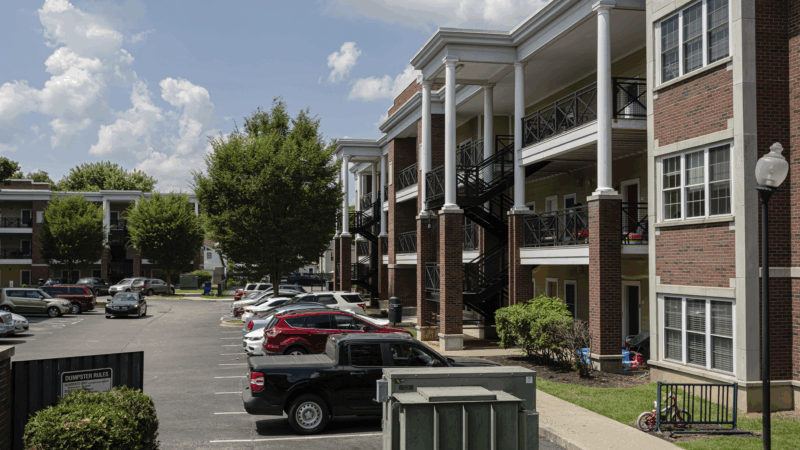
HUD proposes time limits and work requirements for rental aid
The rule would allow housing agencies and landlords to impose such requirements "to encourage self-sufficiency." Critics say most who can work already do, but their wages are low.
Paramount and Warner Bros’ deal is about merging studios, and a whole lot more
The nearly $111 billion marriage would unite Paramount and Warner film studios, streamers and television properties — including CNN — under the control of the wealthy Ellison family.

A new film follows Paul McCartney’s 2nd act after The Beatles’ breakup
While previous documentaries captured the frenzy of Beatlemania, Man on the Run focuses on McCartney in the years between the band's breakup and John Lennon's death.

An aspiring dancer. A wealthy benefactor. And ‘Dreams’ turned to nightmare
A new psychological drama from Mexican filmmaker Michel Franco centers on the torrid affair between a wealthy San Francisco philanthropist and an undocumented immigrant who aspires to be a dancer.
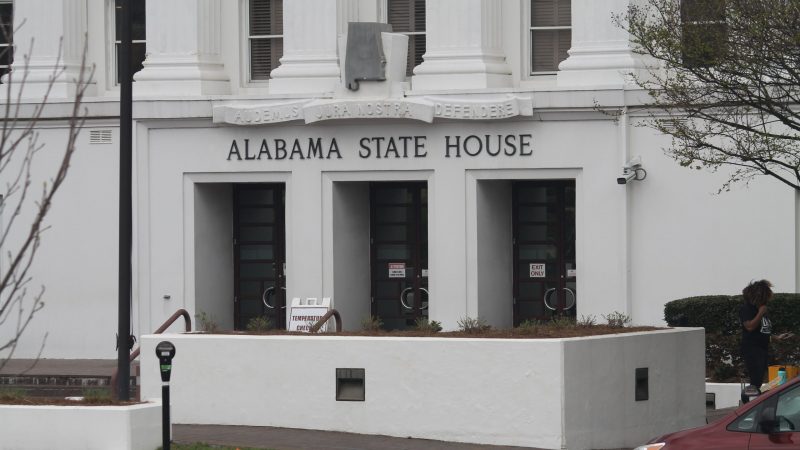
Bill making the Public Service Commission an appointed board is dead for the session
Usually when discussing legislative action, the focus is on what's moving forward. But plenty of bills in a legislature stall or even die. Leaders in the Alabama legislature say a bill involving the Public Service Commission is dead for the session. We get details on that from Todd Stacy, host of Capitol Journal on Alabama Public Television.
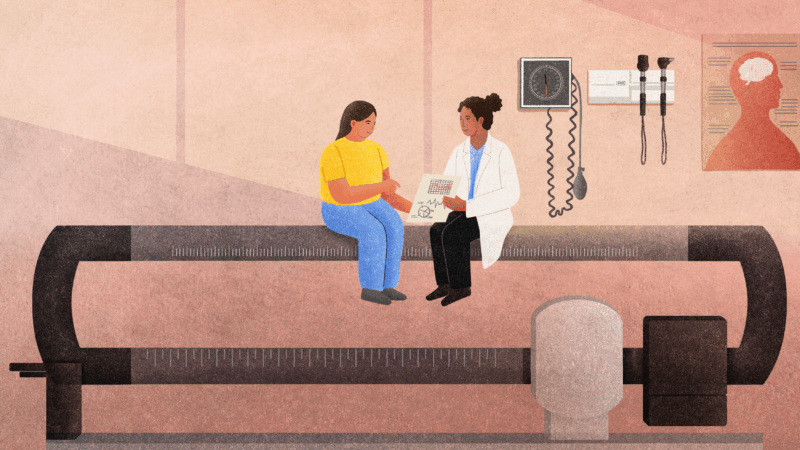
My doctor keeps focusing on my weight. What other health metrics matter more?
Our Real Talk with a Doc columnist explains how to push back if your doctor's obsessed with weight loss. And what other health metrics matter more instead.
