
Trump asks Congress to wipe out funding for public broadcasting
President Trump took yet another step Tuesday to place NPR and PBS at the center of his broader clash with major cultural institutions, formally asking Congress to take back the $1.1 billion it has set aside for all public broadcasters for the next two years.
A simple majority of lawmakers in each chamber must approve what’s technically known as a “rescission request” within 45 days for it to become law. With their slim leads in both the House and Senate, Republicans can afford just a few defections.
A House subcommittee hearing earlier this spring set the stage for Trump’s request. His Republican allies accused NPR and PBS of partisan bias. Lawmakers used the hearing as a springboard to argue for elimination of the federal funding that is funneled through the Corporation for Public Broadcasting to local stations and the public media networks.
The cuts to public broadcasting are part of a larger package from the White House of $9.4 billion in proposed clawbacks, which include funding for foreign aid. Senate Appropriations Committee Chair Susan Collins, R-Maine, told reporters she got an early copy. She noted it included a cut to the HIV/AIDS program started by President George W. Bush that is known as PEPFAR. Collins said it was “one of the most successful public health programs in the world without a doubt.”
“I will not support a cut in PEPFAR, which is a program that has saved literally millions of lives and has been extremely effective and well run,” Collins told reporters. She sidestepped a question on cuts to CPB and whether there were enough Senate Republicans to block the bill.
The rescission request follows grousing from conservative Republicans that the budget plan the House recently approved only after Trump visited Capitol Hill would significantly raise the federal debt in coming years.
Yet the $1.1 billion to be rescinded from public broadcasting would make little dent in the $36 trillion national debt, even as it represents the full funding levels for the Corporation for Public Broadcasting through the end of September 2027. Congress approved that funding in March as part of a stopgap spending bill the president signed.
While public broadcasting has enjoyed bipartisan support over its decades of existence, many Republicans consider it to have a liberal outlook or bias.
“NPR and PBS have increasingly become radical, left-wing echo chambers for a narrow audience of mostly wealthy, white, urban liberals and progressives,” Rep. Marjorie Taylor-Greene of Georgia, a vocal Trump ally, said at the subcommittee hearing earlier this spring.
Even so, Alaska Sen. Lisa Murkowski, a Republican, came out last month in favor of retaining federal funding, saying stations in her state provide vital services.
Some leading Democrats also have flagged their enduring support for the networks. Senate Minority Leader Chuck Schumer and Sen. Patty Murray, the leading Democrat on the Senate Appropriations Committee, accused Trump of “misplaced priorities.”
“President Trump is looking to go after PBS and NPR to settle political scores and muzzle the free press, while undermining foreign assistance programs that push back on China’s malign influence, save lives, and address other bipartisan priorities,” the two senators said in a statement.
Rep. Dan Goldman of New York, the Democratic co-chair of the House Public Broadcasting Caucus, sent a letter in May signed by 106 lawmakers – all Democrats – to House appropriators in which they advocated for maintaining financial subsidies.
“Without federal support for public broadcasting, many localities would struggle to receive timely, reliable local news and educational content, especially remote and rural communities that commercial newsrooms are increasingly less likely to invest in,” stated the letter obtained by NPR. “In states such as Alaska, Minnesota, North Dakota, and Texas, rural public radio stations are often the only weekly or daily news source in their communities. Even in places with other daily or weekly news sources, those outlets may not be directing resources toward original or locally based stories, leaving it to public stations to fill the gap.”
As relatively small as the public broadcasting funding is to the larger fiscal picture, the rescission request represents an expansion of Trump’s rhetorical attacks on NPR and PBS. He has previously sought to take control of CPB’s board by ordering the firing of three of its five members. He also issued an executive order stating that no money from CPB can go to NPR or PBS – and that other public broadcasters that receive CPB money cannot send it to the two national networks.
Those moves are now being questioned in court. CPB is privately incorporated in the District of Columbia and was set up by Congress with statutory safeguards against political influence. It sued the Trump White House over the attempt to fire CPB directors. Then NPR and three Colorado member stations sued the administration over Trump’s edict that no federal taxpayer money go to NPR or PBS. At the end of May, PBS and Minnesota affiliate Lakeland PBS followed up with their own joint lawsuit challenging the executive order.
Trump’s rescission request, however, is unquestionably legal. And it has prompted a flurry of lobbying. Officials from nearly 200 public radio stations flooded Capitol Hill in May to tell lawmakers about the value they say they bring to their communities and regions.
By law, Trump’s message kicks off the 45-day period for Congress to consider his request. It’s unclear when the House and Senate will take up the measure, but House Speaker Mike Johnson mentioned the rescissions package last week as part of a focus on enacting more spending cuts. He vowed to “act quickly.”
The last time a president successfully made a rescission request was a generation ago.
Disclosure: This story was reported and written by NPR Media Correspondent David Folkenflik and NPR Congressional Correspondent Deirdre Walsh. It was edited by Deputy Business Editor Emily Kopp, Managing Editor Vickie Walton-James and Managing Editor Gerry Holmes. Under NPR’s protocol for reporting on itself, no corporate official or news executive reviewed this story before it was posted publicly.
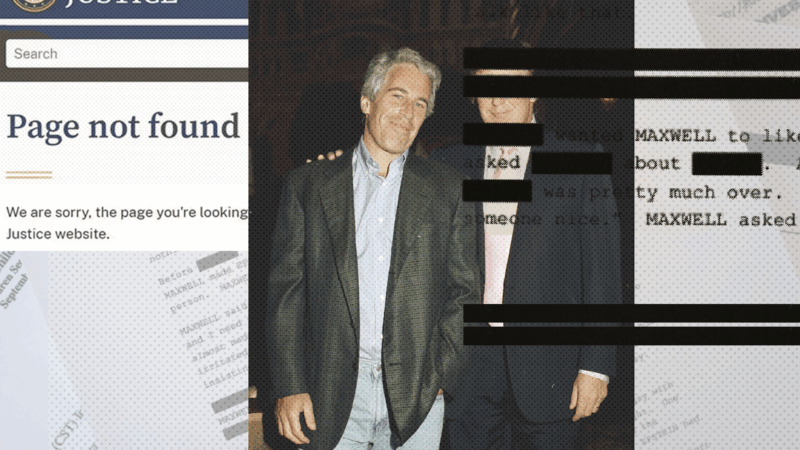
Justice Department publishes some missing Epstein files related to Trump
The Justice Department has published additional Epstein files related to allegations that President Trump sexually abused a minor after an NPR investigation found dozens of pages were withheld.
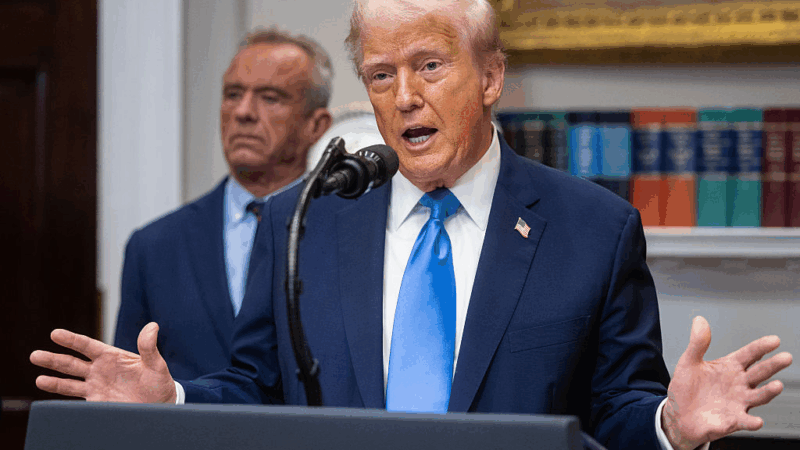
Pregnant women in ERs took less Tylenol after Trump autism warning
A study in The Lancet finds that pregnant women in emergency rooms used less Tylenol after President Trump said it could raise their babies' risk of autism. Scientists say there is no proven link.

Mixed reactions, including relief, greet news the Coast Guard is buying BSC campus
The U.S. Coast Guard will take possession of the 192-acre campus in the northeast corner of Birmingham’s Bush Hills Neighborhood and will begin work to refit it as a training center for officers and enlisted personnel.
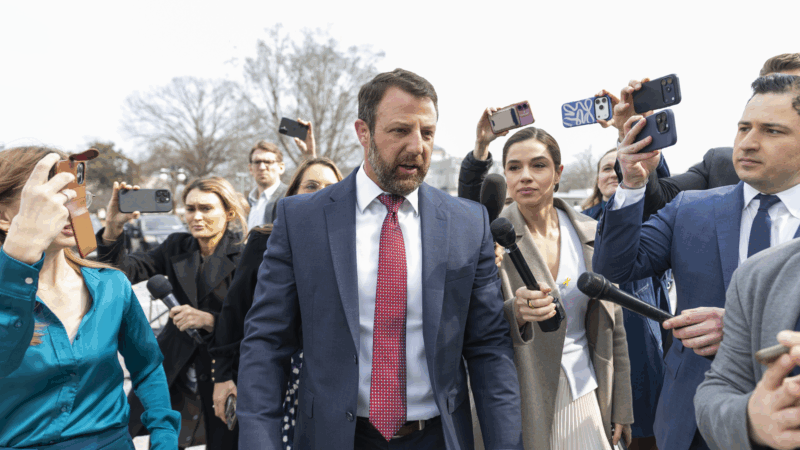
What you need to know about Sen. Markwayne Mullin, Trump’s new pick to lead DHS
President Trump announced Thursday that Sen. Markwayne Mullin, R-Okla., is his pick to replace Kristi Noem as the head of the Department of Homeland Security.

Travel industry pushes Congress to end DHS shutdown and pay federal security workers
With the busy spring break travel season looming, travel and aviation industry leaders urged Congress to end the stalemate over DHS funding before workers at TSA and ports miss a full paycheck.

Trump fires Kristi Noem as DHS chief, names Sen. Markwayne Mullin to replace her
President Trump has fired his homeland security secretary, Kristi Noem, and said Markwayne Mullin, a senator from Oklahoma, would replace her.
