
Trump aims to ‘unleash’ local police, but cautions against standing in the way of ICE

President Trump has signed two executive orders promising to “unleash high-impact local police forces” and to step up law enforcement pressure on “criminal aliens.“ While the orders are separate, they share a White House vision of reinvigorated local police who work closely with federal law enforcement.
The order on policing calls on federal agencies to provide “new best practices” to state and local police, improve police training and pay, and improve the tracking and reporting of crime statistics, among other measures popular with law enforcement.
The order doesn’t specify how to achieve those goals, but Peter Moskos, a former police officer and now professor at John Jay College of Criminal Justice, says on its face the first portion of the executive order is positive.
“These are indeed things the federal government can do to make communities safer,” says Moskos, who wrote Back From The Brink, an oral history of New York’s historic decline in crime in the 1990s.
But he doesn’t like other portions of the order. One section, titled “Holding State and Local Officials Accountable,” calls on the attorney general to pursue “legal remedies” against state and local officials for “discrimination or civil-rights violations” connected to DEI initiatives, as well as “obstruction” of law enforcement officers carrying out their duties.
“As a total package, it’s worrisome, because of the excessive reach of the Feds trying to control local policing,” Moskos says.
The threat of action over “obstruction” coincides with the signing of a second executive order on Monday that tells the attorney general and the secretary of homeland security to come up with a list of states and cities they believe are obstructing federal immigration enforcement.
It’s the latest step in the administration’s campaign against what it calls “sanctuary” jurisdictions. Previously, local jurisdictions that didn’t cooperate with Immigration and Customs Enforcement have faced the threat of funding cuts; now the White House says it may also pursue “legal remedies” for potential violations of federal law.
“It’s quite simple: obey the law, respect the law, and don’t obstruct federal immigration officials and law enforcement officials when they are simply trying to remove public safety threats,” White House press secretary Karoline Leavitt said of the order on Monday.
On Friday, the FBI arrested Wisconsin judge Hannah Dugan for allegedly trying to help a man avoid being arrested by ICE in her courtroom at the Milwaukee County Courthouse.
“When you cross that line to impedement (sic) or knowingly harboring, concealing an illegal alien from ICE, you will be prosecuted,” White House Border Czar Tom Homan said during the same press briefing. “Judge or not.”
With these executive orders, local law enforcement officials may wonder if they, too, could face that kind of prosecution.
“I’ve never suggested that anybody interfere with what the federal government has to do,” says Sheriff Paul Heroux, of Bristol County, Mass. But he says state law doesn’t allow him to accommodate ICE requests to hold people in jail beyond their release dates, and he doesn’t think the White House executive orders change that.
“I don’t know how the goal posts can move with an executive order,” Heroux says. He points out there’s already a federal law, known as 287(g), that sets up a program for the local departments that choose to help ICE. “I don’t believe that an executive order can supersede a U.S. law. I don’t think that’s how it works,” he says.
The executive order promising the “unleashing” of police also promises legal help to individual officers who “unjustly incur expenses and liabilities for actions” taken on duty. The order says the system, to be created by the attorney general, should include “private-sector pro bono assistance,” possibly a reference to the pro-bono work pledged by law firms that have recently come under pressure from the administration.
The order also calls on the attorney general to review all ongoing federal consent decrees and other binding legal arrangements with police departments, with an eye to terminate those that “unduly impede the performance of law enforcement functions.”
Consent decrees were once a favorite method of the Obama-era Justice Department to impose reforms on troubled police departments, but the tactic fell into disuse during the first Trump administration, and was slow to come back under Biden, as even some reformers acknowledged that consent decrees were often too burdensome on local police.
Now, in the second Trump administration, there’s been an exodus of lawyers from the Justice Department’s civil rights division, making it less likely that the DOJ will initiate new investigations and consent decrees directed at law enforcement.
“In its totality, it is incredibly concerning,” says Juan Cuba, executive director of the group Sheriff Accountability Action. “When you tie all these things together, trying to force sheriffs and local police to sign on to agreements with ICE, and then saying ‘if you get sued [we’ll defend you],’ it’s just going to encourage more bad actors.”
This historian dug up the hidden history of ‘amateur’ blackface in America
In her new book, Darkology, historian Rhae Lynn Barnes writes about how blackface and minstrel shows became one of the most popular forms of entertainment in 19th- and 20th-century America.
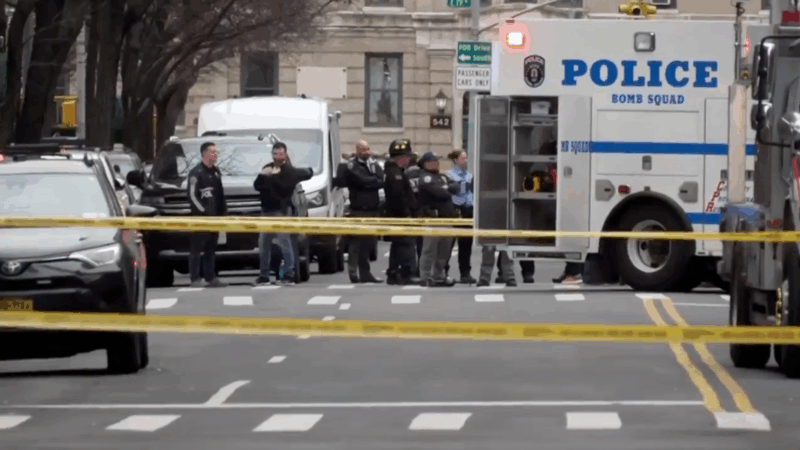
Attempted attack with explosives in New York City investigated as “ISIS-inspired terrorism”
New York City NYPD Commissioner: "Explosive devices that could have caused serious injury or death."
Trump is using immigration policy to suppress speech, lawsuit claims
A new lawsuit accuses the administration of violating the First Amendment by threatening the visas of researchers for work on disinformation and content moderation of social media.

Why young girls are disguised as boys in Afghanistan
The Taliban has released a video of an interrogation of a girl who passed as a boy. It's an age-old practice in this patriarchal society but now appears to be happening with some frequency.

Live Nation and Justice Department reach settlement in antitrust case
The trial, which began a week ago in a New York City courtroom, aimed to break up Live Nation and its subsidiary, Ticketmaster.

Microshelters for Birmingham’s unhoused set to open soon
The pilot program called Home For All involves building 14 small pallet homes to house those who would otherwise be living on the streets.
