
Trump again calls for FCC to revoke ABC and NBC licenses
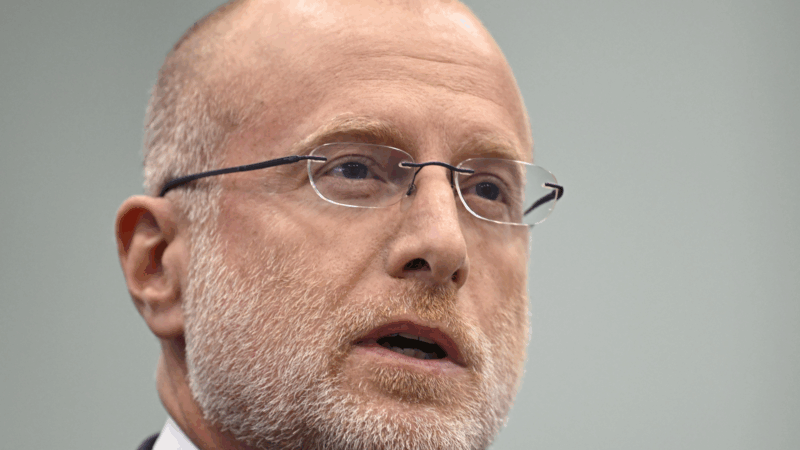
The nation’s chief broadcast regulator is, once more, at the center of President Trump’s culture war after the president launched a social media barrage Sunday night against ABC and NBC.
While the Federal Communications Commission has historically operated with a degree of independence from U.S. presidents, its new chairman, Brendan Carr, has muscularly followed Trump’s lead.
Carr has launched formal reviews of nearly all the major broadcast networks — ABC, CBS, NBC, NPR and PBS. He has also initiated investigations into the diversity, equity and inclusion actions of the corporate parents of ABC and NBC — the Walt Disney Co. and Comcast, respectively.
One network has so far escaped his scrutiny: Fox, which is owned by Trump political ally Rupert Murdoch.
Carr has also publicly supported lawsuits Trump filed as a private citizen against ABC and CBS, which yielded twin $16 million settlements from the networks’ parent companies. (Trump is suing Murdoch’s Wall Street Journal for reporting that he sent a sexually suggestive birthday greeting to the disgraced late financier Jeffrey Epstein.)
In a trio of social media posts late Sunday, the president attacked the media and accused ABC and NBC of being “two of the worst and most biased networks in history.” He said, without citing any evidence, that 97% of the stories they had aired about him were “BAD STORIES” and suggested they were an arm of the Democratic Party.
He then suggested the FCC should revoke the networks’ broadcast licenses for how they cover Republicans and conservatives or, barring that, should at least make them “pay BIG” for using the airwaves.
Carr and the FCC did not respond to several requests for comment. ABC and NBC declined comment for this story.
Earlier in the day, the networks’ Sunday morning public affairs shows included some pointed criticism of the FBI’s search of the home of Trump’s former national security adviser John Bolton, who has become a sharp opponent of the president.
Trump soon after trashed the host of ABC’s This Week, Jonathan Karl, over his hair (“He looks absolutely terrible!”) before attacking a former ally, former New Jersey Gov. Chris Christie, who assailed the FBI investigation of Bolton on the show.
To be clear, the national networks do not own broadcast licenses to use the public airwaves, which are granted and reviewed by the FCC. Local stations do hold those licenses, however. And ABC corporate parent Walt Disney owns 10 stations, while Comcast, the parent of NBC, owns 36.
These attacks on the media are of course nothing new for Trump, who has long accused news outlets of unfair coverage.
But the impact that the attacks have had in his second term is new: The lawsuits that ABC and CBS agreed to settle were, according to many outside legal experts, ones Trump was unlikely to win in court. Separately, at Trump’s behest, the Republican-led Congress also killed all federal funding for public media, including NPR, throwing the system into crisis.
FCC reviews could thwart business plans
According to current and former colleagues at the FCC, Carr was previously seen as a relatively conventional free market conservative on the commission, eager to strip the agency of what he viewed as needless restrictions and bureaucratic red tape. And he has indeed as chairman embarked on an effort to do that, with initiatives to cut back regulations.
Carr has, for example, started a review of whether it’s time to scrap regulations barring local television companies from owning stations in markets that reach more than 39% of the nation’s population. Nexstar, the largest local TV company in the U.S., has proposed buying all of Tegna’s TV stations, which would let it reach 80% of the country — more than double the currently allowed level.
And yet the investigations and reviews Carr has initiated — including over journalistic choices by the networks’ news divisions — have served to tie the national news outlets in knots and have left free speech concerns in the rearview mirror. Were parent companies Disney or Comcast, which have vast entertainment holdings, to enter into major deals requiring approval from federal regulators at the FCC or other agencies, the FCC reviews could prove nettlesome — or costly.
Early in his tenure, Carr resurrected a review of CBS’ 60 Minutes that had been dismissed by his Democratic predecessor. That investigation proved a hurdle to Skydance Media’s acquisition of the network’s parent company, Paramount Global, given that the agency had to sign off on the transfer of the licenses of more than two dozen CBS affiliate stations as part of the deal.
July proved a pivotal month: Paramount agreed to pay the $16 million to settle Trump’s lawsuit against CBS. Carr met days later with Skydance chief David Ellison, who assured him of “Skydance’s commitment to unbiased journalism and its embrace of diverse viewpoints.” And then — and only then — did Carr’s FCC approve the merger.
The pressure point is the point: The journalists at the networks under investigation and highlighted by the president are highly aware of the administration’s actions — and words that encourage still more actions.

Pentagon labels AI company Anthropic a supply chain risk
The Pentagon said in a statement Thursday that it has "officially informed Anthropic leadership the company and its products are deemed a supply chain risk, effective immediately."
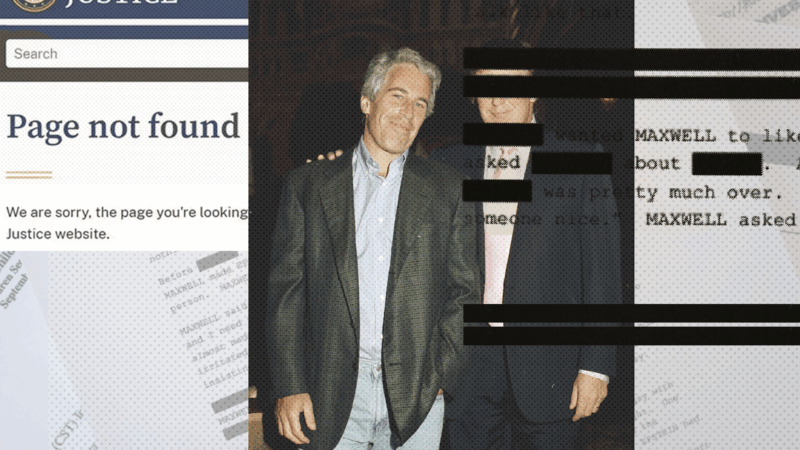
Justice Department publishes some missing Epstein files related to Trump
The Justice Department has published additional Epstein files related to allegations that President Trump sexually abused a minor after an NPR investigation found dozens of pages were withheld.
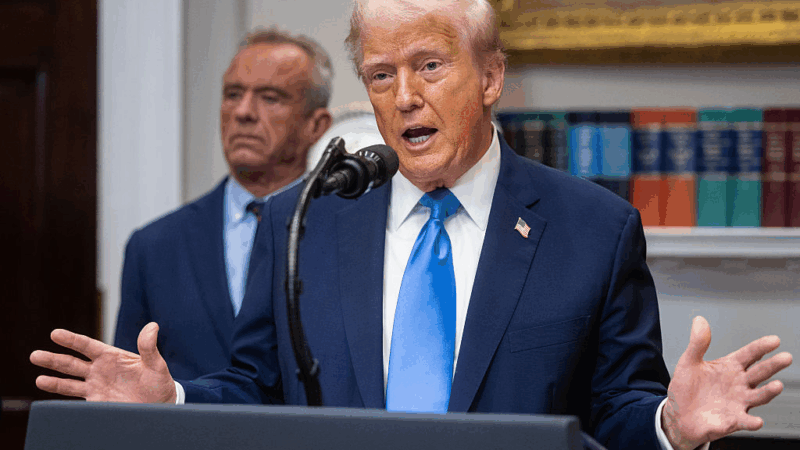
Pregnant women in ERs took less Tylenol after Trump autism warning
A study in The Lancet finds that pregnant women in emergency rooms used less Tylenol after President Trump said it could raise their babies' risk of autism. Scientists say there is no proven link.
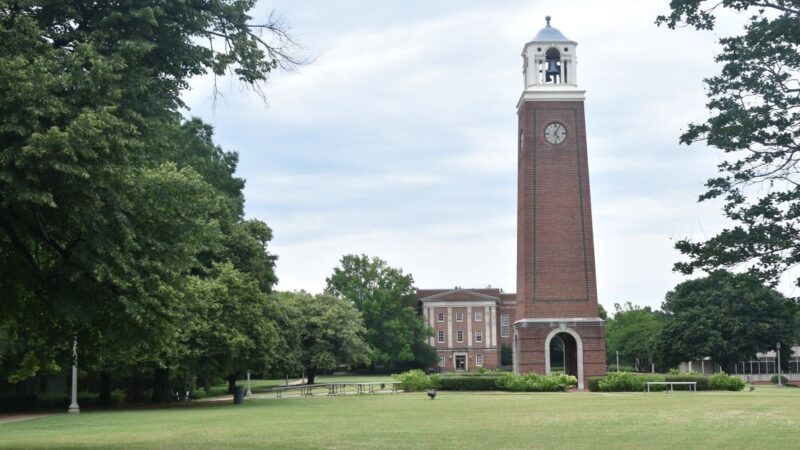
Mixed reactions, including relief, greet news the Coast Guard is buying BSC campus
The U.S. Coast Guard will take possession of the 192-acre campus in the northeast corner of Birmingham’s Bush Hills Neighborhood and will begin work to refit it as a training center for officers and enlisted personnel.
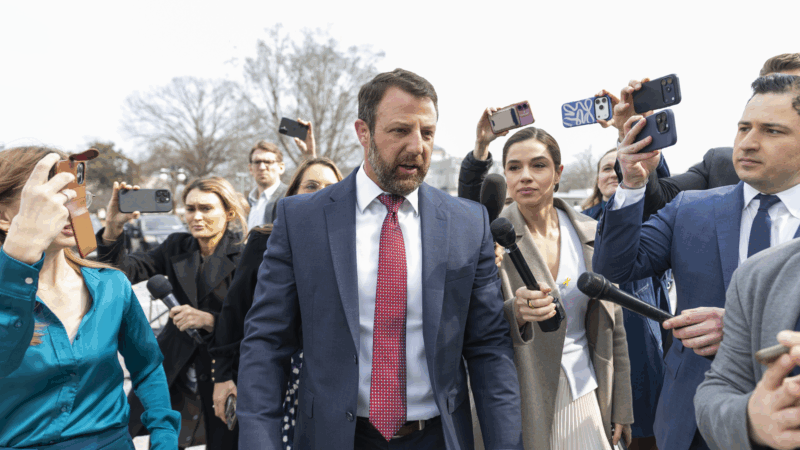
What you need to know about Sen. Markwayne Mullin, Trump’s new pick to lead DHS
President Trump announced Thursday that Sen. Markwayne Mullin, R-Okla., is his pick to replace Kristi Noem as the head of the Department of Homeland Security.
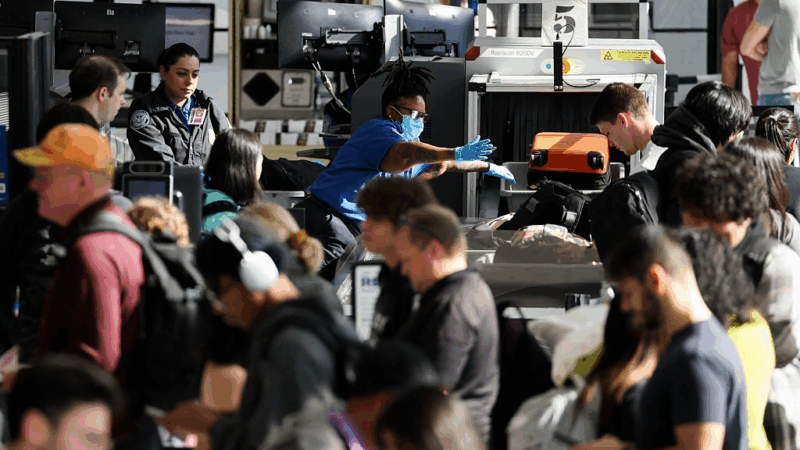
Travel industry pushes Congress to end DHS shutdown and pay federal security workers
With the busy spring break travel season looming, travel and aviation industry leaders urged Congress to end the stalemate over DHS funding before workers at TSA and ports miss a full paycheck.
