
Trump administration sues all of Maryland’s federal judges over deportation order
The Trump administration on Tuesday filed a lawsuit against all 15 federal judges in Maryland over an order blocking the immediate deportation of migrants challenging their removals, ratcheting up a fight with the federal judiciary over President Donald Trump’s executive powers.
The remarkable action lays bare the administration’s determination to exert its will over immigration enforcement as well as a growing exasperation with federal judges who have time and again turned aside executive branch actions they see as lawless and without legal merit.
“It’s extraordinary,” Laurie Levenson, a professor at Loyola Law School, said of the Justice Department’s lawsuit. “And it’s escalating DOJ’s effort to challenge federal judges.”
At issue is an order signed by Chief Judge George L. Russell III and filed in May blocking the administration from immediately removing from the U.S. any immigrants who file paperwork with the Maryland district court seeking a review of their detention. The order blocks the removal until 4 p.m. on the second business day after the habeas corpus petition is filed.
The administration says the automatic pause on removals violates a Supreme Court ruling and impedes the president’s authority to enforce immigration laws.
The Republican administration has been locked for weeks in a growing showdown with the federal judiciary amid a barrage of legal challenges to the president’s efforts to carry out key priorities around immigration and other matters. The Justice Department has grown increasingly frustrated by rulings blocking the president’s agenda, accusing judges of improperly impeding the president’s powers.
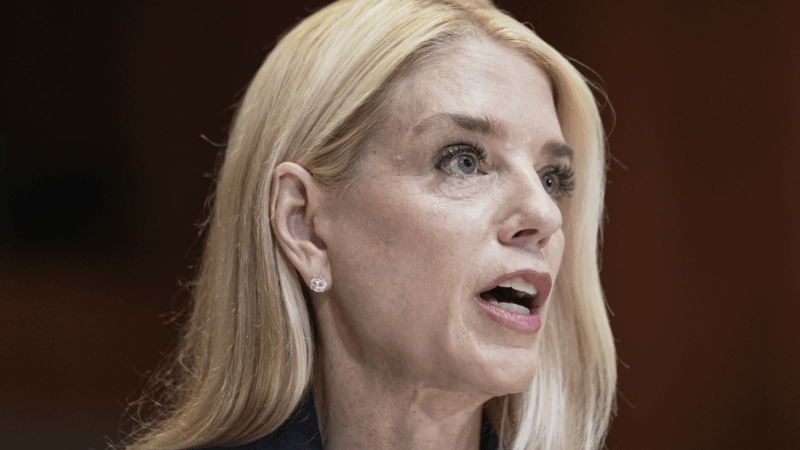
“President Trump’s executive authority has been undermined since the first hours of his presidency by an endless barrage of injunctions designed to halt his agenda,” Attorney General Pamela Bondi said in a statement Wednesday. “The American people elected President Trump to carry out his policy agenda: this pattern of judicial overreach undermines the democratic process and cannot be allowed to stand.”
A spokesman for the Maryland district court declined to comment.
Trump has railed against unfavorable judicial rulings, and in one case called for the impeachment of a federal judge in Washington who ordered planeloads of deported immigrants to be turned around. That led to an extraordinary statement from Supreme Court Chief Justice John Roberts, who said “impeachment is not an appropriate response to disagreement concerning a judicial decision.”
Among the judges named in the lawsuit is Paula Xinis, who has called the administration’s deportation of Kilmar Abrego Garcia to El Salvador illegal. Attorneys for Abrego Garcia have asked Xinis to impose fines against the administration for contempt, arguing that it ignored court orders for weeks to return him to the U.S.
The order signed by Russell says it aims to maintain existing conditions and the potential jurisdiction of the court, ensure immigrant petitioners are able to participate in court proceedings and access attorneys and give the government “fulsome opportunity to brief and present arguments in its defense.”
In an amended order, Russell said the court had received an influx of habeas petitions after hours that “resulted in hurried and frustrating hearings in that obtaining clear and concrete information about the location and status of the petitioners is elusive.”
The Trump administration has asked the Maryland judges to recuse themselves from the case. It wants a clerk to have a federal judge from another state hear it.
James Sample, a constitutional law professor at Hofstra University, described the lawsuit as further part of the erosion of legal norms by the administration. Normally when parties are on the losing side of an injunction, they appeal the order — not sue the court or judges, he said.
On one hand, he said, the Justice Department has a point that injunctions should be considered extraordinary relief; it’s unusual for them to be granted automatically in an entire class of cases. But, he added, it’s the administration’s own actions in repeatedly moving detainees to prevent them from obtaining writs of habeas corpus that prompted the court to issue the order.
“The judges here didn’t ask to be put in this unenviable position,” Sample said. “Faced with imperfect options, they have made an entirely reasonable, cautious choice to modestly check an executive branch that is determined to circumvent any semblance of impartial process.”

In pictures: Winter storm slams the east coast
Photos of cities in Connecticut, New York, New Jersey and Massachusetts as they cope with a powerful winter storm.

The FDA creates a quicker path for gene therapies
The Food and Drug Administration aims to evaluate treatments for rare diseases based on plausible evidence that they would work — without requiring a clinical trial first.

BAFTAs apologize after guest with Tourette syndrome uses racial slur during ceremony
A man with Tourette syndrome shouted a racial slur and other offensive remarks during the BAFTA awards ceremony Sunday. The BBC did not edit out his outbursts in its delayed broadcast.

‘Everything was in pieces:’ Lindsey Vonn describes grueling surgery on broken leg
In a recent video, the Olympic skier credits her surgeon with saving her leg from potential amputation.

A new lawsuit alleges DHS illegally tracked and intimidated observers
Observers watching federal immigration enforcement in Maine who were told by agents they were "domestic terrorists" and would be added to a "database" or "watchlist" are now part of a new federal class action lawsuit.

Kate Hudson on regret, rom-coms and finding a role that hits all the notes
Hudson always wanted to sing, but feared it would derail her acting career. Now she's up for an Oscar for her portrayal of a hairdresser who performs in a Neil Diamond tribute band in Song Sung Blue.
