
To ‘graduate’ from poverty, they can borrow to build a business. So why aren’t they?
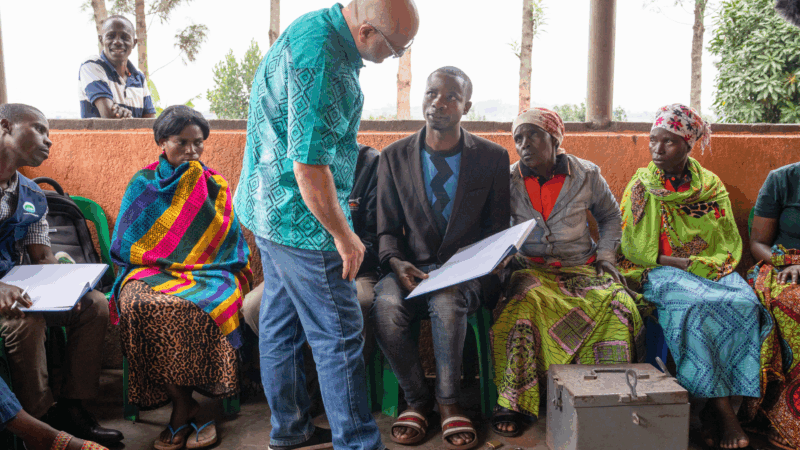
KYEGEGWA, Southwest Uganda — Economist Dean Karlan was perplexed. He’d come to a remote part of Uganda to check on a program he’d helped design to lift people out of extreme poverty. Only things weren’t going exactly as expected.
The program applies a method known as the Graduation Approach. Its basic logic: You need money to make money.
Participants are typically given a grant of about $200 plus coaching to build a small business. It might be raising crops or animals, hairstyling, even selling secondhand clothes. Graduation programs have had notable success in some 20 countries. A U.N. report calls them a “promising ladder from poverty.”
Karlan is an expert on poverty solutions — founder of the well-regarded Innovation for Poverty Action research group and chief economist for the United States Agency for International Development until it was dismantled by the Trump administration.
For the Uganda program, he came up with an innovation that he hoped would provide a stronger push out of poverty. Instead of individual grants, block grants of around $4,000 were given to groups of about 20 people to manage jointly. They could borrow larger sums than $200 — and when they paid back the loan with interest, the interest would be distributed among all members.
Each group comes up with its own rules for the grant, including borrowing limits, the interest rate and deadlines for repaying loans.
When Karlan met with participants on his two-year check-in, he was surprised to see that half the money was sitting untouched in the bank. People were not borrowing as much as they could.
What he learned as he spoke to the people in the program reveals the multilayered challenges that ultra-poor people face. And how even the most successful anti-poverty projects need to evolve in response to global shocks, such as the Trump administration’s overhaul of foreign aid.
Goat potential
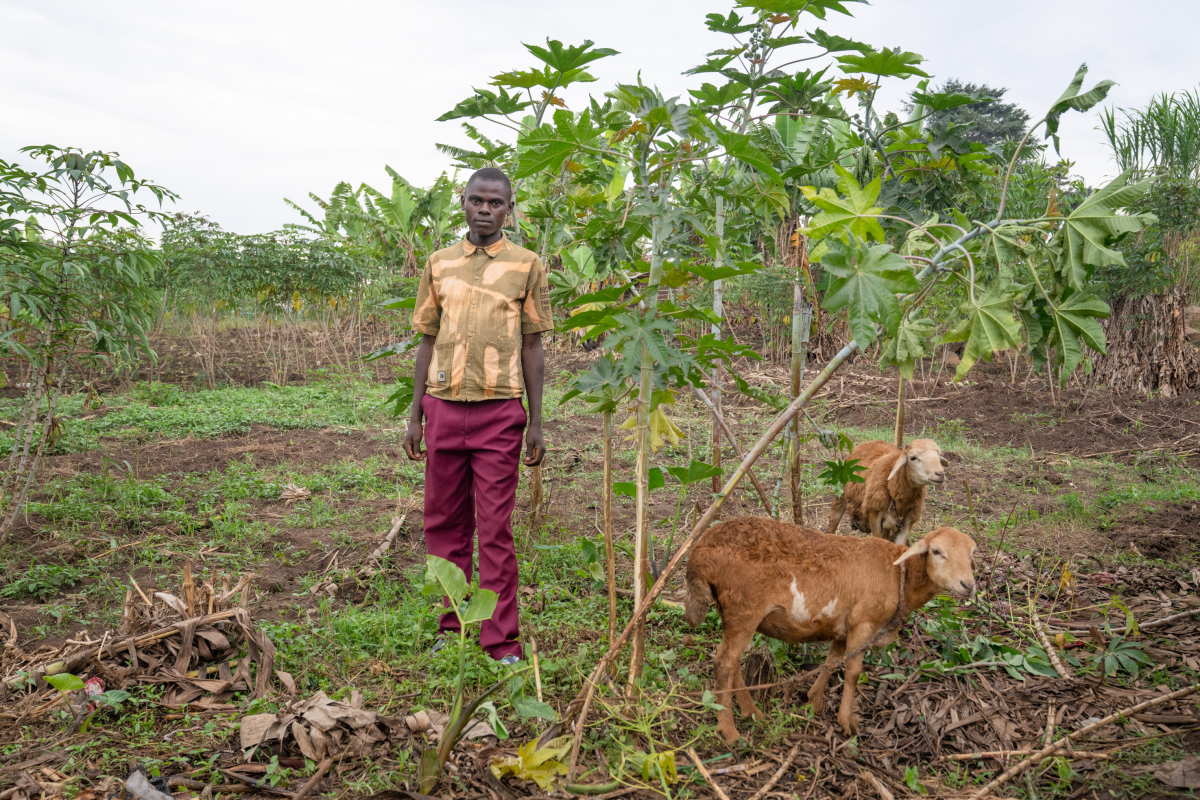
One of the participants of the program that Karlan meets is Jacquerin Kabanyana, a refugee from the Democratic Republic of Congo.
Most of the homes in the refugee camp near Kyegegwa are one-room huts with sheet metal roofs. Kabanyana and his family of 11 — parents, sisters, nieces and nephews — used to all live crammed in a hut like that.
In 2018, the 23-year-old and his family fled war in DRC. They sought refuge in neighboring Uganda. But life in a remote refugee settlement is difficult. For years, the only way for Kabanyana — the eldest son — to make money and support his family was to do occasional daily labor in fields.
The family survived on about $5 a week. Some days they didn’t eat, says Kabanyana. And they couldn’t afford school fees for his nieces and nephews.
Then came the graduation program that Karlan helped design. With a $28 million donation from the IKEA Foundation, a total of 14,000 households were eligible — both refugees and local Ugandans. The program has a jargon-laden name but a cheerful acronym. It’s Sustainable Market Inclusive Livelihood Pathways to Self-Reliance — aka SMILES.
In 2022, Kabanyana got $74 from the grant and started raising and selling goats. In two years, he’s more than doubled his weekly income to about $13 and is building a larger, sturdier home for his family. He’s expanded his livestock business to sheep and chickens.
SMILES is run by the non-profit group AVSI Foundation, which also hires and trains the coaches who work with Kabanyana and others. Karlan and researchers from Innovation for Poverty Action are monitoring the progress of the participants with data collected throughout the duration of the program, which ends in 2027. And they’ll track them for a couple of years after.
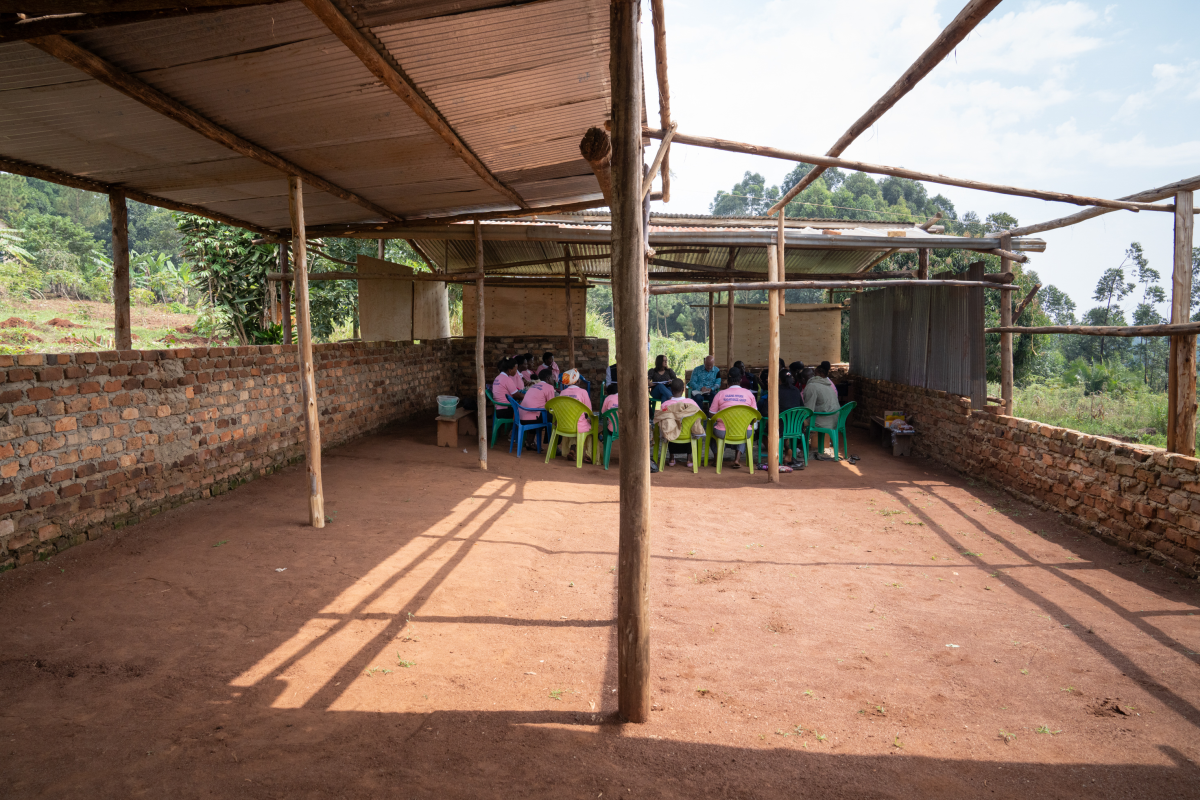
Twice a month, each group of 20 households meets with their coaches to talk about how their businesses are going. While in Uganda, Karlan and his team attend several of those meetings, digging deep into why people have not been tapping the block grant to the fullest extent.
In the meeting with Kabanyana’s group, Karlan asks him about his goat business.
“I took out 500,000 shillings [about $140] to buy two goats,” Kabanyana says.
“Why not have a budget for four goats? And say ‘my budget is a million, so that I can buy four goats’?” Karlan asks.
“I wanted to first see how the market is,” Kabanyana replies. “If I am able to manage the new business first and then I would borrow more the next time.”

“So how much are you planning to take out from the block grant next?” asks Karlan. It turns out, it’s even less: 300,000 Ugandan shillings — about $80.
Karlan says he’s surprised, because Kabanyana’s business has been successful. So why is he borrowing less rather than more?
“Recently, I noticed that when I’m at the market, people have less money to spend,” Kabanyana says.
He’s referring to the fact that many of the refugees here were getting monthly cash to buy food from the World Food Programme — provided by the United States and eliminated in the Trump administration’s overhaul of foreign aid in the spring of 2025.
Several other members in the group agree with his perspective.
“Because of the cutbacks in aid, there was less economic activity going on, the markets were not as thriving — and they could actually see that difference,” Karlan says, adding that he had not expected the aid cuts to have such an immediate and jarring impact on the program.
Other group members tell Karlan they’re not taking out loans because the bank they need to visit to borrow money was too far from where they lived. For some it was an errand that took the whole day. And there were those who said they simply didn’t trust the bank.

Antoinetta Justine, 35, stands up and speaks passionately. Pointing to a tin box in the middle of the room that has the group’s block grant records and some cash for emergency needs, she says she is afraid to take out too much from the grant.
“You see this money here?” she says, “It’s where our hearts are. It feeds our families. That’s why we are more responsible about it.”
Rita Larok, AVSI’s director of programs, says she appreciates that responsibility and offers gentle encouragement.
“This money is supposed to help you make more money,” Larok says. She wants them to borrow more. “Because when you borrow little, you earn little interest, and you share little.”
Probing the reluctance to borrow
A lot of the hesitancy comes down to fear of risk, Karlan says.
“What we’re seeing clearly is that it’s deeper than you need money to make money,” he says. “You also need to be able to take on risk to make money. And that’s a double whammy for someone who’s poor.”
Households living on the very edge feel that they need to do everything they can to preserve what little they have, says Karlan — so it may be challenging for them to take full advantage of the grant or other opportunities.
“And that beats people down so that someone who is particularly poor stays poor,” he says.
And while the fear of taking financial risks may be universal, the consequences of failure are ever harsher for people in poverty, Karlan says. The night may come when they have to tell their hungry children there is no food to eat.
Why the block grant?
Part of the impetus for the block grant innovation, according to Karlan, was to help address some of the traps of poverty: “The big picture is about providing a faster on-ramp for households to be able to start up larger and have a better and more stable source of income.” And someone who’s had success in growing a business can go for more capital.
“It is designed to reward the high performing members without leaving the most vulnerable behind,” he says. Those who are “generating income” from the grant share their profits with the interest they pay.
Think of it in terms of a basketball coach who has to maximize the play time for his best players in order to achieve a win as a team.

There’s an added urgency to finding a faster way out of poverty, as a result of the Trump administration’s overhaul of foreign aid.
Before January 2025, USAID was becoming a top funder of the graduation model, according to Karlan. As chief economist at the agency from November 2022 until this February, he saw financial support for such programs scale up by nearly half a billion dollars.
All that has now changed. NPR reported on a USAID-funded graduation program — also in Uganda, also run by AVSI Foundation — that the administration terminated just as it was about to launch. Thousands of households were on the cusp of receiving life-changing support and then told it was shut down.
Development assistance and poverty solutions have not appeared in the administration’s new foreign aid strategy so far.
NPR reached out to the State Department for comment on whether the U.S. will fund any graduation programs but did not receive a response.
Given this new environment, Karlan is hopeful that block grants could help: “If we can find a better way of squeezing more juice out of whatever we’re doing, then you can expand and help more people. And instead of going to 1,000 communities, we can go to 2,000 communities.”
Time for tweaks
After days of conversations with participants and coaches, Karlan and the AVSI team decide to make some tweaks.
Instead of traveling to a physical bank, participants will be able to borrow from the block grant via mobile money — an electronic wallet system popular in many lower income countries.

Karlan and AVSI’s Rita Larok say the coaches will also need to keep encouraging participants and building confidence.
“Over time the block grant will get used more and more because of the group coming together and knowing each other better,” Karlan says.
In discussions with groups in the remote villages, Karlan and AVSI staff gently tease participants about the block grant money they haven’t been spending.
During one such meeting, the leader of the group, Tumurhiwe Justine, says they have a request for Karlan, whom she addresses as “jubu jubu.” It means high authority leader in Runyankore.

“We would like to ask you as jubu jubu to help us get a tractor, so we can do more farming,” Justine says.
Karlan replies that they don’t really need him to be the high authority to get that tractor. They can just buy it themselves.
“You have all that block grant money sitting in the bank,” he says, as the room erupts in giggles and heads nod.
Transcript:
AILSA CHANG, HOST:
You need money to make money. We have all heard this before, but what are people living in extreme poverty supposed to do with that? How do they make it out of poverty? That is the problem for almost a billion people all around the world. And in response, some programs give people cash to start a business, and they coach people on how to build a sustainable income. But these efforts are dealing with some major global shocks. NPR’s Fatma Tanis reports from Uganda on how these programs keep evolving.
(SOUNDBITE OF ROOSTER CROWING)
FATMA TANIS, BYLINE: Rolling hills are topped with lush greenery in this remote part of southwest Uganda. Most homes here are one-room huts with sheet metal roofs.
JAKARIN KABANANA: (Non-English language spoken).
TANIS: Twenty-three-year-old Jakarin Kabanana (ph) and his family used to live in a hut like that. They fled here in 2018 from the war in the Democratic Republic of the Congo.
KABANANA: (Non-English language spoken).
(SOUNDBITE OF CHICKEN CLUCKING)
TANIS: But now, Kabanana, the oldest son, is building a much larger and sturdier house.
KABANANA: (Non-English language spoken).
TANIS: It’s a big step up for this family of 11. They used to survive on just $5 a week. Sometimes they didn’t eat, and they couldn’t afford school fees for the children.
KABANANA: (Non-English language spoken).
TANIS: Then in 2022, Kabanana got a grant for $74. He started raising and selling goats. This break came from a $28 million donation from the IKEA Foundation. Fourteen thousand households in this region got the same grant. They can use it to start a steady business like selling secondhand clothes or growing food. They also get coaching. It’s called The Graduation Approach. Now Kabanana earns $13 a week from raising goats. It’s how he’s built this new house.
(SOUNDBITE OF FOOTSTEPS)
TANIS: The people who got the grant meet up twice a month in groups of 20, along with a coach.
(SOUNDBITE OF METAL CLINKING)
TANIS: This group meets at the school. In the middle of the circle on the floor is a metal box with some petty cash and a ledger.
(APPLAUSE)
TANIS: Today there’s other visitors, too.
DEAN KARLAN: My name is Dean Karlan. I’m a professor.
TANIS: Economist Dean Karlan, who designed the program, along with a team of researchers and the NGO that’s running it, AVSI Foundation.
KARLAN: And so we want to learn as much as we can from what you’ve experienced so far.
TANIS: Now, there are programs in many low-income countries that apply The Graduation Approach, but this one is trying something new. Karlan is an expert in poverty solutions at Northwestern University, and he’s been wondering, could you get more out of the same pot of money? So instead of giving each household a one-time grant of, say, $200, a group of 20 households gets around $4,000 to manage jointly. They use the pot of money to loan themselves cash for their businesses. If those do well, they pay back the money and keep the profit. They also pay interest to the group on the loans, which then gets distributed to all 20 members. It’s called the block grant, and Karlan says it essentially creates a mini bank for the group.
KARLAN: The big picture is about providing a faster on-ramp for households to be able to start up large and having a better and more stable source of income.
TANIS: And funding for global development programs like this is being cut.
KARLAN: If we can find a better way of squeezing more juice out of whatever we’re doing, then you can expand and help more people. And instead of going to a thousand communities, we can go to 2,000 communities.
TANIS: But in discussion after discussion, Karlan notices something perplexing. People have not been borrowing from the block grant as much as they could be. In fact, half of the money has been sitting safely in the bank. Karlan asks Kabanana about his goat business. Why did he only take out 500,000 Ugandan shillings, about $140, from the block grant to buy two goats?
KARLAN: Why not have a budget for four goats and say my budget is a million and I – so that I can buy four goats?
KABANANA: (Non-English language spoken).
TANIS: He says, “first, I wanted to see how the market is, and if I’m able to manage it, then I’ll borrow more.” Karlan then asks him how much he’s planning to borrow next time. But it turns out it’s even less, 300,000 shillings, about $80.
KARLAN: So I was surprised ’cause now he knows this is a successful business. He knows how to do it. So why is he borrowing less rather than more?
KABANANA: (Non-English language spoken).
TANIS: Kabanana says, “recently, I noticed that when I’m at the market, people have less money to spend.” He’s referring to the fact that many of the refugees here were getting cash aid to buy food, but the Trump administration cut that earlier this spring.
KARLAN: Because of the cutbacks in aid, there was less economic activity going on. The markets were not as thriving, and they could actually see that difference.
TANIS: Other group members tell Karlan they’re not taking out loans because they felt the bank was too far from where they lived. And one woman says she’s afraid to take out too much. Her name is Antoineta Justine (ph). She points to the metal box on the floor.
ANTOINETA JUSTINE: (Non-English language spoken).
TANIS: “This money here,” she says, “it’s where our hearts are. It feeds our families. That’s why we’re more responsible about it.” AVSI’s director of programs, Rita Larok, chimes in, saying she appreciates that.
RITA LAROK: However, this money is supposed to help you make more money. Because when you borrow a little, you earn little interest, and you share little.
TANIS: For Karlan, it’s a stark reminder of how challenging it can be to address poverty.
KARLAN: What we’re seeing today, clearly, from these conversations, is that it’s deeper than you need money to make money. You also need to be able to take on risk to make money. And that’s a double whammy for someone who’s poor.
TANIS: It can be really hard for people in poverty to take advantage of opportunities. There’s fear that failure might leave you worse off than before. After all the meetings, Karlan and AVSI staff put their heads together. They decide to make some tweaks. Instead of a bank, they’ll use mobile money online to help people access the block grant easily. And the coaches will have to keep encouraging the groups.
KARLAN: Over time, the block grant will get used more and more because of the group coming together and knowing each other better. So that’s one thing that we’re going to look out for in the next phase of this project.
UNIDENTIFIED CHILD: (Non-English language spoken).
TANIS: Back in the village, Karlan meets with a different group that shares a block grant. They gather under a gazebo surrounded by banana trees.
TUMORIWAY JUSTINE: (Non-English language spoken).
TANIS: This group’s leader, Tumoriway Justine (ph), has a request for Karlan. AVSI’s Ruth Ninsiima is translating. She says Justine has been calling Karlan a (speaking Runyankore), which in Runyankore means the top leader.
RUTH NINSIIMA: She’s referring to you as (speaking Runyankore), like high authority, leader.
TANIS: And what Justine wants Karlan to do is to get them a tractor to do more farming.
NINSIIMA: High authority, if you can get them a tractor, oh, they’ll be glad.
KARLAN: If they’re leftover money in the block, yeah.
T JUSTINE: (Laughter).
TANIS: But Karlan says they don’t need him to be the high authority to get that tractor. They can just buy it with the money they still haven’t used that’s sitting in the bank.
NINSIIMA: There’s actually some. Yes. (Non-English language spoken).
(LAUGHTER)
TANIS: Fatma Tanis, NPR News in southwest Uganda.
Bill making the Public Service Commission an appointed board is dead for the session
Usually when discussing legislative action, the focus is on what's moving forward. But plenty of bills in a legislature stall or even die. Leaders in the Alabama legislature say a bill involving the Public Service Commission is dead for the session. We get details on that from Todd Stacy, host of Capitol Journal on Alabama Public Television.
My doctor keeps focusing on my weight. What other health metrics matter more?
Our Real Talk with a Doc columnist explains how to push back if your doctor's obsessed with weight loss. And what other health metrics matter more instead.

Baz Luhrmann will make you fall in love with Elvis Presley
The new movie is made up of footage originally shot in the early 1970s, which Luhrmann found in storage in a Kansas salt mine.
Forget the State of the Union. What’s the state of your quiz score?
What's the state of your union, quiz-wise? Find out!

A team of midlife cheerleaders in Ukraine refuses to let war defeat them
Ukrainian women in their 50s and 60s say they've embraced cheerleading as a way to cope with the extreme stress and anxiety of four years of Russia's full-scale invasion.
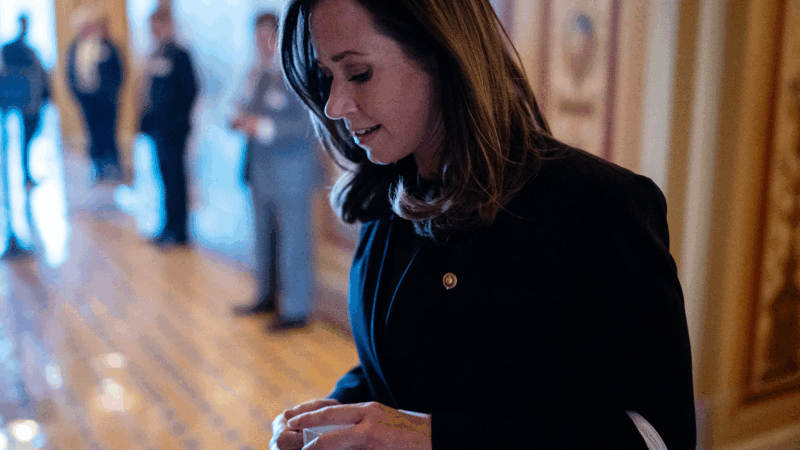
SNL mocked her as a ‘scary mom.’ In the Senate, Katie Britt is an emerging dealmaker
Sen. Katie Britt, Republican of Alabama, is a budding bipartisan dealmaker. Her latest assignment: helping negotiate changes to immigration enforcement tactics.
