
Tick tock: Congress has 14 legislative days to stop a government shutdown
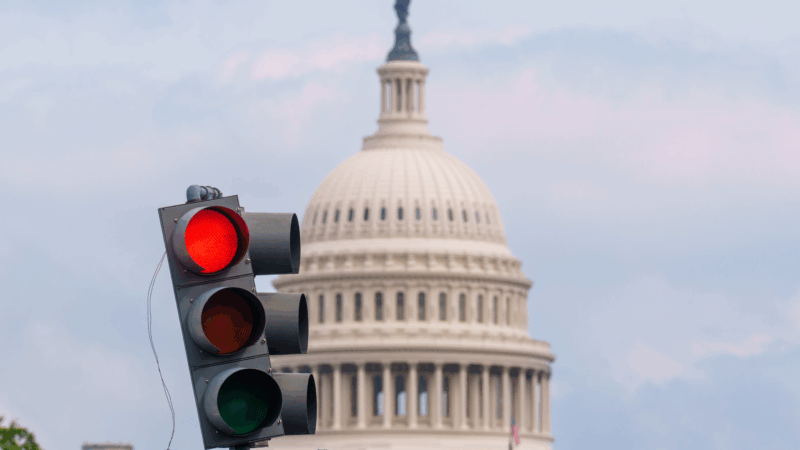
Lawmakers return to Capitol Hill this week after an extended recess with a packed to-do list, top of which is efforts to prevent a government shutdown when funding for federal agencies expires at the end of the month.
The House and Senate are both scheduled to be out out the week of September 22, which means Congress has 14 legislative days to either make a bipartisan deal to extend funding or shut the government down.
Lawmakers are expected to turn to a short-term funding bill, known as a continuing resolution, to tide agencies over temporarily. But even a stopgap bill will need bipartisan support.
A long-term funding solution will be even harder to craft. A key subcommittee in the House will hold a markup Tuesday evening on the fiscal year 2026 funding proposal, published Monday evening. The provides a total discretionary allocation of $184.5 billion, nearly $14 billion below the fiscal year 2025 level.
“This bill prioritizes cutting-edge biomedical research, strengthens our medical supply chains and biodefense infrastructure, and ensures support for rural hospitals and public health programs,” said House Chairman Tom Cole, R-Okla., in a statement. “With each measure, we reaffirm that Making America Healthy Again is not just a slogan, but a promise.”
Congressional Democrats have denounced the proposal’s funding slashes for the Centers for Disease Control and Prevention, the National Institutes of Health, funding for need-based financial aid for students and programs that support maternal and child health.
“This bill is an attack on the programs and services that Americans depend on at every stage of their life,” the top Democrat on the Committee, Rep. Rosa DeLauro, D-Conn., said in a statement.
The bipartisan cooperation necessary to avoid the shutdown was undermined further by the White House’s announcement late last week of a $5 billion “pocket rescission” of foreign aid late. Senate Appropriations Chair Susan Collins, R-Maine, referred to the move as “unlawful” and Congressional Democrats say it’s another example of the executive branch chipping away at the power of the legislative branch.
“President Trump and his allies in Congress have already been shutting down whole parts of the government, through rescissions and now through unconstitutional and dangerous pocket rescissions,” Delaware Sen. Chris Coons told NPR. “If they continue in those efforts, I won’t support keeping the government open September 30, because they’re already closing it in ways that are illegal and inappropriate.”
As for Democratic leadership, Senate Minority Leader Chuck Schumer, D-N.Y., said the Trump administration is “waging an all-out war against Congress’ Article I authority and the constitutional balance of power.”
“Senate Republicans must decide: stand up for the legislative branch or enable Trump’s slide toward authoritarianism,” he said in a letter to his colleagues Tuesday morning.
Notably, Schumer emphasized that he and House Minority Leader Hakeem Jeffries are “aligned in our shared priorities.” In March, House Democrats were outraged when Schumer announced his plans to provide a key Democratic vote Republicans needed to advance a spending bill.
Jeffries, told colleagues in his own letter that House Democrats “have repeatedly made clear that we are prepared to pass a bipartisan spending bill in advance of the deadline.”
“However, any agreement must meet the needs of the American people in terms of their health, safety, national security and economic well-being. We will not rubber stamp partisan Republican legislation that hurts everyday Americans and continues their unprecedented attack on healthcare.”
While funding the government is a tall order, it’s just one of the many agenda items lawmakers are contending with this month.
National Guard in D.C.
While the House Oversight Committee plans to put forward various D.C. crime bills, the National Guard remains in the nation’s capital.
Trump is legally allowed to federalize D.C.’s police department for up to 30 days. He needs Congressional approval to retain control past that date, something that’s likely to be a subject of debate on the Hill.
Lawmakers heard concerns from constituents over the August recess that Trump would make good on his threats to deploy the National Guard to other blue cities.
Going nuclear for Trump’s nominees
Senators left town in August despite Trump’s push for them to stay to process more confirmations of his nominees. Now that they’re back, senators will continue a debate over whether to make changes to the rules on how nominees are confirmed in order to expedite the process — over the objections of Democrats.
Senate Majority Whip John Barrasso, R-Wyo., wrote in a Wall Street Journal opinion piece that “it is time to change Senate confirmation rules” because of Democratic obstruction.
“Historically bad nominees deserve a historic level of scrutiny by Senate Democrats,” responded Schumer on social media.
Epstein files
House Republicans jumpstarted their summer recess ahead of schedule back in July when calls to release detailed federal records related to disgraced financier and convicted sex offender Jeffrey Epstein threatened to divide the party. The divisions remain a major issue as lawmakers return Washington.
Reps. Thomas Massie, R-Ky., and Ro Khanna, D-Calif., will begin collecting signatures this week for a bill that would require the Trump administration to turn over all relevant Epstein case documents.
I am in DC and I will file the discharge petition today, Sept 2nd, at approximately 2pm when Congress officially returns from the August recess. At that point we can begin collecting the 218 signatures necessary to force a vote on binding legislation to release the Epstein files.
— Thomas Massie (@RepThomasMassie) September 2, 2025
Khanna told NPR’s Morning Edition he’s confident they have the votes.
“We have 12 Republicans who have co-sponsored it, and we’re very confident that we will get over six Republicans to sign it,” he said. “That will force a full vote in the House.”
He added: “If the House passes this, it will be such strong political pressure on the president to release the full files.”
Massie and Khanna will hold a press conference with survivors of Epstein’s abuse on Wednesday.
The House Oversight Committee received an initial batch of documents related to the Department of Justice’s investigation into Epstein in mid-August.
Guerilla Toss embrace the ‘weird’ on new album
On You're Weird Now, the band leans into difference with help from producer Stephen Malkmus.
Nancy Guthrie search enters its second week as a purported deadline looms
"This is very valuable to us, and we will pay," Savannah Guthrie said in a new video message, seeking to communicate with people who say they're holding her mother.

Immigration courts fast-track hearings for Somali asylum claims
Their lawyers fear the notices are merely the first step toward the removal without due process of Somali asylum applicants in the country.

Ilia Malinin’s Olympic backflip made history. But he’s not the first to do it
U.S. figure skating phenom Ilia Malinin did a backflip in his Olympic debut, and another the next day. The controversial move was banned from competition for decades until 2024.

‘Dizzy’ author recounts a decade of being marooned by chronic illness
Rachel Weaver worked for the Forest Service in Alaska where she scaled towering trees to study nature. But in 2006, she woke up and felt like she was being spun in a hurricane. Her memoir is Dizzy.

Bad Bunny makes Puerto Rico the home team in a vivid Super Bowl halftime show
The star filled his set with hits and familiar images from home, but also expanded his lens to make an argument about the place of Puerto Rico within a larger American context.
