
This High Arctic rhino may change what we know about ancient animal migrations
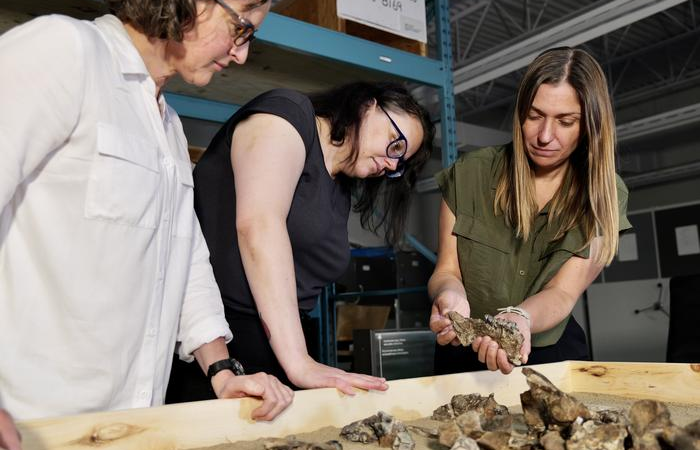
Researchers from the Canadian Museum of Nature (CMN) have identified a new species of rhino that once roamed Canada’s High Arctic 23 million years ago.
The extinct rhinoceros, described in the journal Nature Ecology & Evolution, is the northernmost rhino known to have ever walked the planet — and it’s already reshaping scientists’ understanding of when many ancient animals spread across the continents.
While there are only five rhino species alive today, the fossil record suggests that in the past, well over 50 species may have walked the Earth. Back then, rhinoceroses occupied not just Asia and Africa, but also Europe and North America — and they came in all shapes and sizes. That’s certainly the case for the newly named rhino now known as Epiatheracerium itjilik.
E. itjilik had no horns, was on the smaller side and lived in the dark for months of the year — back when this part of the Arctic was likely a temperate forest. Its fossil remains were first discovered in 1986 in Nunavut, Canada.
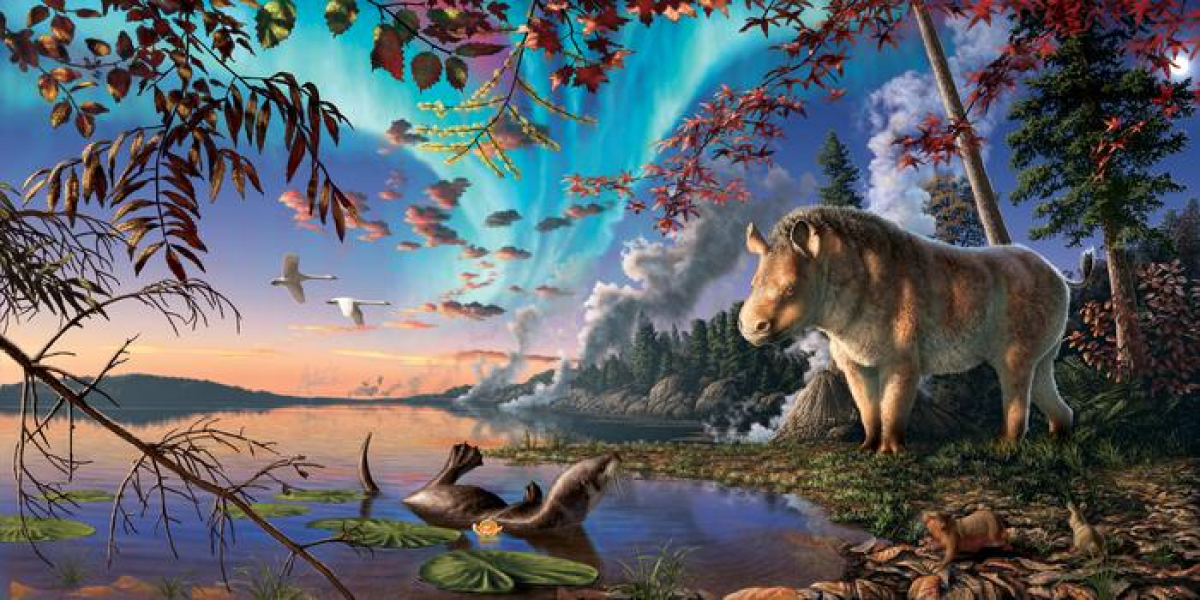
(Julius Csotonyi)
Since then, scientists have managed to recover roughly 75% of the animal’s skeleton. Danielle Fraser, the head of Paleobiology at CMN and lead author of the paper, says this exceptional level of preservation is probably thanks to the animal having been encased in the Arctic’s permafrost.
Fraser and her team set out to analyze the fossil’s physical features to learn where it fell on the rhino family tree. After comparing it with other specimens, they found that the animal’s closest relatives lived in Europe and Western Asia. This told them that the rhino’s ancestors very likely crossed over a strip of land connecting Europe and North America known as the North Atlantic Land Bridge.
The North Atlantic Land Bridge may get less attention than the Bering Land Bridge, which once connected Asia and North America and is well known for its role in human migration. But Fraser says the North Atlantic Land Bridge has its own special place in the history of animal migration.
Previously, scientists believed animals used the North Atlantic Land Bridge to travel between Europe and North America until 50 million years ago, after which it was thought to have been submerged by water. However, the researchers’ analysis shows rhinos were making the trek in both directions at least 20 million years longer than scientists previously thought.
Fraser says this discovery is “really exciting because it tells us that the [North Atlantic] Land Bridge played a much bigger role for much longer in animal evolution than we thought.”
Although other environments like the tropics are usually seen as centers for evolution, Fraser says she hopes the study helps people understand how important the Arctic has been in the evolution of mammals.
“The more we dig into the fossil record,” Fraser says, “the more we go out into the field and collect more fossils, the more we describe new species, we’re finding that the Arctic was super important for shaping mammals, not only in the past, but also today.”
Marisa Gilbert, a senior research assistant at CMN who co-authored the study, agreed. And as climate change continues to disrupt ecosystems around the world today, she says the findings offer a sort of analogue to see how past animals dealt with periods of great environmental upheaval.
“We can see how animals utilize these land bridges,” Gilbert explains, “and how they were able to survive and thrive in different areas despite a lot of these constraints that we see today.”
The arctic conditions also made it possible for the team’s research partners to retrieve and study the world’s oldest sequenced proteins. Ryan Sinclair Paterson, a postdoctoral fellow at the University of Copenhagen’s Globe Institute, took the lead on this part of the research, which was published in Nature in early July of this year.
Paterson says ancient biomolecules provide a “window into the past.” Ancient DNA can offer a trove of information about evolutionary history and when species diverged from each other, but it’s not an especially hardy molecule. Proteins — the biomolecules that are built from DNA’s instructions — are a little more rugged. The proteins they found in the enamel of the rhino’s tooth are from roughly 21 million years ago, which is ten times older than the world’s most ancient DNA.
Fraser thinks these ancient proteins are going to “change how we view mammal evolution.” In addition to helping restructure existing evolutionary trees, she thinks this new tool will allow scientists to “start asking bigger questions about evolutionary trends and biogeography that we haven’t been able to answer without those [proteins].”
Paterson worries about the future of fossil-rich sites in the Arctic, like Haughton Impact Crater, where the fossil was found, because of the growing threat of climate change. He says that without the extreme cold conditions, they would likely not have been able to recover the proteins. “Because of deglaciation and climate change-associated erosion, these sites, [for] both archaeology and paleontology, are being eroded away and lost,” he says.
The new species was named with the help of Jarloo Kiguktak, an Inuit elder and former mayor of Griese Fiord, a hamlet near where the fossil was found. To honor its High Arctic home, they decided on Epiatheracerium itjilik, itjilik meaning “frosty” or “frost” in Inuktitut.
CMN has been collaborating with Kiguktak since 2008. Fraser sees working with indigenous people from the area where specimens are collected as incredibly important and thinks the practice is growing.
Lawrence Bradley is an adjunct professor in the University of Nebraska’s Geography/Geology department who was raised by Oglala Lakota. He says that this approach — working with the indigenous groups that live on the land that researchers are studying — fosters goodwill between both groups, provides crucial guidance for scientists who may not know the area, and, in the best of cases, can even encourage local kids to be involved in the research going on in their homeland.
In fact, Bradley says he’d like to have seen even more about the research team’s collaboration with Kiguktak in the paper. Those kinds of choices, he says, can help reinforce the importance of fostering those relationships.

HUD proposes time limits and work requirements for rental aid
The rule would allow housing agencies and landlords to impose such requirements "to encourage self-sufficiency." Critics say most who can work already do, but their wages are low.
Paramount and Warner Bros’ deal is about merging studios, and a whole lot more
The nearly $111 billion marriage would unite Paramount and Warner film studios, streamers and television properties — including CNN — under the control of the wealthy Ellison family.

A new film follows Paul McCartney’s 2nd act after The Beatles’ breakup
While previous documentaries captured the frenzy of Beatlemania, Man on the Run focuses on McCartney in the years between the band's breakup and John Lennon's death.

An aspiring dancer. A wealthy benefactor. And ‘Dreams’ turned to nightmare
A new psychological drama from Mexican filmmaker Michel Franco centers on the torrid affair between a wealthy San Francisco philanthropist and an undocumented immigrant who aspires to be a dancer.
Bill making the Public Service Commission an appointed board is dead for the session
Usually when discussing legislative action, the focus is on what's moving forward. But plenty of bills in a legislature stall or even die. Leaders in the Alabama legislature say a bill involving the Public Service Commission is dead for the session. We get details on that from Todd Stacy, host of Capitol Journal on Alabama Public Television.
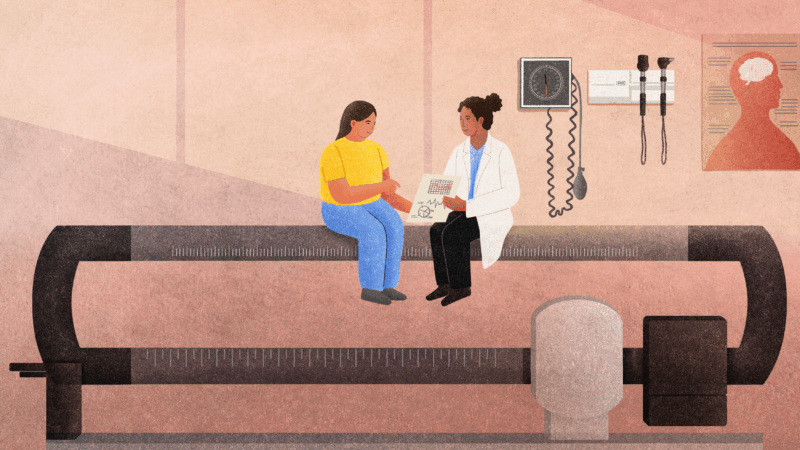
My doctor keeps focusing on my weight. What other health metrics matter more?
Our Real Talk with a Doc columnist explains how to push back if your doctor's obsessed with weight loss. And what other health metrics matter more instead.
