
They’ve tracked Americans’ drug use for decades. Trump and RFK Jr. fired them

A federal study on mental health problems and substance use across the country that has been running for decades and is used by a wide range of researchers faces an uncertain future after President Trump’s cuts to the federal workforce.
The National Survey on Drug Use and Health is an annual survey of households conducted by the Substance Abuse and Mental Health Administration, which is being dissolved in Health Secretary Robert F. Kennedy Jr.’s overhaul of the nation’s health agencies.
“We survey about 70,000 people, 12 and older each year,” says Jennifer Hoenig, who used to lead the team of scientists in charge of the survey, which is the largest in the country
On April 1, Hoenig and her 16-person team of mostly statisticians lost their jobs to the layoffs orchestrated by Elon Musk’s DOGE effort to shrink the federal government. The Department of Health and Human Services fired 10,000 staff, while another 10,000 employees took buyouts and early retirement offers.
In a statement to NPR, Emily Hilliard, press secretary at HHS, wrote that agency staff are working with a contractor to continue conducting the 2025 survey. And the 2024 annual report will be out later this summer. Since the firings, the agency has published two brief reports based on the 2023 survey – one on use of marijuana by people 12 years and older and one about the treatments received by adults with serious mental illness.
Details and deep dives
Hoenig and her colleagues analyzed the survey data each year and put out detailed reports on the prevalence of mental health problems and substance use.
“It is really the first line for people to understand the prevalence of substance use, substance use disorders and mental health outcomes, treatment, recovery and things like that,” Hoenig says.
In addition to a report on national estimates, Hoenig says her team also put out “state and substate” estimates. “It allows people to really figure out ‘who are the people in the country that need help, who are these people? Where do they live? What are their issues?'”
“Those of us who work in the field and also a lot of states, they know it’s one of the major tools for assessing behavioral health in America,” says Sean Esteban McCabe, director of the Center for the Study of Drugs, Alcohol, Smoking and Health at the University of Michigan.
Insights about substance-use disorder
In a recent study published in JAMA Pediatrics, McCabe and his colleagues used the data from the survey and estimated that 1 in 4 kids in the United States has a parent with a substance use disorder.
He says this data is critical for researchers like himself as well as lawmakers and health care care providers. “Addressing addiction and promoting recovery are national priorities, and it’s really difficult to monitor progress without one of America’s gold standard metrics.”
Metrics on mental health
The same goes for efforts to address mental health problems, says Katherine Keyes, an epidemiologist at Columbia University, who has also used the NSDUH data for years for her research.
“Unless we know how many people are affected by common mental health problems, it will really hamper our efforts to determine whether the interventions that we’re trying to implement are having any kind of effect,” says Keyes.
“This is really a central piece of data,” says Dr. Scott Hadland, chief of adolescent medicine at Massachusetts General Hospital. “When we use it clinically, it’s often in a way that is helping pediatricians like me and my colleagues across the country understand what’s going on with teenagers.”
For example, the prevalence of opioid addiction among teens.
“We know now from the NSDUH that about one in 80 teenagers struggles with opioid addiction,” says Hadland. “That’s a lot higher than any pediatrician would guess. And we only know that because of this survey.”
A long-range view of trends
The data also reflects the success of past efforts to address substance use among young people, says Keyes. “You look at factors like cigarette and tobacco use among young people, which is at extraordinary lows. Binge drinking and alcohol use has been declining among young people.”
But there’s still a long way to go, she adds. And “if some of these trends reverse, we need to know immediately.”
Hilliard says the survey will continue as HHS reorganizes, and Kennedy has indicated that mental health and substance use issues will be managed by a new agency he plans to form called the Administration for a Healthy America.
But Hoenig says it’s unclear how the survey will continue without her team of scientists. Hadland stresses that it’s important to have scientists at the helm of the survey.
“This idea that there’s sort of a group of experts overseeing the entire survey and really looking out for its future and the reliability and the validity of the questions in the survey is really critical,” he says.
And it’s important that the data gathered by the survey is made available to the public, says Hoenig.
“If that information is not being disseminated out into the public, we will lose lives,” she says. “We will lose lives to overdose. We will lives to suicide. But these are entirely preventable.”
British Columbia to make daylight saving time permanent
The Canadian province is permanently ending the biannual time shifts for more light at the day's end. But research shows daylight saving increases health risks.

Jan. 6 plaque honoring police officers is now displayed at the Capitol after a 3-year delay
Visitors to the Capitol in Washington now have a visible reminder of the siege there on Jan. 6, 2021, and the officers who fought and were injured that day.

Authorities searching debris after suspected tornadoes kill 6 in Michigan, Oklahoma
A 12-year-old boy is reported to be among the dead following powerful storms that stretched across the middle of the country.

Opinion: The immorality of betting on war
Traders on prediction markets bet on nearly anything. One made more than half a million dollars betting on the U.S. strike against Iran. But should people wager on human suffering?
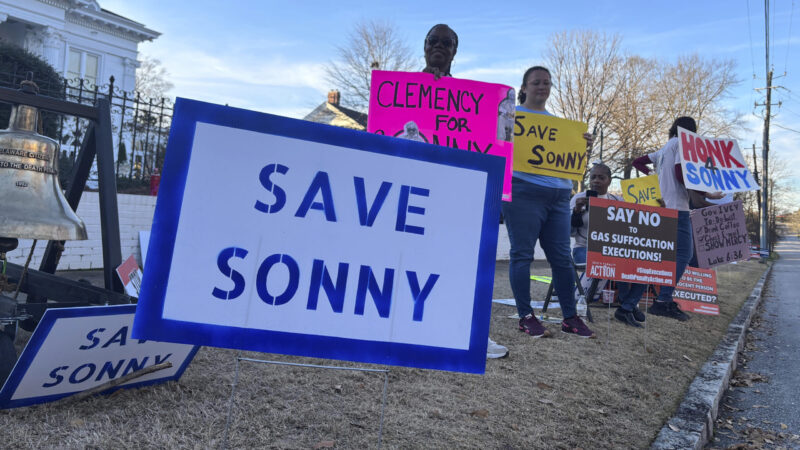
Alabama man facing execution for deadly robbery asks for clemency as he didn’t kill victim
Charles “Sonny” Burton is scheduled to be executed March 12 for his role in a 1991 robbery in which a man was fatally shot. His supporters and attorney are asking the governor for clemency, arguing that his life should be spared because Burton didn’t fire the gun or witness the killing.

Curling had its moment at the Olympics and now Paralympics. It sparked a curling bonanza in America
Hundreds of people become interested in curling every four years and the 2026 numbers already show that boom.
