
These students protested the Gaza war. Trump’s deportation threat didn’t silence them

When, in early March, one of Mahmoud Khalil’s classmates at Columbia University heard that immigration agents had come for him, she triple-locked her door, terrified she might be next.
“I just absolutely broke down, because he has a green card,” she said. As a student with only a temporary visa, she reasoned they’d certainly come for her. “That’s what really made me feel afraid.”
In an instant the student, who because of that fear asked to be identified by her first initial, T, faced a decision more consequential than any she had yet to confront during a tumultuous year of involvement in Columbia’s pro-Palestinian movement. President Trump was trying to make good on his promise to deport foreign-born student protesters just like her. Should she continue to speak out, she asked herself, for what had become the central cause motivating her life? Or should she go silent in the hopes of evading arrest and potential expulsion from the U.S.?
It’s a high-stakes reckoning that international students across the country have had to grapple with as the Trump administration has moved aggressively to silence campus criticism of Israel’s bombardment of Gaza. It’s canceled student visas and whisked outspoken foreign-born students away to ICE detention centers, accusing them, without presenting evidence, of supporting Hamas terrorism, spreading antisemitism and threatening the nation’s foreign policy.
“Mahmoud’s detainment was the catalyzing moment where people either continued advocating or just completely retreated,” T said one recent afternoon, sitting in a New York City park not far from Columbia’s campus. “At this point, I don’t think anything would get me to stop advocating for Palestine. But I see it in all the international students around me. People are terrified.”
Two international graduate students in the final weeks of their academic programs recently spoke with NPR about their decision to continue speaking out despite the risk of losing their visas and being detained or deported, and about how that decision has affected their lives and plans for the future.

T, Columbia University graduate student
T is a writer and photographer of Palestinian descent who publishes articles and photos online about the protests on her campus, in large part, she said, to counter right-wing narratives of the pro-Palestinian movement as violent and antisemitic. She publishes under her real name, but does not draw attention to the fact that she’s an international student on a visa.
“I’ve been to probably every single protest in the capacity of documenting what’s happening,” she said. “I don’t want this moment in our history to be erased or manipulated by the powers that be. I want our voices on the ground to be heard.”
She underestimated how aggressively the federal government would move to deport students for their pro-Palestinian views. She said the arrests of Khalil, Mohsen Mahdawi, and Tufts University student Rümeysa Öztürk, who plainclothes ICE agents picked up over an op-ed she wrote, shattered her assumption that the constitutional right to free speech would protect her.
T said that realization turned her life upside down.
“I now move with paranoia,” she said. “Every time I leave my house I’m emotionally and mentally preparing myself for detention. Any man on the street or any white or black van that I see sparks some sort of panic within me.”
She was unsure whether the government already had her in its sights. She worried about being targeted by pro-Israel websites that publish the names and photos of pro-Palestinian students and call for them to be deported. She said she began concealing herself when she left home: facemask, sunglasses, and a scarf.
She saw it not as capitulation but as a necessary precaution. International students around her began retreating, she said, so those still speaking out against what they believe to be a genocide in Gaza — something Israel denies — have felt more exposed.
“I’m protecting myself so that I can continue to publish, continue to speak, continue to advocate,” T said. “Had you asked me a year ago, I don’t think I would have said I would gladly put my education and body on the line for Palestine. And now, I don’t think there’s anything I wouldn’t do to stop the genocide.”
Even so, she said the course of the last few months altered her post-Columbia plans. She had always intended, after finishing her graduate program, to adjust her student visa into a temporary work visa. She wanted to get a job in New York, a city she loves.
The unrelenting anxiety that her published writings might attract the attention of immigration agents took a deep toll, though. Federal judges have ordered some students released from detention and raised concerns that their arrests violated the constitution.
T decided several weeks ago, though, that after her graduation this month, she’ll return to her home country in the Middle East, where she’ll find new ways to support Palestinian rights, and importantly, she said, feel safer doing so.
“I think I realized: I can’t live like this,” she said. “It’s just not normal.”

F, graduate student, New York City
F asked that in addition to using only her first initial, NPR also withhold the name of her university. A few months ago, she said, it disciplined her for participating in a pro-Palestinian protest. The federal government has pressured universities to turn over the disciplinary records of student activists, and she worries knowing her school could make it easier to find her.
“All of us international students, we had this thought of, ‘what if it was me?'” she said of her reaction to the first few students that ICE agents arrested. “Students that were higher risk, they all started to talk to their lawyers and make arrangements for if that were to happen.”
F, who is also from a Middle Eastern country, never considered herself at high risk for detention. She said she’s gone to many protests, always as a participant and not as a leader.
She said she was shocked, when Khalil was arrested, at how quickly the government had followed through on President Trump’s audacious promise. And at how unconcerned it seemed about free speech and due process rights.
“They said, we’re going to do this, and they did it. And not only did they do it, but they took this man and others to Louisiana,” F said.
The detentions made her think more seriously about her safety. She considered covering her face. Before their arrests, Khalil, Mahdawi and Öztürk had all been doxxed — their names, photos and summaries of their protest activities published online. F said she’s never been doxxed and wants to keep it that way. She began assessing her exposure at each protest. If most people masked up, she did too, to avoid sticking out.
Like many student activists, F said that a year and a half after the start of the conflict in Gaza, she often feels numb to the unending reports of Palestinians killed by Israeli bombs. The guilt, she said, can be overwhelming. She decided that losing her student visa or being detained and deported would be a small price to pay for continuing to protest the killings.
“If something were to happen with my immigration status because I was unwavering in my support of Palestine, I’m definitely fine with that,” she said. She said the fact that the government has succeeded in silencing some of the students around her with the threat of deportation has motivated her.
“This is the time where I think I still need to commit myself to the movement and take on higher risks that other people cannot afford to,” she said.
She also graduated this week, and plans to continue working in New York.
British Columbia to make daylight saving time permanent
The Canadian province is permanently ending the biannual time shifts for more light at the day's end. But research shows daylight saving increases health risks.
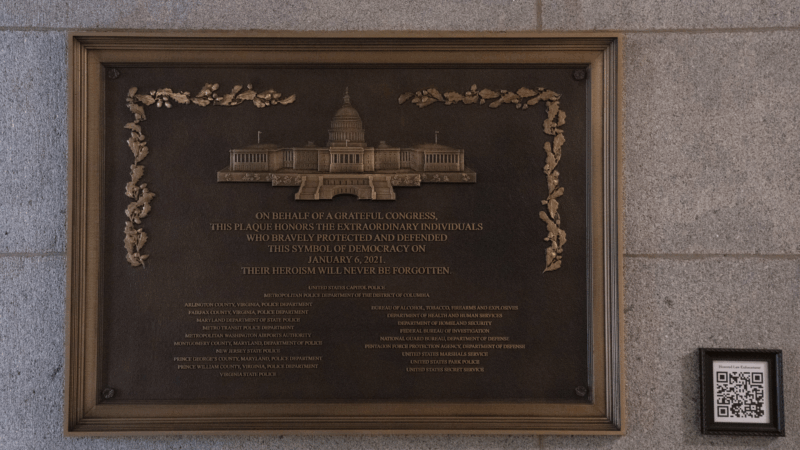
Jan. 6 plaque honoring police officers is now displayed at the Capitol after a 3-year delay
Visitors to the Capitol in Washington now have a visible reminder of the siege there on Jan. 6, 2021, and the officers who fought and were injured that day.
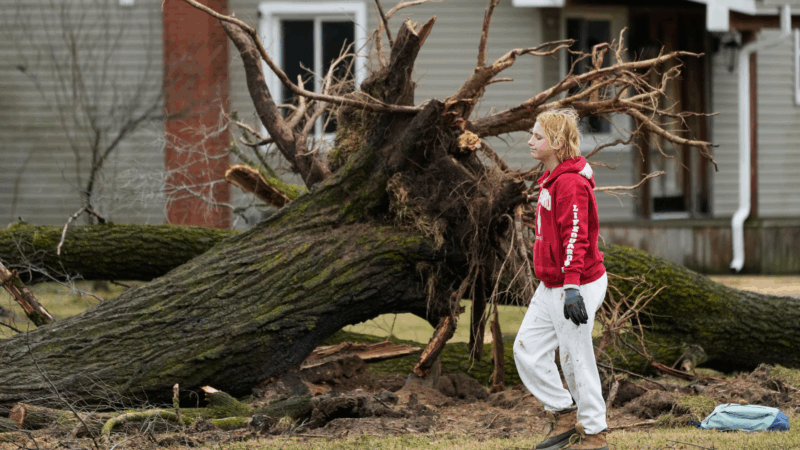
Authorities searching debris after suspected tornadoes kill 6 in Michigan, Oklahoma
A 12-year-old boy is reported to be among the dead following powerful storms that stretched across the middle of the country.
Opinion: The immorality of betting on war
Traders on prediction markets bet on nearly anything. One made more than half a million dollars betting on the U.S. strike against Iran. But should people wager on human suffering?
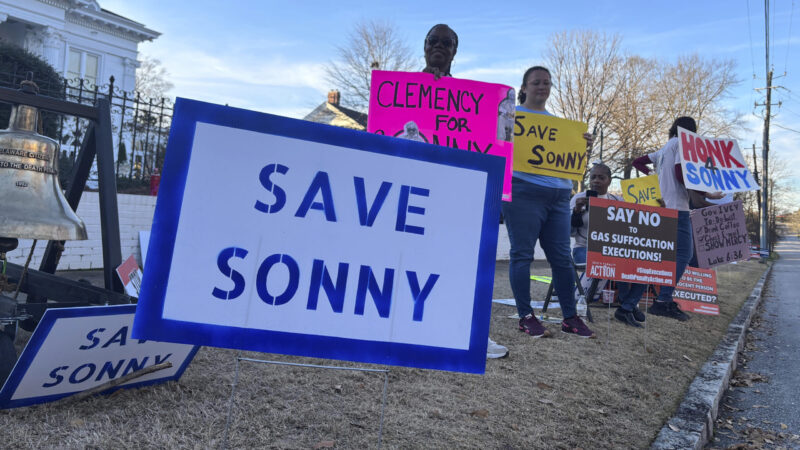
Alabama man facing execution for deadly robbery asks for clemency as he didn’t kill victim
Charles “Sonny” Burton is scheduled to be executed March 12 for his role in a 1991 robbery in which a man was fatally shot. His supporters and attorney are asking the governor for clemency, arguing that his life should be spared because Burton didn’t fire the gun or witness the killing.
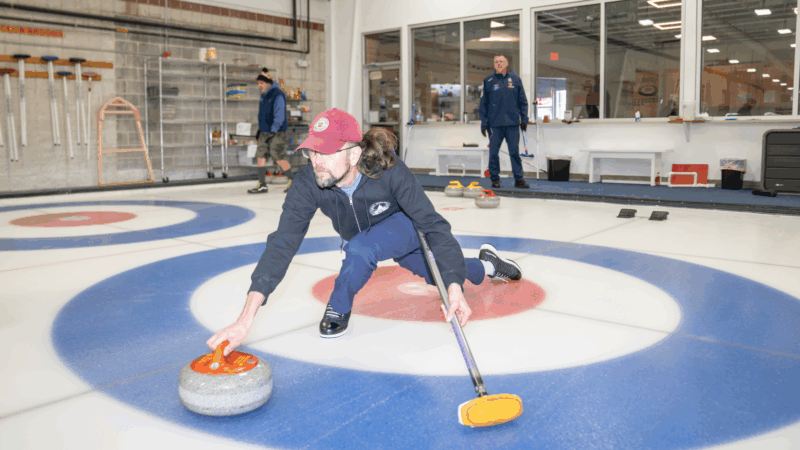
Curling had its moment at the Olympics and now Paralympics. It sparked a curling bonanza in America
Hundreds of people become interested in curling every four years and the 2026 numbers already show that boom.
