
These small business owners are owed tariff refunds. Will they ever get them?

Ask anyone selling anything in the U.S. right now and they’ll probably say they want their tariff money back.
“How do we get a refund?” said Alfred Mai, whose San Francisco firm ASM Games makes card games in China and by his estimates paid more than $150,000 in tariffs the Supreme Court on Friday declared unconstitutional.
“Where do I go to get a refund?”
Since the court ruling striking down about half of President Trump’s tariffs, importers and retailers have been calling, texting and emailing almost nonstop — each other, their trade groups and any lawyer on tap — asking these questions.
Some raised alarm when U.S. Customs continued to charge those very tariffs for days after the Supreme Court declared them unconstitutional. Customs and Border Protection later said it would stop collecting these tariffs on Tuesday.
The tariffs that the Supreme Court struck down amounted to around $130 billion. Anyone who paid the taxes should get reimbursed. But the high court did not address how.
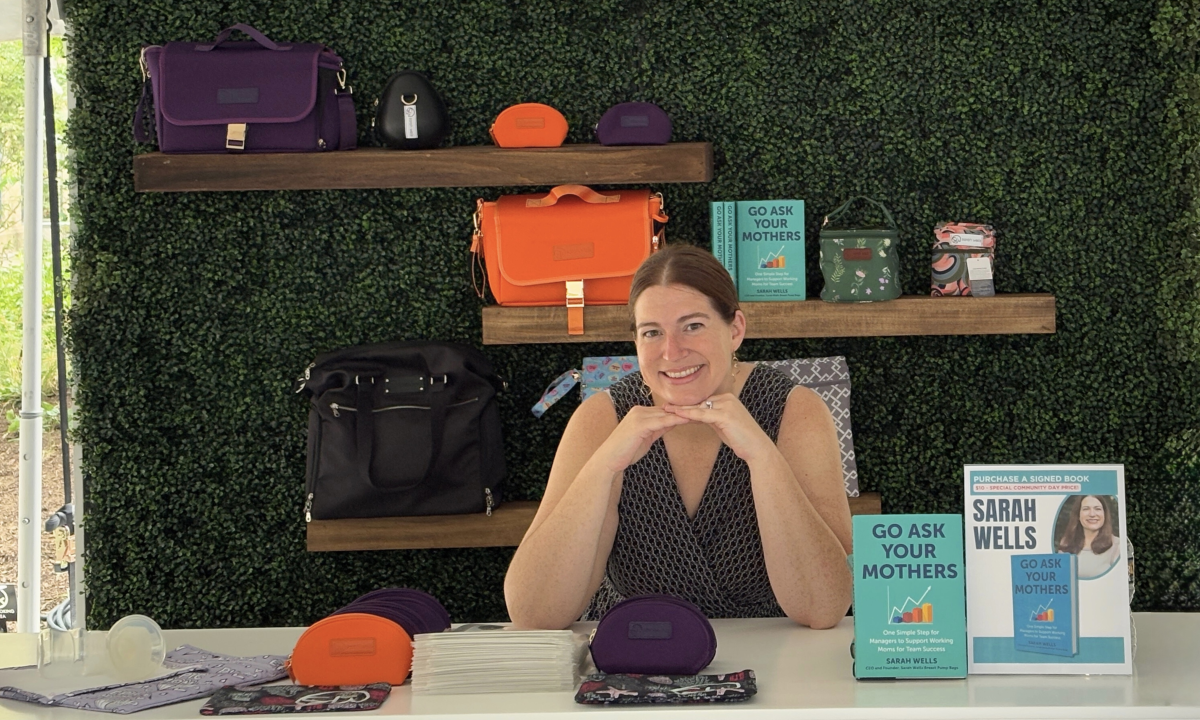
“We not only need the money back,” said Sarah Wells from Virginia, who sells backpacks and totes for breast pumps, for new moms, “but we need a process to get the money back that doesn’t involve lawyers, really time-consuming paperwork, expensive processes — none of us have the bandwidth or the resources to do that.”
Indeed, the government already has a routine process to refund tariffs in cases of, say, errors on a customs form. But on Monday, Wells dialed into a call arranged by the small-business group Main Street Alliance and heard lawyers suggest that this time, getting her money back would likely require suing the government.
“I’m so frustrated that there isn’t clear guidance that would make it easier on small businesses,” Wells said afterward. “We shouldn’t have to become litigators just to get our money back.”
“A seamless process to refund tariffs”
For weeks, Wells had obsessively refreshed the Supreme Court’s website on opinion days, watching the tariff case. A coalition of small businesses not too different from hers had challenged Trump’s use of emergency authority known as IEEPA to set new taxes on virtually all imports, without Congressional approval. Wells says she’s paid $35,000 for tariffs on her shipments from China and Cambodia.
On the morning of the high-court ruling, Wells’ power went out during a torrential rainstorm. She raced to the nearest cafe for internet access and thought of the ways she could use that refund money.
“If we got the refunds, I know what I would do is I would start hiring again, because we need it,” Wells said. Her firm is down a part-time customer service rep; she’d laid off staff and contractors last year, trying to afford tariffs. She held shipments abroad while scrounging for cash to pay tariffs, leaving her top-selling backpacks out of stock for months. Those costs she would never recoup. But maybe at least the duty fees?
In an urgent statement Friday, the National Retail Federation called for the lower court — the Court of International Trade — to “ensure a seamless process to refund the tariffs to U.S. importers.” After filing the lawsuit, the small-business plaintiffs in the case had asked for U.S. customs to stop collecting tariffs as the litigation played out, but the government successfully argued there was no need: it could always issue refunds.
On Friday, in a defiant press conference, Trump quickly vowed to find new avenues to reinstate tariffs. Within hours, he set a new 10% blanket tariff; within a day, he raised it to 15%. He called the Supreme Court justices who ruled against his tariffs “fools” and “unpatriotic.” And he said that repayments to importers would get bogged down in litigation for two, maybe five years.

“Even less certainty”
Senate Democrats in the highly divided Congress introduced a bill on Monday that would require U.S. Customs to refund tariffs — with interest — within 180 days, prioritizing small businesses.
Already a long queue of companies — including Costco, Revlon, Bumble Bee and Kawasaki — have lined up for refunds with pre-emptive lawsuits in trade court. In Indiana, Danny Reynolds, who runs the nearly century-old fashion store Stephenson’s of Elkhart, wonders where that leaves him.
“Especially for small businesses who don’t have retained legal teams to file suit and sort of get their place in line,” he said, “you sort of wonder, will there be anybody going to bat for us?”
Reynolds doesn’t import his clothes himself, but pays another company to bring in the containers. So that supplier actually pays the tariffs as the “importer of record” — but it also has been charging Reynolds a tariff fee. When, or if, this supplier gets a tariff refund, would Reynolds actually get any of his tariff fees back?
“This is so directionless,” is how Mai, the card game seller, put it. “I think there’s even less certainty of what’s going to happen over the next few months with the Supreme Court ruling, to be honest with you.”

A system exists, but will it be used?
Looking for guidance, Mai consulted AI on how tariff refunds might work and landed on the same platform as scores of other businesses: an online portal called ACE, where the government has long reviewed refund claims from businesses over clerical errors or miscalculations.
The portal seems to have a lot going for it as a refund venue. It’s a well-oiled operation that already exists. It contains meticulous records. The government knows exactly how much each importer has paid. So many business owners had the same thought that Mai struggled to log in, getting error messages for hours, then for days.
“I’m guessing everyone and their mothers are rushing in right now to try to do what I’m doing,” he said.
The Trump administration so far has not indicated any inclination toward using this existing system, falling back on comments about litigation.
On Sunday, Treasury Secretary Scott Bessent was asked on CNN about “the big question”: Would American businesses get their tariff money back? Bessent countered that this was, in fact, “not the big question” and touted Trump’s push to revive American manufacturing and reduce trade imbalances. No matter the question’s scale, the answer to it was up to the courts, he said, weeks or months from now.
Transcript:
STEVE INSKEEP, HOST:
American businesses that paid President Trump’s tariffs for a year want to know when they get the refund. That’s their top question after the Supreme Court found those tariffs to be illegal. NPR’s Alina Selyukh has been talking with business owners.
ALINA SELYUKH, BYLINE: Sarah Wells had developed a bit of an obsessive habit in recent weeks.
SARAH WELLS: Every day that the Supreme Court this year has had a decision opportunity, I’ve been refreshing their website.
SELYUKH: Waiting for a ruling in a case brought by small businesses not too different from hers. Her company called Sarah Wells Bags, sells backpacks and totes for breast pumps for new moms. The lawsuit had argued that President Trump acted illegally when he used emergency authority to set new taxes on virtually all imports. Wells, in the past year, has paid $35,000 in those specific taxes.
WELLS: So I’ve been waiting with bated breath to get this decision because it’s so impactful on whether we can even really continue operations going forward.
SELYUKH: On the morning when the ruling finally came rejecting Trump’s tariffs, her power went out. A rainstorm was tearing through her suburb in Virginia. Wells raced to the nearest cafe for internet and thought of all the ways she could use that $35,000.
WELLS: If we got the refunds, I know what I would do is I would start hiring again because we need it. But I think it’s really contingent on the refunds.
SELYUKH: Ask anyone who sells anything in the U.S. right now what’s on their mind and they’ll probably say tariff refunds. The Supreme Court says about half of Trump’s tariffs from last year are unconstitutional – that’s a total of more than $100 billion in taxes. And anyone who’s paid part of those tariffs should get their money back, including small businesses like Sarah Wells Bags.
WELLS: And we not only need the money back, but we need a process to get the money back that doesn’t involve lawyers, really time-consuming paperwork, expensive processes, like, none of us have the bandwidth or the resources to do that.
SELYUKH: Except the high court said nothing about how refunds might work. It sent the case back to a lower court. Trump has suggested repayments could get bogged down in litigation for years. Lots of small companies and big ones like Costco and Revlon have already preemptively sued in trade court to get in line for potential refunds. In Indiana, Danny Reynolds wonders where that leaves him.
DANNY REYNOLDS: Especially for small businesses who don’t have, you know – retained legal teams to file suit and sort of get their place in line, so to speak, you know, you sort of wonder will there be anybody going to bat for us?
SELYUKH: Reynolds runs a clothing store called Stephenson’s of Elkhart. It’s almost a century old, and it sells imported wedding dresses, mostly from China. But his case is complicated because he does not import those dresses. He pays another company to bring in the containers of wedding gowns, and that company pays the tariffs to the U.S. government. But then it does charge Reynolds a tariff fee. So when or if his supplier gets a tariff refund, would Reynolds actually get any of his tariff fees back?
REYNOLDS: As an indirect importer, what does the process look like? Would the refunds come from our suppliers?
SELYUKH: Business owners are messaging each other and their trade groups with questions like these. In San Francisco, Alfred Mai, who sells card games through his firm ASM Games, asked AI for thoughts on how he might file a refund claim. The answer pointed him to a government portal that a lot of small business owners are logging onto now. It’s called ACE, A-C-E.
ALFRED MAI: And I’ve been struggling for the past hour trying to log in. I’m guessing everyone and their mothers are rushing in right now to do what I’m doing.
SELYUKH: The portal is where importers have long been able to ask for tariff refunds as a result of, say, a typo or an error on their customs form. The database could be a way the refunds might work. It tracks all the customs payments, but there’s no assurance that it will in fact be the process. Alina Selyukh, NPR News.
(SOUNDBITE OF MUSIC)
Democrats tap Spanberger and Padilla to respond to State of the Union
Virginia Gov. Abigail Spanberger will deliver Democrats' response on Tuesday following President Trump's State of the Union address.

Is the YIMBY movement doomed?
For decades, rising home prices have been an engine for middle-class wealth. Now a growing movement wants to slow — or even reverse — that trend. Are the politics around new housing development inherently stacked against them?

What you need to know as Russia’s full-scale war on Ukraine enters its 5th year
Russia launched its full-scale invasion of Ukraine four years ago, and the fighting continues. Here's a look at where the war stands today.
What you need to know about tonight’s State of the Union address
The prime-time address is a chance for the president to tout his record ahead of this year's midterm elections. But it comes at a moment when Trump has seen his agenda complicated on multiple fronts.
A U.S. veteran adopted an orphan from Iran. Decades later, ICE is trying to deport her
The woman has no criminal record and is unsure what prompted the threat of removal. She fears being deported to Iran given her father's military service and her Christian faith.
‘Fear of Flying Clinic’ helps anxious travelers back into the skies
For 50 years, a San Francisco-based group has created a space where fearful flyers can get supported exposure to air travel.
