
There’s more than one path to a confessional song
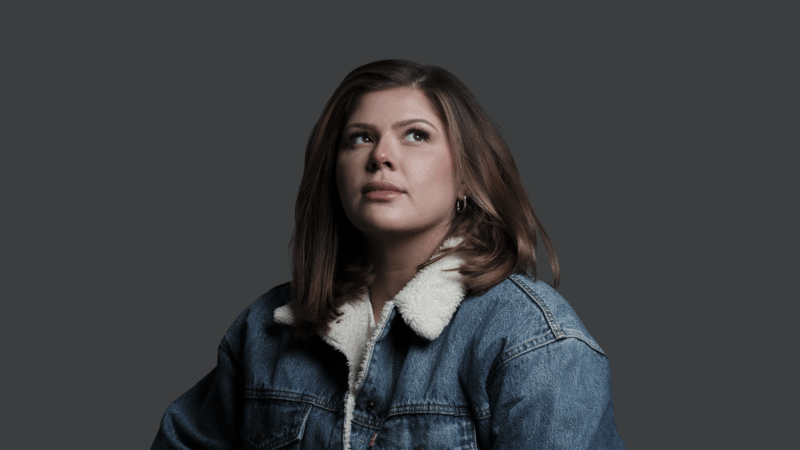
At some point, “singer-songwriter” became a genre unto itself. Though a broadly applicable qualifier for artists of all styles — these days, many rappers are technically singer-songwriters — it has taken on a specific connotation over the years: a solo acoustic artist in the folk tradition, penning confessional songs that feel stripped bare in both sound and subject. Not for nothing, a certain swath of R&B has mirrored that framework across eras — from Babyface’s “When Can I See You” to India.Arie and Corinne Bailey Rae’s aughts pop-soul, and lately through a more diverse range of restrained sounds via artists like Lianne La Havas, Arlo Parks and Pink Sweat$. Two artists with new albums released the same day, the Arkansas-born Yebba and the Houston-raised Pimmie, have defined their voices at distinct ends of that spectrum. Both are singer-songwriters, as defined by popular parlance, who have unmistakable inclinations toward R&B, though hewing more to the blues than to rhythm — yet in many ways they are night-and-day representations of the form, demonstrating how nimbly the style fits into the contemporary R&B soundscape.
Two very different, very modern success stories led Yebba and Pimmie to the same inflection point. Yebba did much of her assembly out in the open, though primarily in the background. She gained notoriety from a YouTube cover of “SWV’s “Weak” before singing backup for Chance the Rapper on Saturday Night Live in 2016; the same week, an in-studio performance she’d given at Sofar NYC went viral. The appeal was evident from the first vocal run: a dynamic, weapons-grade voice that spins off melismatic notes like sparks along a Catherine wheel. That voice soon became a trump card for musicians’ musicians — a feature on PJ Morton’s cover of “How Deep Is Your Love” scored her a Grammy, and collaborating with Mark Ronson on his single “Don’t Leave Me Lonely” led to him co-producing her debut album, Dawn, in 2021. In keeping with her own style, Pimmie’s emergence was more abrupt. A self-taught engineer, she went from complete unknown peddling her services mixing, mastering, singing and songwriting on an online production marketplace to signee on Drake‘s OVO label in under a year. In the handful of songs she’d released prior, she displayed a knack for a liquid sound design that lets her dewy voice bead along the fretboard of a guitar.
Both Yebba and Pimmie were introduced to wider audiences through interlude performances on Drake albums: the aching “Yebba’s Heartbreak” from Certified Lover Boy and the pleading “Pimmie’s Dilemma” from $ome $exy $ongs 4 U. In hindsight, those songs tease out each artist’s grander vision, both the things that make them similar and that distinguish them. Pimmie’s OVO debut, Don’t Come Home, follows “Pimmie’s Dilemma” toward a crestfallen sound, built around echoey vocals and homestyle, fingerplucked arrangements of songs that always find her at an impasse romantically. Jean, Yebba’s second album, is often just as gentle and guitar-spun as Don’t Come Home, but is on the other side of an emotional crisis, making headway. A week after the Sofar performance in 2016, just as her career seemed to be building momentum, Yebba’s mother killed herself. Dawn is named after her, and that album loosed Yebba’s incomparable voice upon the fallout of that loss, in search of solace. Jean, named for her grandmother, adopts the fragility of “Yebba’s Heartbreak” for an odyssey back to the self. Neither artist walks out of these projects fully restored, but both find a spirit-affirming power in quiet confession.
Yebba’s palette is a bit more experimental, but both Jean and Don’t Come Home are constructed around acoustic sounds in ways that play on the idea of withdrawal. For Pimmie, the songs are illustrative of retreating away from someone, the guitars plaintive and pensive. Half of the record doesn’t even have drums. As she lets her shaky yet direct voice brush through the willowy strums of “Wasted” and “D.N.D,” the songs dance like shadows on the wall, as fleeting and disembodied as the relationships they outline. Yebba’s album is more about a restraint of performance, learning to harness her voice in subtler ways. That means dismantling Dawn‘s harmony-rich pop-R&B in favor of something more unadorned and atmospheric, settling somewhere between Sufjan Stevens (“West Memphis“) and Cleo Sol (“Waterfall“). In its non-acoustic moments, like “Delicate Roots,” it still feels pared down, and the few times it amps up sonically (the industrial-lite of “Aggressive,” the jazzy drum and bass of “Of Course“), the emphasis is still placed on the nuance of her vocal execution, a sense of control.
The separation in their respective approaches is dispositional. Pimmie has characterized her music as late-night balladry, and it is powered by a moody, vespertine energy. A child of Jhene Aiko and SZA, she writes for the jilted and scorned, and her singing is stealthily combative. (It’s no accident that the video for one of her oldest songs is set to clips from Malcolm & Marie, a black-and-white drama largely about a couple’s nightlong argument.) Jean finds Yebba at her most muted, but its sun-kissed songs are warmhearted and compromising, purposefully pulling back to give her music a more rustic feel. It is about new beginnings — “I wanted to experience singing in a different way than I had before,” she said in a press statement — and part of that transformation is embracing what can’t be changed and choosing forgiveness. The divide peaks in the distance between Pimmie’s “Foul” and Yebba’s “Yellow Eyes.” The former is unreachable and self-illuminated, like an iPhone vibrating in the dark, the latter untreated, finessing stomp-clap into a streaking summer blues.

Lyrically, their directives reflect their sonic affinities. They are confessional songwriters of contrasting stripes, each open and guarded in different respects. Yebba is an elliptical but enlightened writer, on a roving healing journey that has reawakened an adventurous creative spirit, while Pimmie is indrawn and hermetic yet plainspoken and in the moment, as if so fed up with dishonesty she can’t bear to lie to herself. One is outstretched, the other receding. (Even the runtimes tell the story: Jean is 14 tracks, 40 minutes; Don’t Come Home is 10 tracks, 18 minutes.) Yebba mostly executes Jean from a more liberated place; it would be optimistic to call the songs optimistic, but they do dare to have faith. “My dreams have all been fading so long,” she sings on “Water & Wanderlust.” “No more time for severed answers, second glances and bated questions or playing it small.” Don’t Come Home, as its title suggests, is all about the cyclicality of broken bonds and the cynicism instilled by that pattern recognition. Sometimes Pimmie is the victim, sometimes she’s the perpetrator, but the hurt is ingrained so deeply that each new link in the chain extends toward the same inevitable conclusion. “I gave my best efforts, but it won’t outdo my instincts,” she sings on “Instincts.”
While we can’t know what effect they have when it comes to real-life romance, Pimmie’s instincts are essential to her songcraft — and taking on a more instinctive approach has led Yebba to the most fully realized version of her artistry. When considering the term “singer-songwriter” and why it seems to resonate with some artists more than others, the determining factor may be something intuitive: In the desire to strip everything away, so that all that is left is the singer and her song, there is a need to attune to the innermost self, one that requires a kind of blood sacrifice. Perhaps that’s why someone like Drake feels unfit to wear the mantle right now, despite being confessional in his own right and breaking some of the ground these ladies now walk upon; his practice is not raw or reflexive enough. That hyphen is a balance syncing the inner and outer voice. On these albums, both artists find that sense of integration — with themselves and with the tradition they serve.

Auburn football player uses NIL funds to open a community hub in Birmingham
Jourdin Crawford, a freshman defensive lineman at Auburn, used earnings from a Name, Image, and Likeness deal to give back to his hometown.

Fear of Iranian mines in the Strait of Hormuz could further slow the flow of oil
Attacks by Iran have already nearly halted the flow of oil through the vital waterway as commercial ship crews fear being hit by missiles, drones or mines.
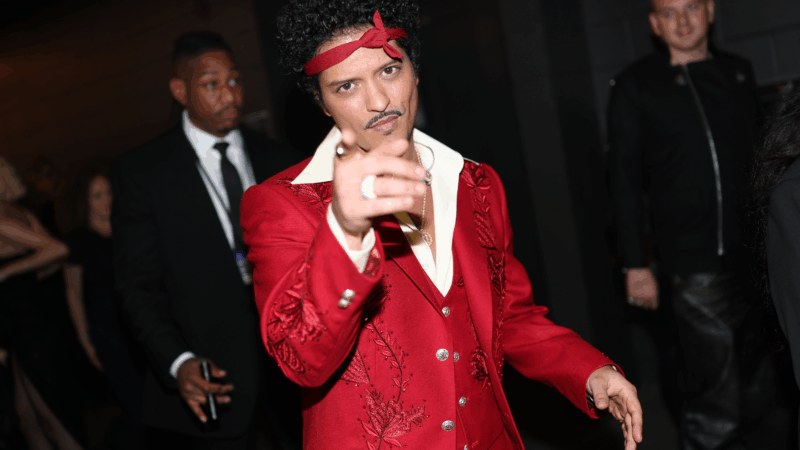
Bruno Mars adds yet another milestone to his career with ‘The Romantic’
Bruno Mars is the most-listened to artist in the world on Spotify. He's won 16 Grammys. In case you thought there were no battles left for him to win, this week he unlocked another achievement.

Suspect in attack at Michigan synagogue is dead, officials say
Security officers at Temple Israel had "engaged the threat" that apparently started with a vehicle ramming into the building, according to Oakland County Sheriff Mike Bouchard.
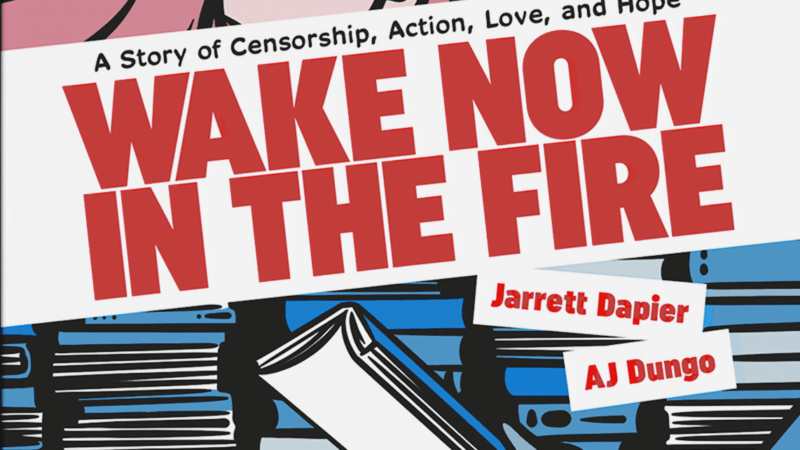
This tale of a Chicago school book ban was inspired by true events
Librarian Jarrett Dapier's graphic novel tells a fictionalized account of real-life events in 2013 that restricted access to Marjane Satrapi's memoir Persepolis in Chicago Public Schools.

Senate passes bipartisan housing bill targeting large investors and easing regulations
The 21st Century ROAD to Housing Act would ban large investors from buying up single-family homes.
