
The World Cup draw is here. Here’s why it matters — and how it will work
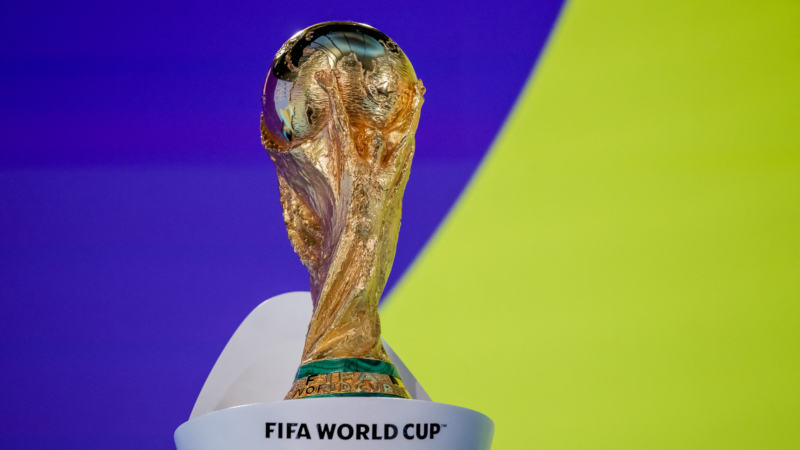
It’s one of the most anticipated events ahead of the 2026 World Cup.
On Friday, FIFA will conduct the draw for the top men’s soccer tournament, taking place across the U.S., Canada and Mexico. The draw — at the John F. Kennedy Center for the Performing Arts in Washington, D.C. — will determine which opponents all 48 teams participating in the World Cup will eventually face in the initial group stage.
The draw will be attended by the three leaders of the countries hosting the event, including President Trump, in an event that has become quite the spectacle over the years.
Here’s what to know about the draw for the World Cup, with the ceremony set to kick off at 12 p.m. ET.
What is the draw for?
Next year’s tournament is the biggest ever, with 48 teams set to be split among 12 groups of four.
These groups make up the first stage of the tournament, which determines which teams advance to the knockout rounds. The top two sides of each group automatically qualify, along with the eight best third-place teams.
Not all teams that will take part in the 2026 World Cup are known, though. So far, 42 countries have qualified, with the remaining six — including Italy — set to compete in playoffs next March to determine the final list of participants.
How will the teams be drawn?
Ahead of the draw, all teams have been placed in four pots, primarily based on their most recent FIFA rankings.
Pot 1 will include top-ranked teams such as Spain and Brazil, along with the three hosts. Pot 4 will include the lowest-ranked teams, including World Cup debutants Cape Verde, Curaçao and Jordan, as well as placeholders for the six teams that have yet to qualify.
Teams will be drawn randomly from each pot — but there are a few rules.
There can be only up to two European teams per group and only one team per group from each of the remaining five continental confederations under FIFA. That means, for example, that an African team such as Tunisia cannot be drawn into the same group as Ghana, even if they are in two separate pots.
In addition, in a quirk for this year’s tournament, FIFA has determined that the top two-ranked teams — Spain and Argentina — will be placed in groups that would end up on opposite sides of the tournament bracket should they each win their respective groups. That ensures these two early favorites would not meet until the final.
The same rule will apply to France and England, the third- and fourth-best ranked teams according to FIFA.
When will we know where teams will play?
In another quirk, teams will not know at Friday’s draw where or when they will play. The locations and kickoff times for each team across all 16 host cities will be determined on Saturday, at a separate event.
FIFA has said it wants to try to take travel times for teams in mind, while also ensuring that teams are drawn into kickoff times that are more favorable for spectators in their respective countries. For example, evening start times would likely be better for Asian sides, ensuring games are taking place when it’s roughly the following day for spectators back home.

Does this all matter?
The draw helps determine how easy — or difficult — the path to the knockout rounds will be for most teams.
Just like in any tournament, all teams would prefer to face the ones they view as weaker and avoid being placed in the “Group of Death,” the moniker given to the group perceived to be the most difficult in a tournament.
“You don’t want to be one of these heroes — like, ‘give me the best,'” says Herculez Gomez, who played for the U.S. in the 2010 World Cup and now hosts the Men in Blazers podcast Vamos. “That’s not how it works. Even the best don’t want the best at the World Cup.”
But World Cups are unpredictable. Strong soccer powerhouses have failed to advance past the World Cup’s group stage before, including Germany in 2018 and 2022, and Spain in 2014.
That said, this year’s tournament is bigger. Even finishing third in a four-team group can ensure qualification, although where each team ends up within its group will determine its path through the knockout rounds.
Which are the early favorites and the teams to watch?
Predictably, among the early favorites are recent global soccer powerhouses such as Spain, England and France, along with South American teams, such as Argentina and Brazil.
But there will be interesting storylines to watch outside the favorites, including Curaçao, which became the smallest country to qualify for the World Cup, with a population of just over 150,000 people.
And, of course, there will be enormous interest in which teams the three hosts will end up facing in their respective groups.
The U.S. men’s national team, for example, is approaching the World Cup draw with some momentum after staying undefeated in the past five games. Its most recent record marks a big improvement after a rocky period under coach Mauricio Pochettino and previous coach Gregg Berhalter, which included an early exit from last year’s Copa America regional tournament.
NPR sports correspondent Becky Sullivan contributed to this report.
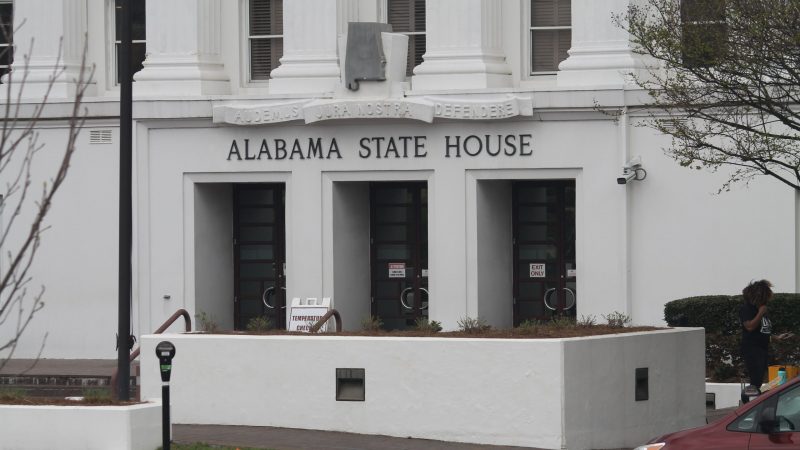
Bill making the Public Service Commission an appointed board is dead for the session
Usually when discussing legislative action, the focus is on what's moving forward. But plenty of bills in a legislature stall or even die. Leaders in the Alabama legislature say a bill involving the Public Service Commission is dead for the session. We get details on that from Todd Stacy, host of Capitol Journal on Alabama Public Television.
My doctor keeps focusing on my weight. What other health metrics matter more?
Our Real Talk with a Doc columnist explains how to push back if your doctor's obsessed with weight loss. And what other health metrics matter more instead.
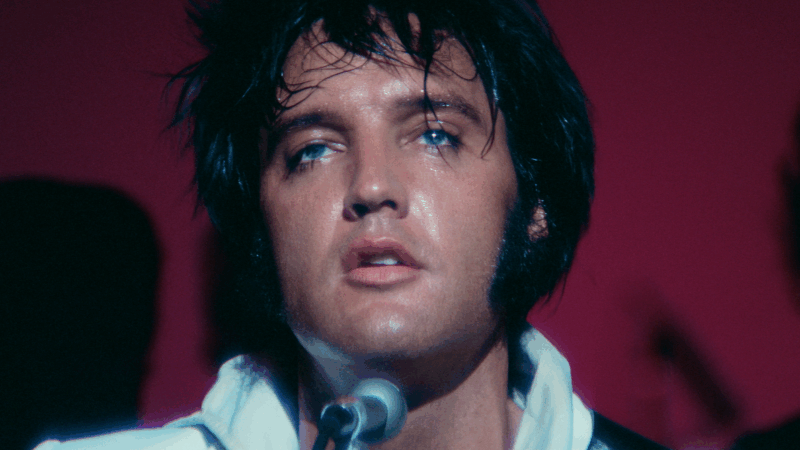
Baz Luhrmann will make you fall in love with Elvis Presley
The new movie is made up of footage originally shot in the early 1970s, which Luhrmann found in storage in a Kansas salt mine.
Forget the State of the Union. What’s the state of your quiz score?
What's the state of your union, quiz-wise? Find out!
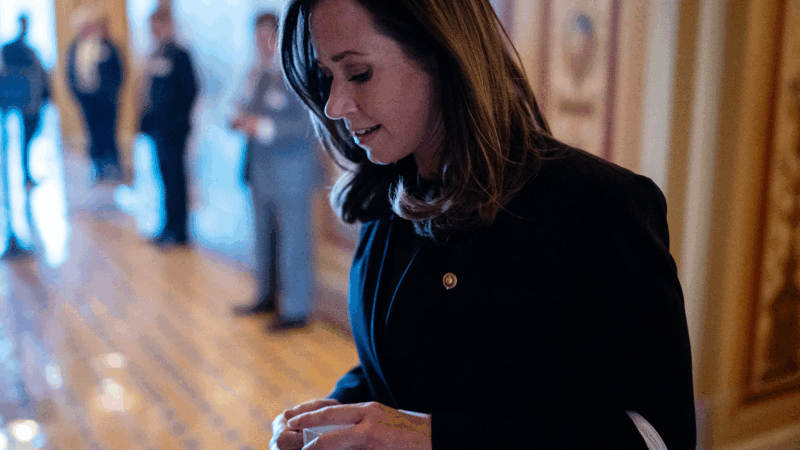
SNL mocked her as a ‘scary mom.’ In the Senate, Katie Britt is an emerging dealmaker
Sen. Katie Britt, Republican of Alabama, is a budding bipartisan dealmaker. Her latest assignment: helping negotiate changes to immigration enforcement tactics.
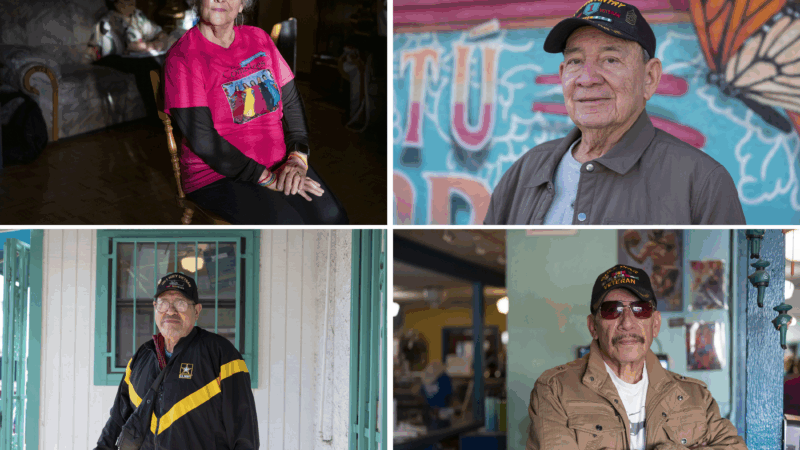
As the U.S. celebrates its 250th birthday, many Latinos question whether they belong
Many U.S.-born Latinos feel afraid and anxious amid the political rhetoric. Still, others wouldn't miss celebrating their country
