
The U.S. economy grew robustly as Americans continued to spend

The U.S. economy grew robustly in July, August and September, powered by steady consumer spending, especially on health care.
The gross domestic product — the broadest measure of the nation’s economic activity — for the third quarter grew at an annual rate of 4.3%, much faster than the 3.8% expansion seen between April and June, according to the Commerce Department on Tuesday.
Growth has picked up from the early months of 2025, when the U.S. economy actually shrunk at an annual rate of 0.6% as President Trump prepared sweeping global tariffs.
The latest figures are already quite dated. Tuesday’s report was originally due in late October but was disrupted by the historic government shutdown. And it now comes as polling increasingly finds Americans glum on President Trump’s handling of the economy and the high cost of living.
Third-quarter data shows business and residential investment declining. Spending by state and local governments rose. The impacts of trade swings were more mixed in the latest report, compared to earlier in the year: imports of goods declined, while exports increased. Imports get subtracted from the government’s measure of domestic economic activity, so they tend to depress GDP.
Loading…
Americans continued to spend but are turning more cautious
Spending by consumers, who remain the key engine of the U.S. economy, increased in the third quarter, according to the Commerce report. People spent more on hospital and nursing home services, on prescription drugs and on "information processing equipment," such as computer hardware, presumably as part of the AI boom.
Consumer spending has been resilient for much of the year; however, in recent polling, more and more people today are saying they're feeling down about their financial prospects.
Inflation has been cooling off notably, with consumer prices rising a modest 2.7% in November from a year earlier. Some food items have continued to drop in price, but not enough to offset the growing big costs, like rent, electricity and health insurance.
On average, workers' wages have been growing faster than prices. But those wage gains have slowed in recent months as the softening job market has chipped away at workers' bargaining power for higher pay. Wealthier shoppers have been propping up much of U.S. spending at stores and restaurants.
The latest NPR/PBS News/Marist poll has found that only 36% of Americans approve of President Trump's handling of the economy, his worst mark in the six years that Marist has been asking the question.
NPR's Scott Horsley contributed to this report.

When a horse whinnies, there’s more than meets the ear
A new study finds that horse whinnies are made of both a high and a low frequency, generated by different parts of the vocal tract. The two-tone sound may help horses convey more complex information.

Trump’s many tariff tools mean consumer prices won’t go down, analysts say
The Supreme Court struck down President Trump's signature tariffs. But the president has other tariff tools, and consumers shouldn't expect cheaper prices anytime soon, economists say.
Hundreds of American nurses choose Canada over the U.S. under Trump
More than 1,000 American nurses have successfully applied for licensure in British Columbia since April, a massive increase over prior years.

Tax credits for solar panels are available, but the catch is you can’t own them
Rooftop solar installers are steering customers toward leases instead of purchases. Federal tax credits for purchased systems have ended but are still available for leased ones.
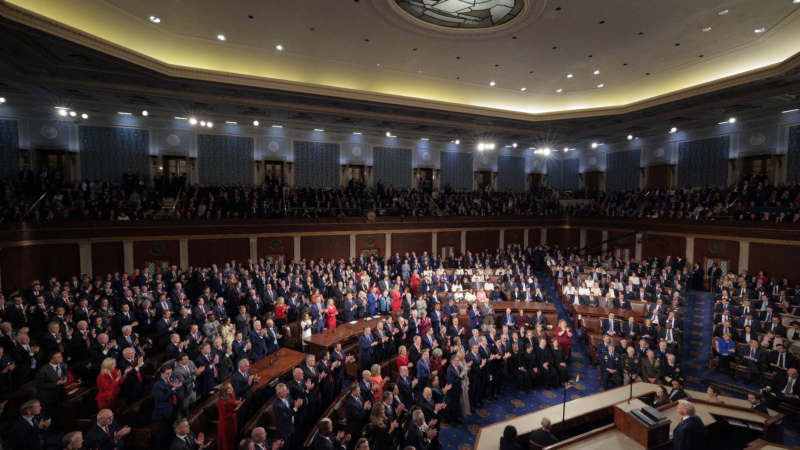
5 takeaways from Trump’s State of the Union address
President Trump hit familiar notes on immigration and culture in his speech Tuesday night, but he largely underplayed the economic problems that voters say they are most concerned about.

China restricts exports to 40 Japanese entities with ties to military
China on Tuesday restricted exports to 40 Japanese entities it says are contributing to Japan's "remilitarization," in the latest escalation of tensions with Tokyo.
