
‘The Shrouds’ introduces a new stage of grief: Watching your loved one decompose
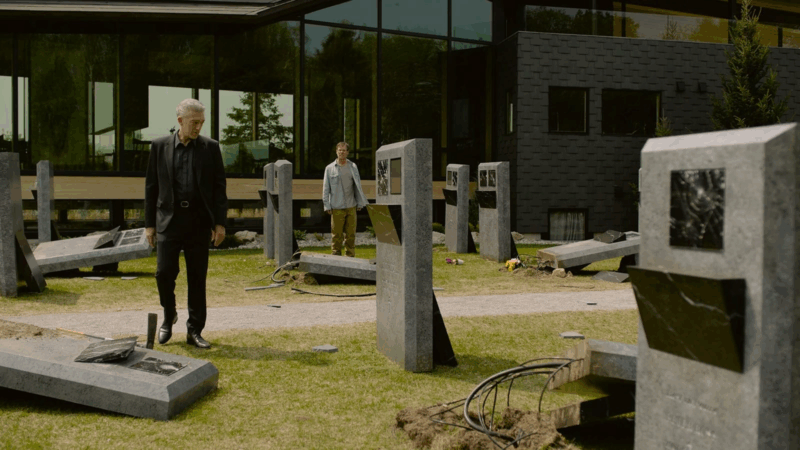
When The Shrouds premiered at film festivals last year, David Cronenberg described it as his most personal work — a deeply felt response to the death of his longtime wife, from cancer in 2017. The movie is about a man named Karsh, who lost his wife, Rebecca, to cancer four years earlier.
That’s not the only similarity. If you know what Cronenberg looks like, you’ll see that Karsh, played by Vincent Cassel with a silvery shock of hair, resembles the director — maybe not a dead ringer, but close enough to give you a chill — and a bit of a chuckle.
That’s the thing about The Shrouds; it’s deeply morbid and sad, but it’s also disarmingly funny. Karsh is the mastermind behind a company called GraveTech, which allows people to monitor the remains of their dead loved ones.
Before the body is buried, it’s wrapped in a high-tech metal shroud, equipped with an MRI-style scanner. And so, at any time, with a swipe of your phone, you can watch a feed, from the grave, of the decomposing body. It’s not just on your phone, either; the feed also goes to a screen built into the person’s headstone.
Karsh himself uses GraveTech obsessively, keeping close tabs on his wife Becca’s body at all times. This has naturally made it difficult for him to move on. One amusing early scene finds Karsh on a blind date with a woman who heads for the exit the minute she finds out what he does for a living. The next day, Karsh debriefs the date with Becca’s sister, Terry, played by Diane Kruger.
Cronenberg is often described as a master of body horror, a subgenre he helped pioneer with early efforts like The Brood and Scanners and recently pushed to audacious new extremes with the wondrously icky Crimes of the Future.
The label can be misleading, though. Cronenberg’s films are even more cerebral than they are visceral, and he’s never been purely interested in grotesque for grotesque’s sake. The Shrouds is certainly a body-horror movie in perhaps the most relatable sense: It’s about the physical ravages of illness and death. At various points, Karsh sees Becca — also played by Kruger — in dreamlike flashbacks that reveal exactly what the cancer did to her body. I can’t think of a filmmaker besides Cronenberg who could present the body this way: with clinical directness, undimmed desire and real tenderness.
The Shrouds isn’t just a horror movie about corporeal decay; it’s a thriller steeped in techno-paranoia.
Early on in the film, someone vandalizes the GraveTech cemetery, ripping the headstones from their foundations and hacking into the video feeds, for reasons unknown. The Shrouds isn’t just a horror movie about corporeal decay; it’s a thriller steeped in techno-paranoia.
To get to the bottom of the vandalism, Karsh enlists the help of Terry’s ex-husband, a computer whiz played by an unnervingly twitchy Guy Pearce. Karsh also relies on an AI personal assistant — voiced by, you guessed it, Kruger again — who doesn’t seem entirely trustworthy. There are whispers that the vandals are aligned with shadowy Russian and/or Chinese forces, hinting at a mass data-theft conspiracy that may or may not exist.
The Shrouds never fully coheres as a mystery; in the end, it’s an intriguing but not especially satisfying puzzle. I didn’t mind that about it; Cronenberg isn’t out to provide easy answers. He’s saying that we live in such a 24/7 internet fog now, who knows what could be out there, mining the most human and vulnerable parts of ourselves: our habits, our yearnings, our relationships. This isn’t a new theme for Cronenberg; he’s always been fascinated by the way technology alters our minds and even our bodies.
In his 1983 classic Videodrome, the director inserted a Betamax cassette into his protagonist’s torso, literalizing the idea of what TV is doing to us. The Shrouds isn’t nearly as graphic, but it doesn’t have to be; it’s set in a world where most of us have all but fused with our phones already. All of which is to say that this seemingly death-obsessed movie — about grief and desire, and the unsettling power of technology to assuage them — is also a movie about life and the way more than a few of us live now.

Swiss Alpine bar fire claims 41st victim, an 18-year-old Swiss national
Swiss prosecutors have opened a criminal investigation into the owners of Le Constellation bar in the ski resort of Crans-Montana, where a fire in the early hours of Jan. 1 killed dozens.

Sunday Puzzle: Rhyme Time
NPR's Ayesha Rascoe plays the puzzle with WBUR listener Laurie Rose and Weekend Edition Puzzlemaster Will Shortz.
Alcaraz beats Djokovic to become the youngest man to complete a career Grand Slam
The 22-year-old Spaniard's win against 38-year-old rival Novak Djokovic at Sunday's Australian Open makes him the youngest male player to win all four major tournaments.
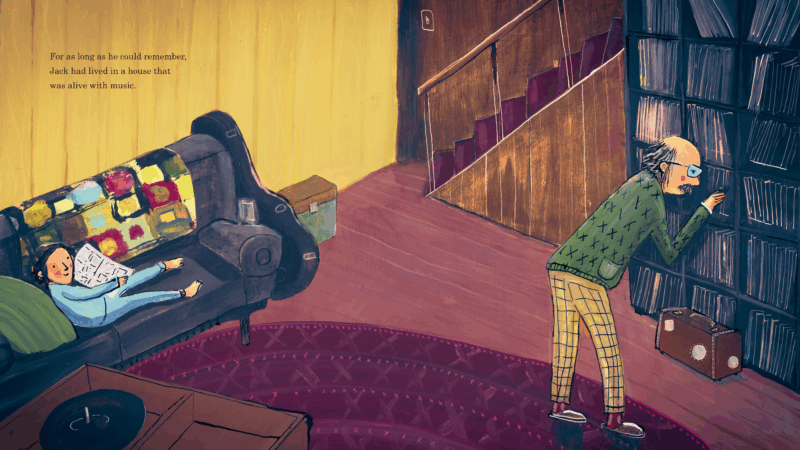
You already know the song — now, ‘The One About the Blackbird’ is also a picture book
In The One About the Blackbird, a young boy learns to play guitar from his grandfather. And there's one song in particular that they love…
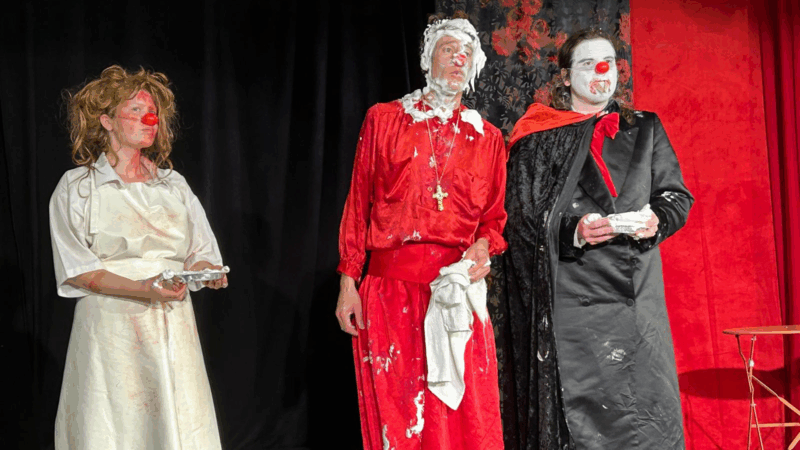
At a clown school near Paris, failure is the lesson
For decades, students at the Ecole Philippe Gaulier have been paying to bomb onstage. The goal isn't laughs — it's learning how to take the humiliation and keep going.

In the world’s driest desert, Chile freezes its future to protect plants
Tucked away in a remote desert town, a hidden vault safeguards Chile's most precious natural treasures. From long-forgotten flowers to endangered crops.
