
The politics of the U.S. strike on Iran’s nuclear facilities: Here’s what to watch next
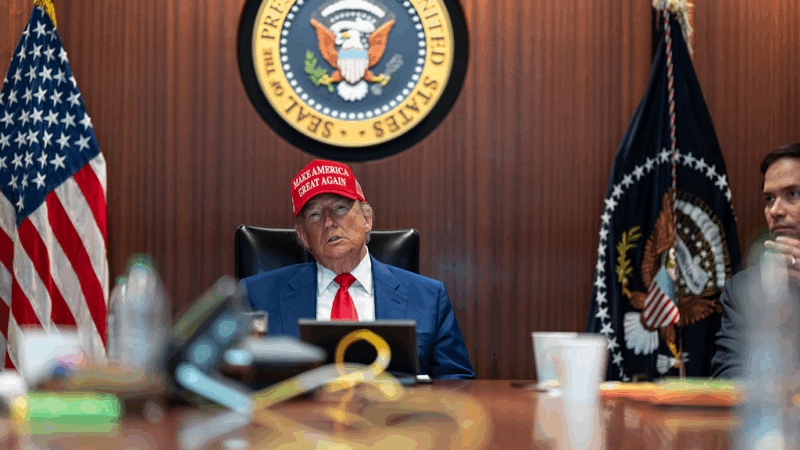
All presidents deal with extraordinary tests.
Many are not by their choosing. But some are.
And President Trump’s decision to strike Iran’s nuclear facilities is one this president chose.
So how will the politics of that decision play out?
Here are five ways to think about that:
1. Trump ran on a pledge to end “forever wars,” so what comes next is pivotal.
As expected, Republicans are rallying around Trump after the strike, but some influential figures in the MAGA base are not thrilled with the prospect of involvement in another conflict in the Middle East.
Trump’s action was unexpected, given that until very recently the president seemed keen on negotiating with Iran over its nuclear program. Trump does not want a prolonged war and certainly doesn’t want to commit ground troops to the effort.
Before the strike, polls showed Americans saw Iran as a fairly serious potential threat. But they were also largely against the U.S. joining Israel in its military campaign against Iran.
Now, the test for Trump is whether the conflict will be contained. The politics of a single operation is one thing. The politics of something more prolonged is another.
2. The full impact of the attack is not yet known. What will Americans learn and when?

Trump says that the strikes “obliterated” Iran’s nuclear facilities. The administration will have to assess just how successful they were, likely with satellite photographs and human intelligence.
After the intelligence failures leading up to the Iraq War, the country is rightfully more skeptical of what the government says. Plus, with about half the country distrustful of Trump regardless, the public will likely expect incontrovertible evidence of a severe setback to Iran’s nuclear capabilities.
On Sunday night, Trump posted on Truth Social that satellite images back his assertion of “Monumental Damage.”
But independent experts analyzing commercial satellite imagery told NPR’s Geoff Brumfiel that key components of Iran’s nuclear enterprise may have survived the attack.
3. The results of Iran’s retaliation will have consequences.
Israel has long planned for an attack on Iran’s nuclear facilities, and Iran has been severely hampered in the last couple of years. With so many Iranian allies in the region depleted — from Hamas, Hezbollah and the Houthis to a Russia preoccupied with its war in Ukraine and a toppled Syrian regime — the time seemed ripe for the attack.
Now that it’s happened, Iran will almost certainly look to respond. With its capabilities in question, Trump may have felt that the attack was worth the risk of potential retaliation.
The Trump administration will work to repel those possible attempts, but from the military on down to governors and local police departments, the country is — and will be — on a heightened level of security concern.
A fatal attack on Americans anywhere in the world — from service members overseas to embassies or civilians — would have serious political ramifications in addition to the human cost.
Loading…
4. The strike raises questions about Trump’s approach to foreign affairs.
Beyond Trump’s campaign pledges to take a less-interventionist approach than past Republican presidents, Trump has also pushed for peace deals overseas.
The biggest deals, though, have eluded him — whether it’s trying to get a permanent ceasefire between Israel and Hamas, wanting to end the war between Russia and Ukraine and — until Saturday night — seeking a nuclear deal with Iran.
So why did Trump change his approach to Iran? Was it because he had privately determined that talks about a new nuclear deal were going nowhere (after having backed out of the one struck by the Obama administration during his first term) — or was it that Israeli Prime Minister Benjamin Netanyahu forced his hand?
When Netanyahu went forward with attacks on Iran, it put Trump in a corner. Politically, it’s difficult for an American president to not appear publicly to be largely supportive of Israel. And Trump has never wanted to look weak.
While he said he wants to be the president of peace, projecting toughness and strength has also always been central to Trump’s politics.
How his “peace through strength” approach plays out over the three-and-a-half years left in his presidency remains to be seen.
5. Don’t expect the debate over congressional authorization to go very far.
There are members of Congress on both sides of the aisle who would like to see presidents go to Congress for authorization of serious, non-defensive military action.
Sen. Tim Kaine, D-Va., is pushing for clearer language that makes pre-authorization from Congress a requirement — and he’s done so during both Republican and Democratic presidencies. Bipartisan members of the House are doing the same.
That debate is going to continue, but with Republicans largely rallying around Trump, it’s highly unlikely that requirement will pass through either chamber.
Democrats also run some risk in making the legality of the strikes a central issue (never mind calling for Trump’s impeachment), because Republicans would paint them as defending Iran — regardless of the merits of their argument. If it becomes clear that the strikes did, in fact, significantly weaken Iran’s nuclear capabilities, that would likely be to Trump’s political advantage.
At the same time, Trump’s unilateral action also builds on Democrats’ message of Trump pushing the bounds of his authority in all aspects of the presidency.

Opinion: The immorality of betting on war
Traders on prediction markets bet on nearly anything. One made more than half a million dollars betting on the U.S. strike against Iran. But should people wager on human suffering?
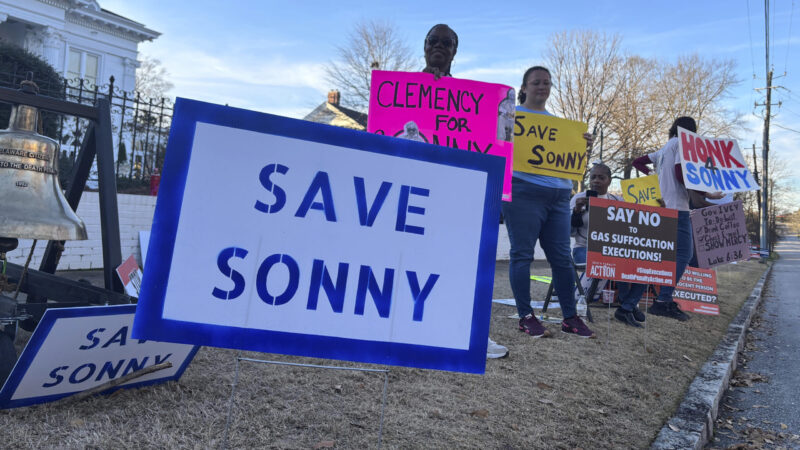
Alabama man facing execution for deadly robbery asks for clemency as he didn’t kill victim
Charles “Sonny” Burton is scheduled to be executed March 12 for his role in a 1991 robbery in which a man was fatally shot. His supporters and attorney are asking the governor for clemency, arguing that his life should be spared because Burton didn’t fire the gun or witness the killing.
One week into the Iran war, the fallout is global
The war is no longer just about the U.S., Israel and Iran. More countries are getting caught in the political crossfire or being drawn into the fighting themselves.

Curling had its moment at the Olympics and now Paralympics. It sparked a curling bonanza in America
Hundreds of people become interested in curling every four years and the 2026 numbers already show that boom.
Iran’s president defies U.S. demands while apologizing for strikes on neighbors
President Masoud Pezeshkian said Saturday that a demand by the U.S. for an unconditional surrender is a "dream that they should take to their grave." He also apologized for Iran's attacks on regional countries.
What the Trump administration says about why it went to war with Iran
The Trump administration says it is "laser focused" and mission driven, but the messaging has been varied. The range of cited motivations for striking Iran now are sometimes at odds with each other.
