
The math behind the war: Can Israel’s air defense keep up against Iranian attacks?
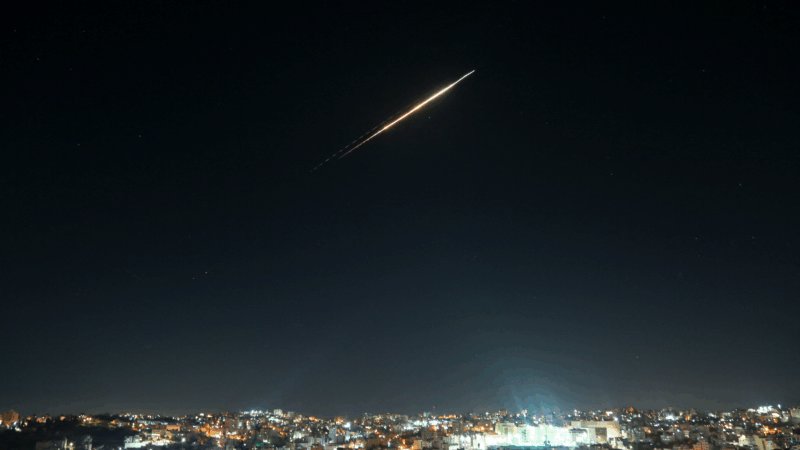
As the war between Israel and Iran enters its second week, there’s a specific kind of math that will determine just how much longer it can go — how many long-range missiles Iran has versus how many missile interceptors Israel has to shoot them down.
Over the course of several days, Iran launched more than 400 missiles and hundreds of drones in retaliation for Israel’s surprise strikes last week, according to the Israeli military. Israel has managed to shoot most of them down — although several have hit — but as the barrages from Iran continue, Israel is using interceptors faster than it can make them.
“Whenever you’re talking about somebody shooting big ballistic missiles at you, you pay real close attention to the clock in terms of how long you can shoot back,” says Tom Karako, director of the Missile Defense Project at the Center for Strategic and International Studies.
Karako says his biggest worry right now is that, eventually, Israel’s missile interceptors could run out: “That would be a bad day. That would be a very bad situation.”
Israeli officials won’t comment on how many interceptors it has left, as that would potentially give Iran much-coveted information to gain an advantage. The Israeli military told NPR it “is prepared and ready to handle any scenario,” when asked about its extended ability to intercept long-range missiles.
Israeli Prime Minister Benjamin Netanyahu has nodded to key U.S. air defense assistance, both with THAAD missile defense systems and U.S. naval power from the sea, but experts say that as the war continues, Israel will get to a point where it needs to start rationing its arsenal.
“The longer this war drags on, Israel will be put in a position where it has to choose what to defend,” says Joe Truzman, a senior analyst at the Foundation for Defense of Democracies, a Washington think tank that often advocates for Israeli security and is critical of Iran.
He says Israel might have to start focusing on defending key military or security targets versus civilian infrastructure, for example, meaning that Israeli cities and towns might start seeing more destruction than they have in the last year-plus with wars on multiple fronts.
That, Truzman says, is what Iran wants.
“I think it’s in Iran’s calculus that it wants to reach that point so it can pressure Israel more to give up on its ambition of destroying Iran’s nuclear infrastructure,” he says.
The other side of the equation is how many long-range missiles Iran has to shoot, and what it has to shoot them with. Few reliable estimates of Iran’s stockpile exist, but experts tend to think that Iran has used around a third to a half of what it has since it began firing at Israel more than 14-months ago. Israel also says it has taken out several munitions caches in recent days.
Perhaps more important is how many missile launchers Iran has, which have been a key target for Israeli strikes.
“We attack the launchers,” Netanyahu said in an interview on Thursday. “It doesn’t matter how many missiles they have, it matters how many launchers they have. And we’re getting there, I think we’ve passed half.”
That’s another difficult number to know for sure, but Fabian Hinz, a missiles expert at the International Institute for Strategic Studies in Berlin, tells NPR that, like most nations, Iran has fewer missile launchers than they do missiles, so their destruction is “definitely an issue” for Iranian forces as they plan salvos towards Israel.
Israel also claims to control all of Iran’s skies, after crippling Iran’s air defense, meaning that unlike Iran, it can now strike whatever targets it wants at will. In an interview with Fox News earlier in the week, Netanyahu described it as a “free highway to Tehran” for Israel.
That could also significantly help the U.S. military should President Trump decide to directly enter the conflict, using massive bunker-buster bombs in an attempt to stop Iran’s nuclear capabilities. Earlier this week, the White House said that President Trump will make that decision within two weeks.
Meanwhile, as arsenals on both sides deplete, civilians continue to pay a heavy price. Some 430 civilians have been killed by Israeli strikes in Iran, according to Iranian state media citing the Health Ministry, and more than 3,500 injured, with anxiety high as hundreds of thousands attempt to flee major cities. Israeli officials say 24 people have been killed in Iranian strikes in Israel, and more than 1,000 wounded.
Shir David contributed to this report from Tel Aviv. NPR’s Geoff Brumsfiel contributed from Washington, D.C.

In the world’s driest desert, Chile freezes its future to protect plants
Tucked away in a remote desert town, a hidden vault safeguards Chile's most precious natural treasures. From long-forgotten flowers to endangered crops.

At a clown school near Paris, failure is the lesson
For decades, students at the Ecole Philippe Gaulier have been paying to bomb onstage. The goal isn't laughs — it's learning how to take the humiliation and keep going.
Iran’s supreme leader warns any US attack would spark ‘regional war’
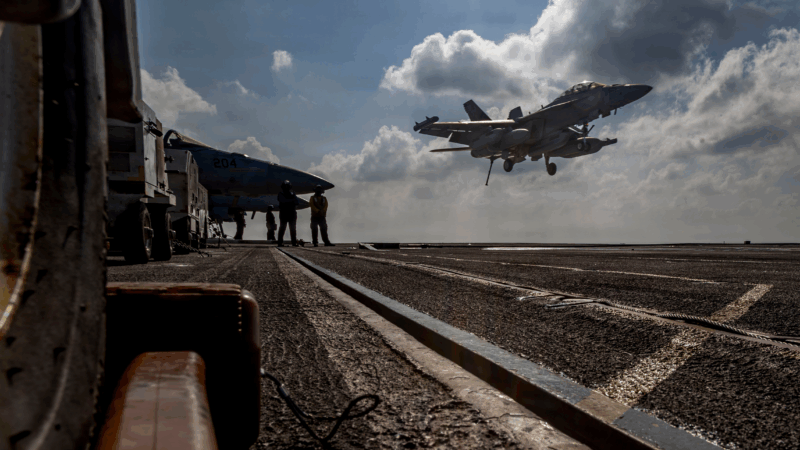
Iran's supreme leader warned Sunday that any attack by the United States would spark a "regional war" in the Mideast, further escalating tensions as President Donald Trump has threatened to militarily strike the Islamic Republic.

Minnesota citizens detained by ICE are left rattled, even weeks later
The number of immigration agents in Minnesota may be reduced, but they'll leave leave behind a changed community, including many U.S. citizens questioned and detained in recent weeks.
Gaza border crossing buzzes with activity after years of near-complete closure
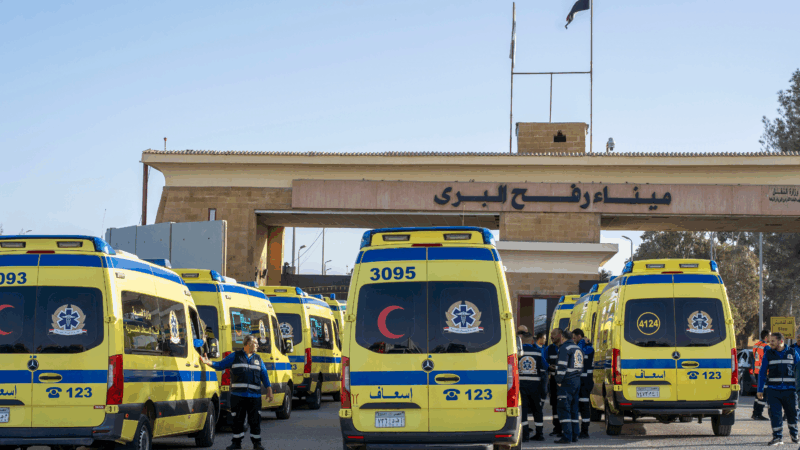
Reopening the border crossing is a key step as the Israel-Hamas ceasefire moves ahead.
Democrat Taylor Rehmet wins a reliably Republican Texas state Senate seat, stunning GOP
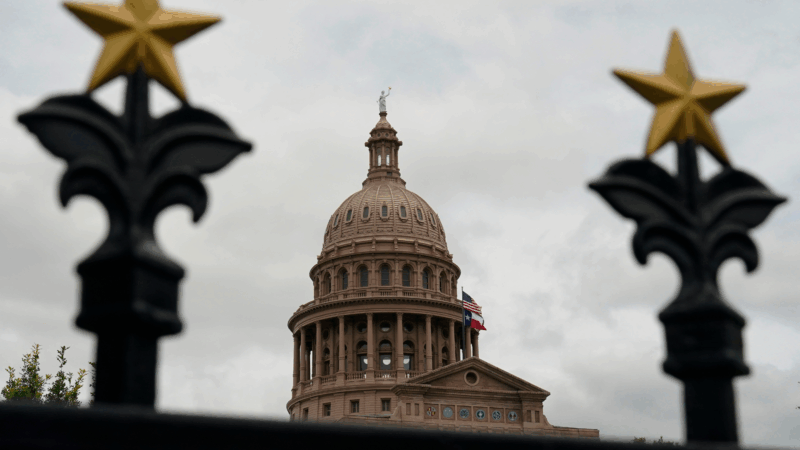
Democrat Taylor Rehmet won a special election for the Texas state Senate on Saturday, flipping a reliably Republican district that President Donald Trump won by 17 points in 2024.
