
The EV tax credit ends soon — but there’s a little bit of wiggle room for car buyers
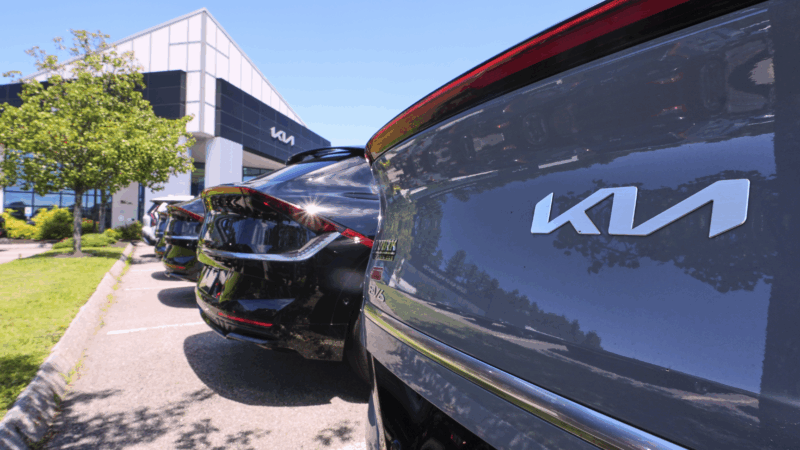
The clock is ticking on the federal EV tax credit for electric vehicle purchases, worth up to $7,500. The One Big Beautiful Bill Act eliminated the credit, which expires Sept. 30.
But this week the IRS clarified that the deadline has a little bit of flexibility. Specifically, as long as a shopper enters a binding contract to buy a vehicle before Sept. 30, the purchase can qualify for the tax credit — even if the car isn’t actually delivered until later.
A payment before the deadline is also required. “A payment includes a nominal downpayment or a vehicle trade-in,” the IRS notes. The tax credit won’t actually be granted until the buyer takes possession of the car, but as long as the binding contract was in place before the deadline, it won’t matter that the transfer happened afterward.
The IRS has typically used delivery dates to determine eligibility for the tax credit; for example, if your vehicle would have qualified for a tax credit in 2024 but not in 2025, and you took delivery on January 1, you were out of luck.
But it’s not unprecedented for the agency to base eligibility on the date a contract was signed.
“The IRS has used this exact same language before, when the rules for claiming the credit changed after the Inflation Reduction Act was passed,” notes Sean Tucker, the lead editor of Kelley Blue Book.
And the new guidance is also consistent with what lawmakers argued during debates over the the tax and spending package, when two Republican members of Congress stated that it was the “legislative intent” of Congress to treat a binding contract as a purchase.
Andy Phillips, the vice president of the Tax Institute at H&R Block, says the added wiggle room will be particularly helpful for car shoppers who want to buy a vehicle that’s located in another state and needs to be shipped to them, or who would like to order a car that hasn’t yet been manufactured. In both cases, they might run out of time to get the car delivered before the deadline.
“I can’t give you exact numbers of how many people will now be able to take advantage of this credit” because of the IRS update, he says. “But what I can tell you is for the people that know the vehicle they want, this added flexibility will make a meaningful difference to them.”
Tax credit 101
The federal tax credits for electric vehicles are complicated, and have changed repeatedly in recent years. (Here’s our most recent guide.) Unlike most tax credits, this one can now be received up-front, in the form of a discount on a vehicle purchase.
For new vehicles, the tax credits are worth up to $7,500. Vehicles have to be under a specific price cap, be made in North America, and contain a certain percentage of battery minerals and components that come from the U.S. and certain allied countries.
Meanwhile, to be eligible for the credit, buyers have to earn less than $150,000 adjusted gross income ($300,000 for married couples) — that’s income after tax-deductible retirement contributions.
Qualifying vehicles are listed here, and include many Tesla, Chevrolet, Hyundai and Kia models, as well as the Ford F-150 Lightning and the Chrysler Pacifica PHEV. In each case, shoppers need to confirm with a dealer that an individual car qualifies for the credit — not all do.
Meanwhile, there’s also a used vehicle credit worth up to $4,000 for EVs at least two years old that are sold for less than $25,000.
And for people who choose to lease rather than buy, $7,500 can be put toward the lease of any EV, without restrictions on price, manufacturing location or buyer income — a loophole that has pleased many automakers and frustrated many EV tax credit critics.
A looming deadline
EV and plug-in hybrid sales in the U.S. grew rapidly from 2020 to 2023. But despite continued growth overseas, since then they have been stuck in neutral in the U.S., holding steady at around 10% of the market. That was disappointing for automakers and environmentalists alike.
Now the Trump administration is rolling back a whole suite of policies designed to promote EVs, including ending these tax credits.
Analysts expect a near-term bump in EV sales, as buyers and dealers race to get ahead of the deadline, followed by a drop in sales. Auto data giant Cox Automotive reports that new EV sales were up almost 20% year-over-year in July, and used EV sales were up 40%. Earlier this month, Stephanie Valdez Streaty of Cox predicted that “urgency is likely to remain high” as the tax credits near expiration, and sales will be strong through the end of September.
In the long run, electric vehicles are still expected to grow in popularity, albeit slower than predicted, and automakers are still investing in new EVs designed to be cheaper.
Jessica Caldwell, the head of insights at the auto data company Edmunds, says the loss of the tax credit is “pretty daunting” for automakers, as they also navigate shifting tariffs and high interest rates.
She says searches for EVs on Edmunds.com haven’t increased as much as she expected as the tax credit deadline approaches. “I don’t think a lot of consumers are necessarily aware this is happening,” she says. “With so much news going out there around autos, particularly around tariffs, some of this message may be getting lost — and people may find themselves disappointed come fall.”

Senegal and Morocco fined and players banned after African Cup final chaos
Africa's soccer body issued fines worth more than $1 million and banned Senegal's coach and Senegalese and Morocco players Wednesday following a shambolic African Cup soccer final this month.

‘Philadelphia,’ ‘Clueless,’ ‘The Karate Kid’ added to the National Film Registry
Every year, the National Film Registry adds 25 films to its collection to be preserved for posterity. Selections for 2025 ranges from 'The Thing' to 'White Christmas'

Caregivers for the elderly could lose wage protections under Trump proposal
The Labor Department has proposed rescinding an Obama-era rule that gave home care workers the right to overtime pay and other wage protections. The administration says the rule made care too costly.

Big budget Melania Trump documentary premieres with splashy rollout
A film about First Lady Melania Trump premiere's this week, with big presidential promotion.

Trump has sued universities for billions. Here’s what the strategy tells us
Each deal between colleges and the administration is unique, but they have common goals: altering the culture at powerful institutions and making their policies more aligned with President Trump's.

Car rams into Chabad headquarters in New York City, damaging doors
A man was arrested after repeatedly crashing his car into the Chabad Lubavitch world headquarters in New York City on Wednesday night while people were gathered for prayer.
