
‘The Emperor of Gladness’ is a beautiful novel about hard work and found family
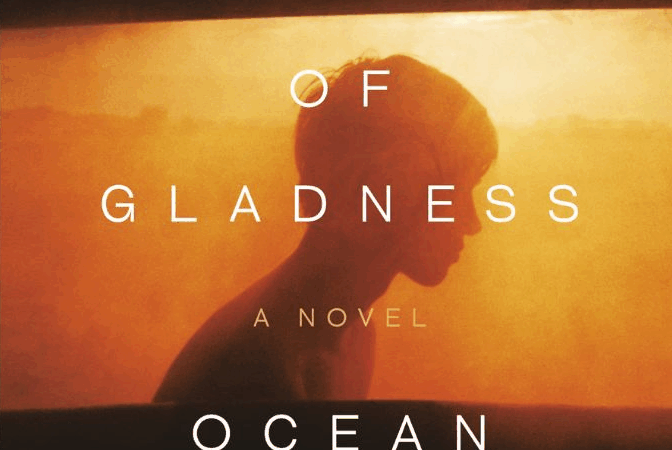
Ocean Vuong’s 2019 debut novel, On Earth We’re Briefly Gorgeous, was one of those novels that made me silently pledge, “I’ll follow you anywhere, whatever you write.” And, so I have into Vuong’s 2022 poetry collection, Time Is a Mother, and, now, his second novel.
The Emperor of Gladness, like its predecessor, explores what Vuong has called in a recent interview, “the loneliness of class movement.” Sprawling where its predecessor was compact, The Emperor of Gladness opens on a view — sweeping in time and space — of East Gladness, Conn., a town that manufacturing left behind. Our tour guides are the spirits of the place, who speak to us in a collective voice:
Follow the [train] tracks till they fork off and sink into a path of trampled weeds leading to a junkyard packed with school buses in various stages of amnesia, … Furred with ivy, their dented hoods pooled with crisp leaves, they are relics of our mislearning.
If the novel’s opening calls to mind Thornton Wilder glazed with Bruce Springsteen, what happens next reads like Vuong’s nod to Frank Capra and his classic 1946 film, It’s a Wonderful Life.
Our main character, a 19-year-old depressed Vietnamese American boy named Hai, stands on the town bridge. Hai has lied to his immigrant mother: She knows he’s dropped out of college, but in an effort to make her feel better, Hai claims he’s been accepted to med school, which she naively believes. Her joy fills him with self-loathing.
As Hai is about to jump into the river below, he’s stopped, not by Clarence-the-angel, but by an elderly woman whose house abuts the river. Grazina arrived in East Gladness as a Lithuanian refugee after World War II. She’s now a widow suffering from dementia and stranded in what once was a thriving blue-collar neighborhood. Because she has an empty house and Hai can’t return to his mother, the two settle in together, with Hai becoming Grazina’s caregiver.
This is one vision of a “found family” that Vuong presents in The Emperor of Gladness and its miraculous lack of sentimentality surely owes something to the fact that he lived a similar story himself. In fact, Vuong dedicates this novel to “his” Grazina.
Vuong’s s gifts of writerly restraint also keep things real here. About midway through the novel Grazina asks Hai, who’s giving her a bath, if he’ll “undress for once,” so she doesn’t feel “like I’m some patient.” Hai steps out of his boxers and Grazina looks at him, the relationship silently equalized.
But it’s another type of “found family” that this novel even more deeply explores: that is, the often fleeting-but-intense one that sometimes emerges through work. Hai finds a job at a local fast-casual restaurant called “HomeMarket,” although he quickly catches on that: “At HomeMarket ‘made by hand’ meant heating up the contents of a bag of mushy food cooked nearly a year ago in a laboratory outside Des Moines and vacuum-sealed in industrial resin sacks.”
There are pages of wry and often compassionate catalogues here describing the routines of Hai and his fellow workers, as well as the drugs they take to get through the pain and exhaustion of those routines. Every day this crew spends more of their waking hours with each other than they do with anyone else. One result is that they can sniff each other’s presence:
Before long Hai began to know which employee was behind him by their scent alone. The Johnson & Johnson baby lotion Wayne rubbed over grease burns on his arms, the traces of whiskey coming through the Wrigley’s Maureen chewed, the bootlegged Tom Ford … BJ wore cut with the strawberry Starbursts Russia was always sucking on.
The Emperor of Gladness is a truly great novel about work — still an under-acknowledged topic in American fiction. Hard work is supposed to get you somewhere — that’s part of the promise of America. But the pay-off feels much less certain to these characters. A winning lottery ticket, an inheritance, maybe even a union would have to come along to propel these characters to a place of greater humane possibility. Vuong’s achingly austere artistic vision leaves it to his readers to imagine the better world he won’t let himself depict on the pages of this wonderful novel.

Carney says he backs strikes on Iran ‘with some regret’ as world order frays
Canadian Prime Minister Mark Carney says he supports the strikes on Iran "with some regret" as they represent an extreme example of a rupturing world order.
Iranian civilians are now fleeing the relentless bombing for neighboring Turkey
As the U.S. military broadens its strikes in Iran, traumatized Iranians are reaching the border with Turkey.

A split Senate votes against measure to constrain Trump’s authorities in Iran
Democrats in the Senate were facing an uphill climb Wednesday in their push to restrain President Trump's ability to wage war against Iran.
WATCH: How traffic dried up in the Strait of Hormuz since the Iran war began
The effective closure of the Strait of Hormuz is "about as wrong as things could go" for global oil markets. Iran achieved it not with a naval blockade, but with cheap drones.

As Mississippi waits to spend opioid settlement funds, children and families suffer
Mississippi will receive more than $400M to fight the opioid epidemic. So far, officials haven't directed it toward programs that support addiction recovery.
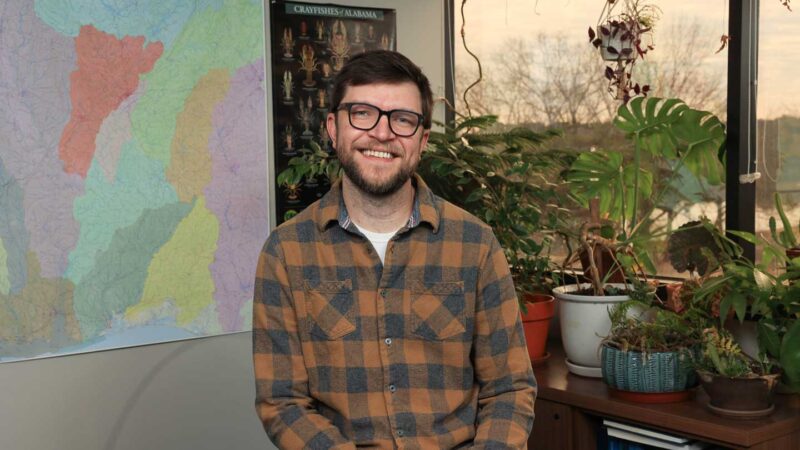
Alabama’s new state climatologist takes the reins
The controversial John Christy is retiring as Alabama’s state climatologist. Lee Ellenburg now assumes the role and is already making a few changes, including declaring that climate change is real and caused by humans.
