
The delightful history behind serendipity suggests it’s not mere luck
In the new year, we can all use some serendipity, right?
Since the word was coined in the 18th century, “serendipity” has been used to describe all kinds of scientific and technological breakthroughs, including penicillin, the microwave oven and Velcro. (More on these below.)
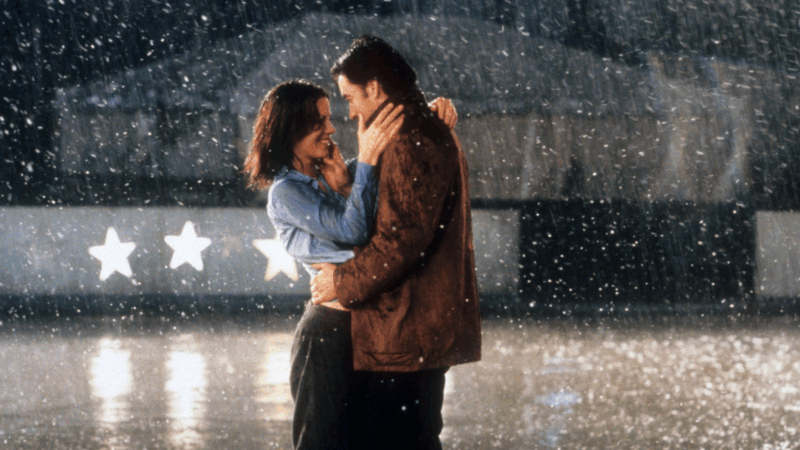
The whimsical term has also been the title of countless poems, songs and books about remarkable coincidences or eureka moments. And let’s not forget that it was the name of the charming 2001 romantic comedy about two strangers — played by John Cusack and Kate Beckinsale — meeting and reuniting during chance encounters.
“Serendipity” — as the Merriam-Webster dictionary defines it — is “the ability to find valuable or agreeable things not sought for” or “luck that takes the form of such finding.”
While the word has often been associated with good fortune or happy accidents, its origin suggests that serendipity goes beyond just happenstance. Some researchers argue that serendipity can be acquired through skill and that opportunities for serendipitous moments occur more frequently than we realize.
In this week’s installment of NPR’s Word of the Week, we dive into the roots of serendipity, its impact throughout history and tips on how we can cultivate it ourselves.
Serendipity’s wayward journey
While serendipity is all about the unexpected, its origins are less mysterious.
“This is one of those relatively rare words that we can actually pinpoint the exact time and place when it was coined,” said Colin Gorrie, a language scholar who has studied the history of “serendipity.”
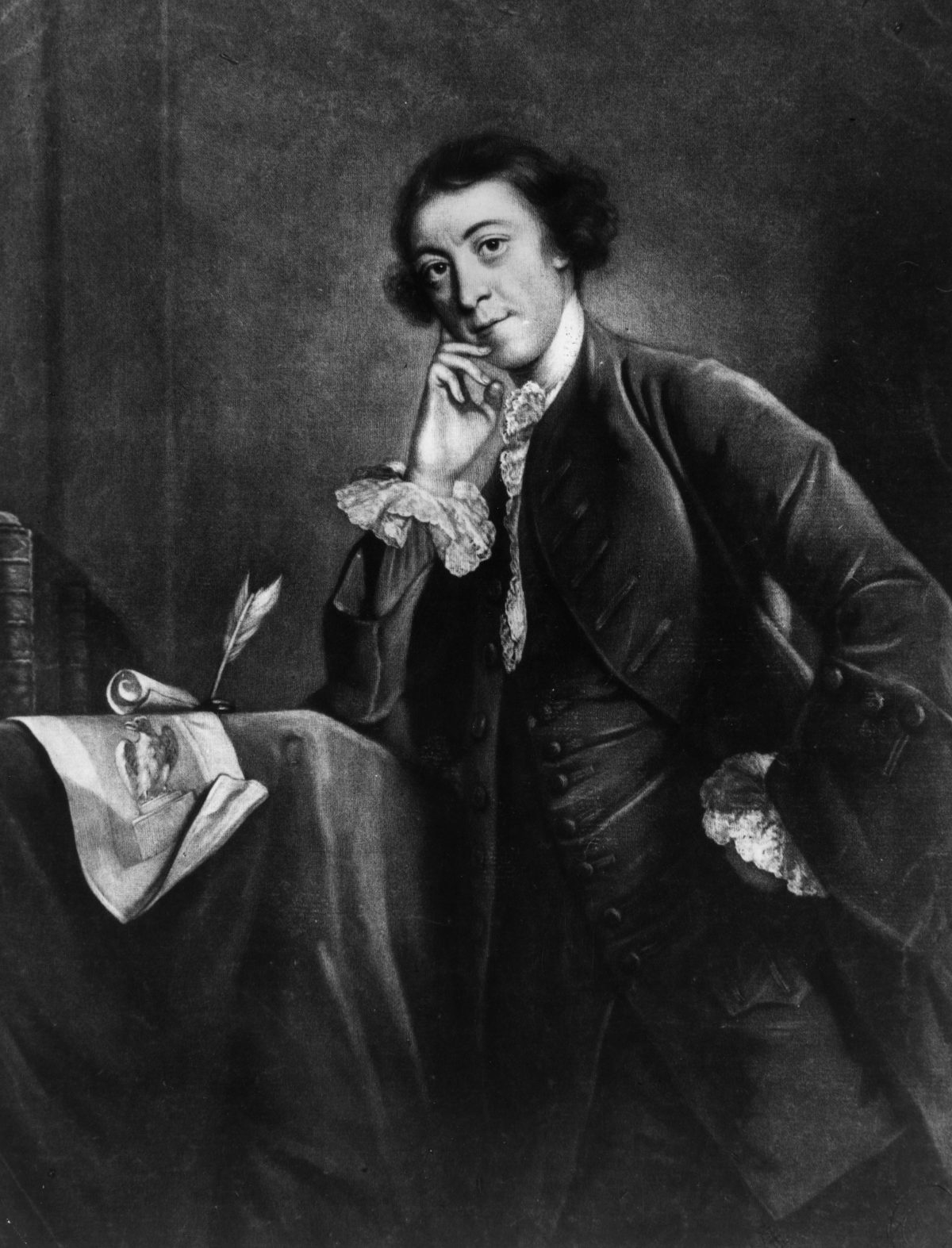
The term was introduced by English politician and writer Horace Walpole in a letter dated Jan. 28, 1754. Walpole is widely credited with writing the first gothic novel, The Castle of Otranto, but he was also the inventor of dozens of words in the English language, including “souvenir” and “nuance,” along with less common terms like “balloonomania,” referring to an 18th-century craze for hot air balloons, and “robberaceously,” meaning a robber-like manner.
Walpole said he drew inspiration from a Persian fairy tale, “The Three Princes of Serendip.” (Serendip is a historical name for Sri Lanka.)
“As their Highnesses travelled, they were always making discoveries, by accidents and sagacity, of things which they were not in quest of,” he wrote.
As an example from the story, Walpole recalled how the three princes realized that a mule was blind in its right eye after observing that only the grass on the left side of the road had been eaten.
“Now do you understand Serendipity? One of the most remarkable instances of this accidental sagacity,” Walpole added.
According to linguist Gorrie, the story had traveled far and been translated multiple times before reaching Walpole in London.
“I definitely think that it’s a classic instance itself of serendipity,” he said. “The transmission of this folktale, as far as I can tell from my research, it came into English from French, and it came into French from Italian, and it came into Italian from Persian. And then beyond that it probably had oral precedents.”
The skills behind serendipity
Over the years, the definition of “serendipity” has broadened slightly.
“I think often now people will use it in a bit more of a generic sense to mean a positive thing that happened by chance,” Gorrie said. “ It’s the same basic meaning, but it’s less to do with finding and more just to do with happening.”
However, to Sanda Erdelez, a professor at the School of Library and Information Science at Simmons University, serendipity involves more than just being at the right place at the right time.
“ What matters is not just chance, but how people recognize this opportunity and then how they act on that opportunity,” she said. “There is actually an element of human agency in it.”
In her research, Erdelez focused on how people come across information important to them either unexpectedly or when they are not actively looking for it. She called them “super-encounterers.”
“These are people who have a high level of curiosity,” Erdelez said. “[They] have either a number of hobbies or interest areas so they can see connections between various things.”
Erdelez added that super-encounterers were skilled in the art of noticing. That was a key step in many famous instances of serendipity.
For example, in 1928, Scottish microbiologist Alexander Fleming discovered penicillin after examining the mold that had accidentally grown in one of his petri dishes. In 1941, Swiss engineer Georges de Mestral came up with the hook-and-loop mechanism behind Velcro following a walk through the woods, where he observed how a specific plant clung to his dog’s fur. And in 1945, American inventor Percy Spencer developed the microwave oven after realizing that the candy bar in his pocket began to melt near a magnetron.
Erdelez said Velcro is her favorite example of serendipity because it illustrates another trait of super-encounterers: the willingness to “stop and smell the roses.” It’s why Erdelez said she takes the long way to her meetings, giving herself time to scan the posters pinned to the bulletin boards along her route.
So, for those on the hunt for serendipitous moments, Erdelez suggests carving out time from a busy schedule to give chance a good chance to happen.
“Leaving some empty space around you rather than having everything timed, then programmed, I feel is one of the great habits that allows noticing,” she said.

Bill making the Public Service Commission an appointed board is dead for the session
Usually when discussing legislative action, the focus is on what's moving forward. But plenty of bills in a legislature stall or even die. Leaders in the Alabama legislature say a bill involving the Public Service Commission is dead for the session. We get details on that from Todd Stacy, host of Capitol Journal on Alabama Public Television.

My doctor keeps focusing on my weight. What other health metrics matter more?
Our Real Talk with a Doc columnist explains how to push back if your doctor's obsessed with weight loss. And what other health metrics matter more instead.

Baz Luhrmann will make you fall in love with Elvis Presley
The new movie is made up of footage originally shot in the early 1970s, which Luhrmann found in storage in a Kansas salt mine.

Forget the State of the Union. What’s the state of your quiz score?
What's the state of your union, quiz-wise? Find out!

A team of midlife cheerleaders in Ukraine refuses to let war defeat them
Ukrainian women in their 50s and 60s say they've embraced cheerleading as a way to cope with the extreme stress and anxiety of four years of Russia's full-scale invasion.
SNL mocked her as a ‘scary mom.’ In the Senate, Katie Britt is an emerging dealmaker
Sen. Katie Britt, Republican of Alabama, is a budding bipartisan dealmaker. Her latest assignment: helping negotiate changes to immigration enforcement tactics.
