
The cultural works becoming public domain in 2026, from Betty Boop to Nancy Drew
A new year means a new parade of classic characters and works entering the public domain.
Under U.S. law, the copyright on thousands of creations from 1930 — including films, books, musical compositions and more — will expire at the stroke of midnight on Jan. 1, 2026, meaning they will be free to use, share and adapt after nearly a century.
“I think this is my favorite crop of works yet, which is saying a lot,” says Jennifer Jenkins, the director of Duke University Law School’s Center for the Study of the Public Domain, who has compiled an annual list of public domain entrants for over a decade.
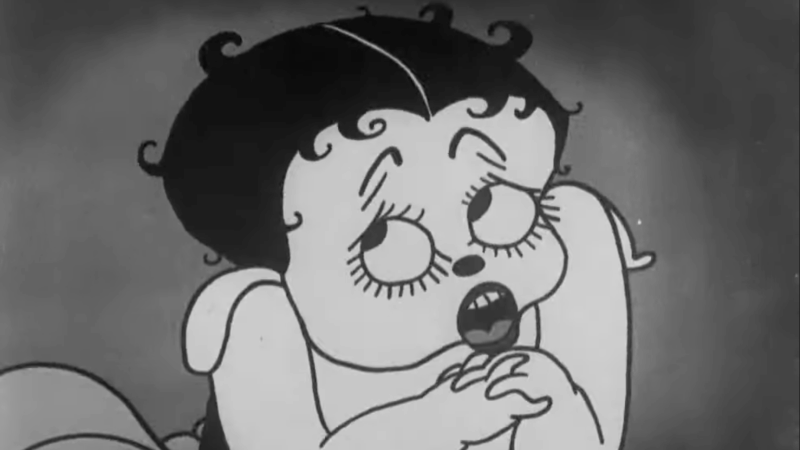
This year’s treasure trove features famous faces like the original Betty Boop — whose iconic hoop earrings originally took the form of floppy dog ears — and the initial version of Disney’s Pluto, who first went by the name Rover.
“That’s not only exciting in itself, but it’s really an opportunity to look back at the history of these two incredible animation studios, Fleischer and Disney, and how their styles are imprinted in the DNA of today’s cartoons,” Jenkins says. “That’s just a fun rabbit hole.”
Literary highlights include William Faulkner’s As I Lay Dying, the full version of Dashiell Hammett’s The Maltese Falcon, Watty Piper’s The Little Engine that Could, the first four books of the Nancy Drew detective series and The Murder at the Vicarage, Agatha Christie’s first Miss Marple mystery.
The movie selection spans war stories, musicals, thrillers, Westerns, comedies and more, coming from directors including Alfred Hitchcock, Howard Hughes and Salvador Dalí. Among them are All Quiet on the Western Front, Animal Crackers starring the Marx Brothers, 1931 best picture winner Cimarron, and two Marlene Dietrich films, Morocco and The Blue Angel.
Several movies on the list feature future stars in their early days: Bing Crosby’s first feature-film appearance in King of Jazz, Greta Garbo’s first talkie Anna Christie and The Big Trail, John Wayne’s first leading role.
Notably, Jenkins says, the films on this year’s list all predate the Hays Code, a set of self-imposed studio guidelines that banned subjects from profanity, violence and nudity to interracial relationships and “lustful kissing” in movies from 1934 to 1968.
The musical compositions include “Georgia on my Mind,” “Dream a Little Dream of Me” and four songs by Ira and George Gershwin: “I Got Rhythm,” “I’ve Got a Crush on You,” “But Not for Me” and “Embraceable You.” Among the artworks are Piet Mondrian’s “Composition with Red, Blue and Yellow” and the Jules Rimet Cup by Abel Lafleur — the original trophy of the FIFA World Cup from 1930 to 1970.
Jenkins says her four-person team spent well over 80 hours poring through the archives to compile this year’s list. Writing the online summary was another feat, one she says kept her busy from 5 a.m. to 5 p.m. over the course of two weeks.
But she thinks the crick in her neck is a small price to pay for shining a light on the value of public domain in “nurturing creativity and enabling access.”
“What’s really fun is that people are excited about it — people well beyond our world of copyright lawyers — especially when they start recognizing these works,” she says. “And for me, one of the most exciting things is when you revisit a work that you loved in a different period of your life and get to look at it again.”
The public domain unleashes new possibilities
You may be wondering: Isn’t there already a pretty famous Nancy Drew movie from 2007, and a cult-favorite Betty Boop musical on Broadway now?
Yes. But those productions had to get permission and pay money to adapt those characters at the time, Jenkins explains.
“What’s different now is if you and me are really good at choreographing dance moves and writing lyrics for songs, we could make our own musical featuring Betty Boop 1.0 and we can go in whatever crazy directions we want,” she says.
As a matter of fact, a Betty Boop horror movie is already in the works, following a string of 2025 scary movies starring villainous versions of the freshly non-copyrighted Peter Pan, Bambi and Popeye. Also, a Minnie Mouse slasher is due for release in 2026.
Not all adaptations have to be dark: Think West Side Story drawn from Shakespeare’s Romeo & Juliet, Percival Everett’s reimagining of Huckleberry Finn in the 2024 book James and, of course, the Wizard of Oz-inspired Wicked movies.
And public domain isn’t just good news for those who want to create art, but also for those who simply want to consume it.
“It goes well beyond creativity to availability, to preservation, to being able to use things freely in school,” Jenkins explains.
For example, Jenkins says, books tend to become cheaper — and available in more editions — once they enter the public domain.
A lot of creative works from the 1930s haven’t been in print for decades, and ownership questions have kept many from being available online at all — at least while they were under copyright.
“Publishing houses go out of business, people die, ownership changes hands,” Jenkins adds. “I mean, who on Earth owns the copyright to those random works from … almost a century ago? And when they go into the public domain, you don’t have to worry about that.”
Another benefit is that third parties can now digitize old films and sound recordings that have physically deteriorated over the decades — allowing for their preservation and wider distribution.
Jenkins says that’s especially exciting for teachers, who can make use of these resources for free at a time when school budgets are shrinking. And even those who are not regularly in a classroom can learn a lot from this sampling of works.
“Now we’re all having these conversations with our chatbots and wondering what it means that we’re reacting to artistic work or to words that are generated by a machine, it was just really striking to feel the humanity behind all these works from 1930,” Jenkins says, explaining that they were all created by people living in the shadow of World War I.
While there are many unresolved questions around AI and intellectual property, Jenkins says one thing is clear: “Human authorship is a requisite for copyright.” So if a bot writes your Boop musical, don’t expect it to be protected.

HUD proposes time limits and work requirements for rental aid
The rule would allow housing agencies and landlords to impose such requirements "to encourage self-sufficiency." Critics say most who can work already do, but their wages are low.
Paramount and Warner Bros’ deal is about merging studios, and a whole lot more
The nearly $111 billion marriage would unite Paramount and Warner film studios, streamers and television properties — including CNN — under the control of the wealthy Ellison family.
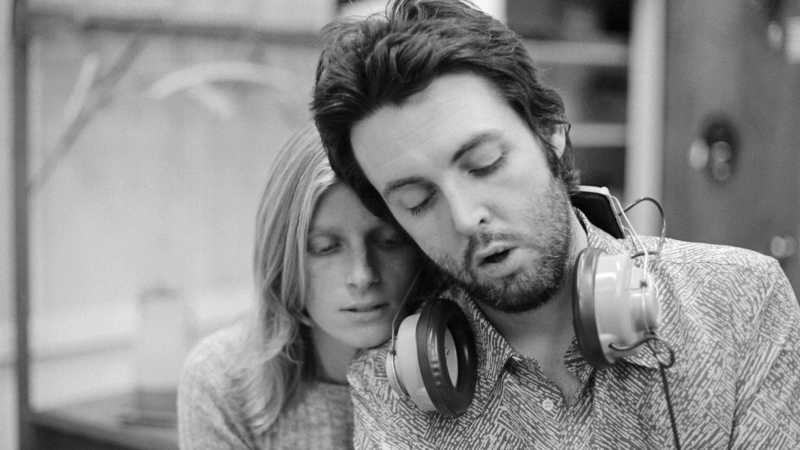
A new film follows Paul McCartney’s 2nd act after The Beatles’ breakup
While previous documentaries captured the frenzy of Beatlemania, Man on the Run focuses on McCartney in the years between the band's breakup and John Lennon's death.
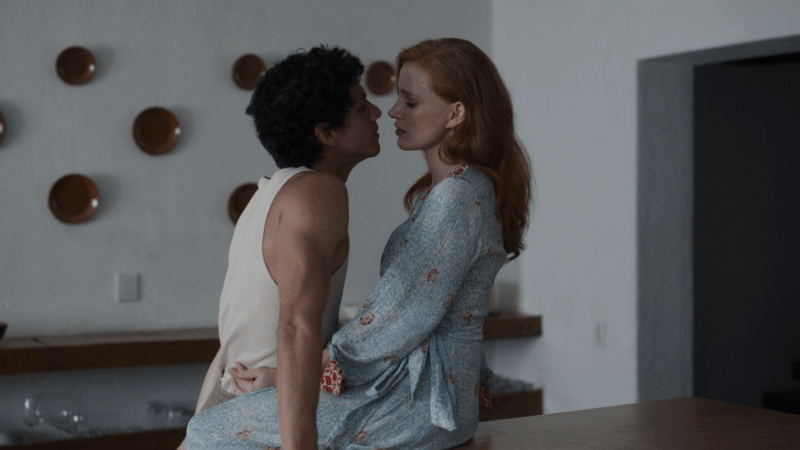
An aspiring dancer. A wealthy benefactor. And ‘Dreams’ turned to nightmare
A new psychological drama from Mexican filmmaker Michel Franco centers on the torrid affair between a wealthy San Francisco philanthropist and an undocumented immigrant who aspires to be a dancer.
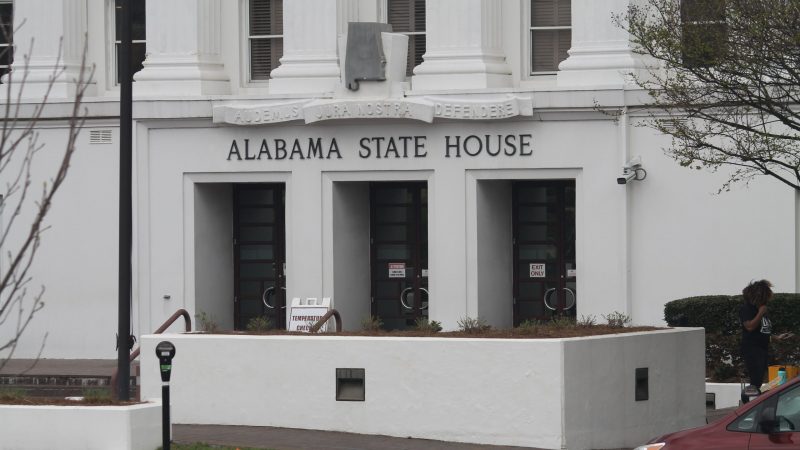
Bill making the Public Service Commission an appointed board is dead for the session
Usually when discussing legislative action, the focus is on what's moving forward. But plenty of bills in a legislature stall or even die. Leaders in the Alabama legislature say a bill involving the Public Service Commission is dead for the session. We get details on that from Todd Stacy, host of Capitol Journal on Alabama Public Television.
My doctor keeps focusing on my weight. What other health metrics matter more?
Our Real Talk with a Doc columnist explains how to push back if your doctor's obsessed with weight loss. And what other health metrics matter more instead.
