
‘The atmosphere is very authoritarian’: Venezuela’s opposition reels from the sidelines
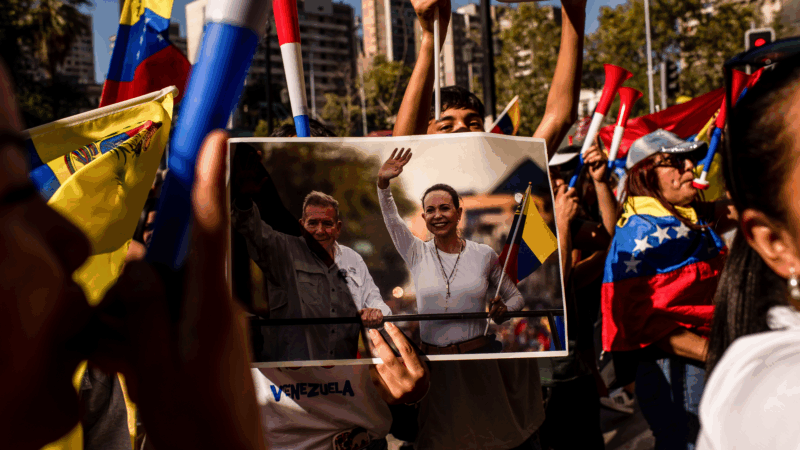
BOGOTÁ, Colombia — Venezuela’s political opposition remains largely muzzled and shut out of power.
Although authoritarian leader Nicolás Maduro was seized by U.S. forces in Caracas over the weekend, his authoritarian regime remains in place. Maduro’s former vice president, Delcy Rodríguez, is now interim president.
Pro-regime figures continue to run the security forces, government ministries, statehouses and most city halls around the country. The government has decreed a 90-day state of emergency that empowers security forces to capture “any person involved in the promotion or support” of the U.S. military operation.
Just as under Maduro, there is almost no room for dissent in Venezuela. Speaking to NPR by phone from Caracas, Guanipa said: “The atmosphere is very authoritarian.”
The sudden turn of events has left the country’s opposition activists — most of whom are in hiding or in exile — frustrated and confused about what to do next.
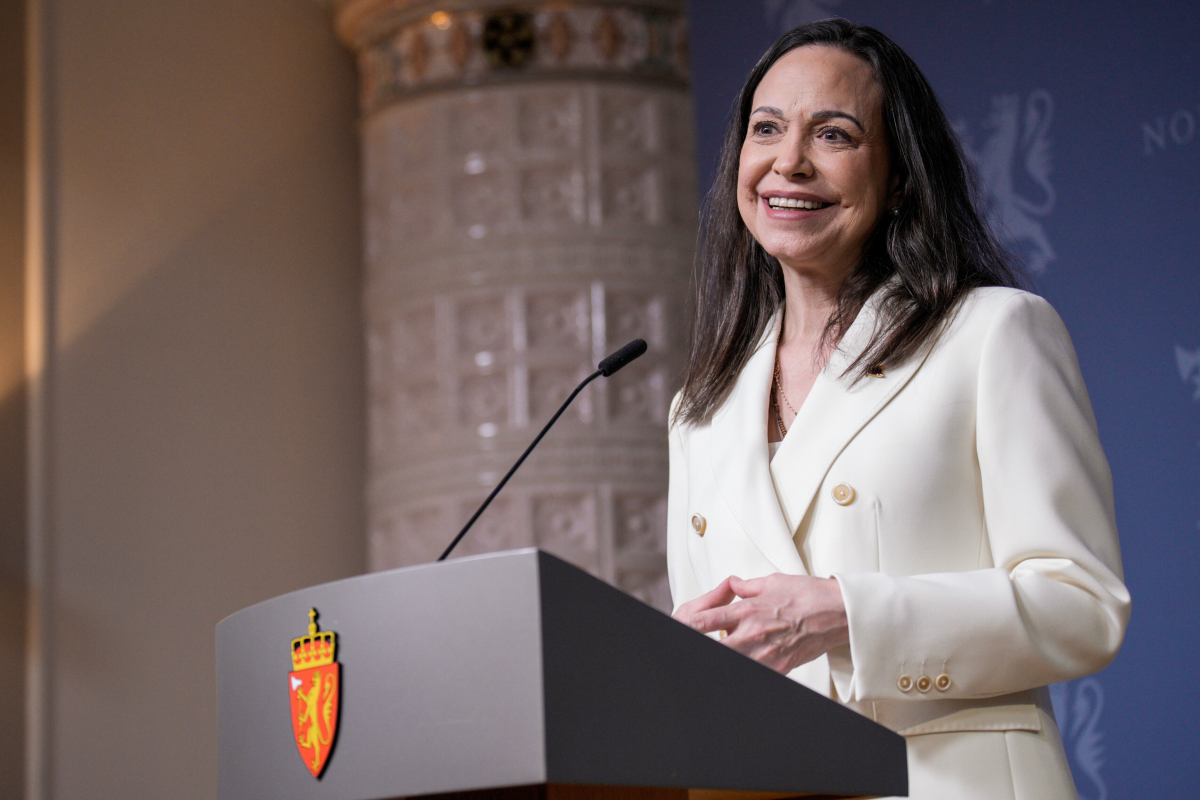
Opposition leader and Nobel Peace Prize recipient María Corina Machado has been effectively sidelined by President Trump, who has chosen to work — for now — with interim President Rodríguez. But over the past 13 years, Rodríguez fully supported Maduro as he jailed opponents, crushed protests and rigged elections.
In his news conference on Saturday, Trump made no mention of restoring Venezuela’s democracy or the fact that a Machado-backed opposition candidate appears to have won the 2024 presidential election by a landslide before it was stolen by Maduro.
“That is a kind of betraying of an electoral outcome that is just as shocking as what Trump did on Jan. 6 [2021], by not recognizing the U.S. electoral results,” said Javier Corrales, a Venezuela expert at Amherst College in Massachusetts. “And it’s even more shocking because María Corina Machado is a proven ally of the United States.”
Rodríguez is viewed by Trump as someone who can control the security forces and maintain stability. By contrast, Machado has spent the past two decades denouncing regime figures for human rights abuses and other crimes and is distrusted by the armed forces, says John Polga-Hecimovich, a Venezuela scholar at the U.S. Naval Academy.
“In some sense it was a smart play by the Trump administration,” he said. “You need to run Venezuela and avoid chaos and the way you do that is by holding the military in control. Delcy can do that and Machado cannot.”
Even Machado has praised Trump’s decisions on Venezuela’s future. Speaking to Sean Hannity of Fox News on Monday, she said: “What he has done, as I said, is historic. It is a huge step towards a democratic transition.”
However, Secretary of State Marco Rubio has said new elections in Venezuela are not an immediate priority for the U.S. On Wednesday, he unveiled a three-phase plan for the country’s future. He said the final step would involve the transition to a more representative democratic government but provided few details.
“In the end, it will be up to the Venezuelan people to transform their country,” Rubio said.
Phil Gunson, who is based in Caracas for the International Crisis Group, predicts that interim President Rodríguez — who he says is despised by many Venezuelans — will try to placate Trump to remain in power while blocking any kind of democratic opening.
“The biggest threat is an outbreak of democracy. This is kryptonite for these people. Democracy will see them thrown out,” he said.
But Paola Bautista de Alemán, an opposition activist who fled Venezuela last year, says Trump’s threat of further military intervention in Venezuela could pressure the regime into holding free elections.
“Trump has said Delcy will have to behave or she could face a fate even worse than Maduro’s,” she said.
Venezuela’s pro-regime Supreme Court on Saturday declared that Rodríguez would take over as interim president for up to 90 days, a period that can be extended to six months with a vote by the National Assembly. But the court made no mention of new elections, leading some to speculate Rodríguez could try to remain in power.
Machado told Fox News that the opposition would win a future election “with over 90% of the vote.”
Machado, who had been in hiding inside Venezuela for 16 months, snuck out of the country in December with the help of private U.S. security forces so should could pick up her Nobel prize in Oslo. But she remains the country’s most popular politician, and some analysts think she should return home.
“María Corina’s story is not over,” said Andrés Izarra, a former government minister who broke with Maduro 10 years ago. “If I were Maria Corina, I would go to Venezuela right now and start organizing on the street and mobilizing the people. All those people that voted for her are still there.”
Machado has vowed to return. But for now, it may be too dangerous. Maduro holdovers control the army and police plus thousands of paramilitaries.
Machado told Fox News “I am planning to go back to Venezuela as soon as possible.”
But amid the security crackdown in Venezuela, she could be arrested upon arrival. Maduro holdovers control the army and police plus thousands of paramilitaries.
Not helping matters are festering rivalries within the opposition. The coalition is made up of more than a dozen parties of different ideologies and for years the main force holding it together has been the push for regime change. But bitter infighting has also been its hallmark.
For example, Machado refuses to work with the current crop of opposition lawmakers, whom she views as traitors. They took part in last year’s legislative elections despite Machado’s call for a boycott to protest the stolen 2024 presidential vote.
“These people don’t want democracy for Venezuela. They are part of the dictatorship,” said Bautista de Alemán, who worked closely with Machado on the 2024 presidential campaign.
Tomás Guanipa, an opposition lawmaker in the National Assembly, says Machado and other exiled politicians have made their own blunders. He says electoral boycotts simply make the regime stronger and blames Machado for turning over Venezuela’s future to the Trump administration.
Even so, he says, “we are trying to unify the opposition forces.”
Transcript:
MARY LOUISE KELLY, HOST:
Venezuela’s political opposition had long sought to remove President Nicolas Maduro from power and restore the country’s democracy. U.S. forces took care of the first part of that scenario, but a democratic revival in Venezuela still seems a long way off. That is because Maduro’s replacement is a hardline socialist, just like him. Meanwhile, as John Otis reports, Venezuela’s political opposition remains deeply divided and unclear about what to do next.
(SOUNDBITE OF ARCHIVED RECORDING)
TOMAS GUANIPA: (Speaking Spanish).
JOHN OTIS: That’s opposition lawmaker Tomas Guanipa. He was demanding freedom for political prisoners during the opening session of Venezuela’s National Assembly on Monday.
(SOUNDBITE OF ARCHIVED RECORDING)
GUANIPA: (Speaking Spanish).
OTIS: But Guanipa, whose brother is one of the country’s more than 800 political prisoners, was quickly silenced by proregime lawmakers.
GUANIPA: (Speaking Spanish).
OTIS: “The atmosphere is very authoritarian,” Guanipa said by phone from Caracas. Maduro is gone, but there is still almost no room inside Venezuela for dissent. Regime loyalists control all branches of power. They hold every governorship, most city halls and 90% of the seats in the legislature. Except for a few lawmakers like Guanipa, most opposition figures remain in hiding or in exile. As for opposition leader and Nobel Peace Prize recipient Maria Corina Machado, she has been effectively sidelined by President Trump. Instead, Trump has chosen to work with – for now – interim President Delcy Rodriguez. That’s despite the fact that, over the past 13 years, Rodriguez fully supported Maduro as he jailed opponents, crushed protests and rigged elections. Still, speaking with Sean Hannity of Fox News, Machado praised Trump’s decisions.
(SOUNDBITE OF ARCHIVED RECORDING)
MARIA CORINA MACHADO: What he has done, as I said, is historic. It’s a huge step towards a democratic transition.
OTIS: However, Secretary of State Marco Rubio has said that new elections in Venezuela are not a priority for the U.S. Meanwhile, interim President Rodriguez, who is despised by many Venezuelans, will likely try to placate Trump while blocking any democratic opening. So says Phil Gunson, who’s based in Caracas for the International Crisis Group.
PHIL GUNSON: The biggest threat is an outbreak of democracy. This is kryptonite for these people. Democracy will see them thrown out.
OTIS: Gunson says the opposition miscalculated by putting the country’s future in Trump’s hands.
GUNSON: Trump had his own agenda that – it was not the same agenda as the opposition leadership.
PAOLA BAUTISTA DE ALEMAN: (Speaking Spanish).
OTIS: That’s Paola Bautista de Aleman, an opposition activist who fled Venezuela last year. She says it may only be through Trump’s threat of further military intervention that the regime allows for free elections. As for Machado, who left Venezuela last month to pick up her Nobel Prize, some think she should return home. She’s Venezuela’s most popular politician after running the opposition’s 2024 presidential campaign that, according to electoral observers, crushed Maduro at the polls. Andres Izarra is a former government minister who broke with Maduro 10 years ago.
ANDRES IZARRA: If I were Maria Corina, I would [expletive] go to Venezuela right now and go start organizing on the streets, you know, and mobilizing all that people. That people that voted for her, they’re still there.
OTIS: Machado has vowed to return, but for now, it may be too dangerous. Maduro holdovers control the Army and police plus thousands of paramilitaries. Not helping matters are festering rivalries within the opposition itself. For example, Machado refuses to work with opposition lawmakers like Guanipa whom she views as traitors for serving in a National Assembly controlled by the regime.
GUANIPA: (Speaking Spanish).
OTIS: For his part, Guanipa says Machado and other exiled politicians have made their own blunders, such as breathlessly promising regime change.
GUANIPA: (Speaking Spanish).
OTIS: “Leadership has an expiration date,” he warns, “especially when leaders promise things that don’t happen.” For NPR News, I’m John Otis in Bogota, Colombia.
Iran’s soccer team cannot participate in the FIFA World Cup, Iranian minister says
Iran is set to play three games in the U.S. this June. But amid the U.S.-Israel military campaign that has killed Iran's supreme leader, Iran's sports minister said the team would pull out.
Pentagon probe points to U.S. missile hitting Iranian school
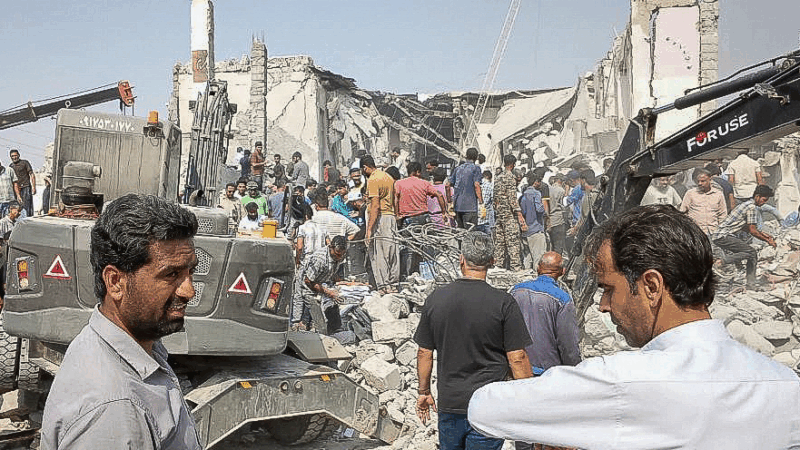
A military assessment suggests a U.S. Tomahawk cruise missile was responsible for at least 165 deaths at an Iranian girls' school, according to a U.S. official who was not authorized to speak publicly.

Harrison Ford isn’t retiring: ‘I really wouldn’t know what to do with myself’
Ford struggled to find his footing in Hollywood before being cast as Han Solo in Star Wars. Now 83, he plays a therapist in the Apple TV series Shrinking: "I really do love the work," he says.
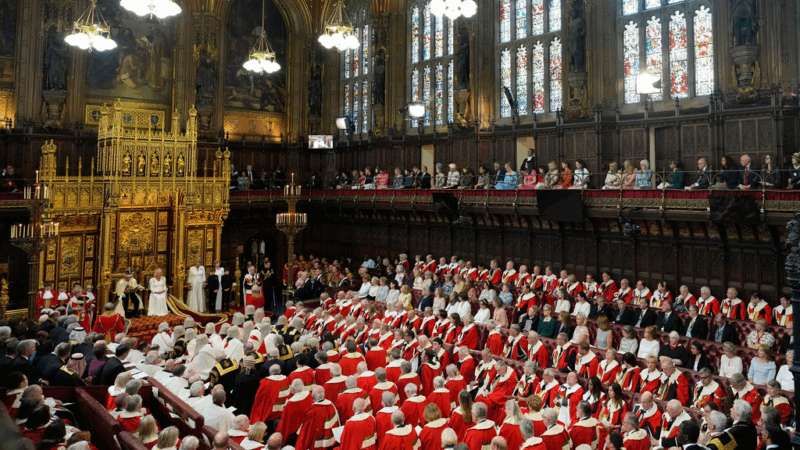
No Nobles Day: Britain’s Parliament boots its last hereditary Lords after 700 years
Government minister Nick Thomas-Symonds said the change put an end to "an archaic and undemocratic principle." The removed aristocrats are 92 of the House of Lords' 800 members.
On her new album, Kacey Musgraves returns home, to the ‘Middle of Nowhere’
Before making her upcoming sixth album, the country star returned to her small-town Texas home and discovered the power of in-between spaces. "I found a lot of clarity there," she says.
How the Iran war is disrupting air travel — and advice if you’re planning a trip
The war in Iran is roiling jet fuel prices and airlines are beginning to hike prices, unsettling travelers far from the Middle East. If you're booking a flight soon, here are things to know.
