
Thailand and Cambodia sign new ceasefire agreement to end border fighting

BANGKOK — Thailand and Cambodia on Saturday signed a ceasefire agreement to end weeks of armed combat along their border over competing claims to territory. It took effect at noon local time.
In addition to ending fighting, the agreement calls for no further military movements by either side and no violations of either side’s airspace for military purposes.
Only Thailand employed airstrikes in the fighting, hitting sites in Cambodia as recently as Saturday morning, according to the Cambodian defense ministry.
The deal also calls for Thailand, after the ceasefire has held for 72 hours, to repatriate 18 Cambodian soldiers it has held as prisoners since earlier fighting in July. Their release has been a major demand of the Cambodian side.
The agreement was signed by the two countries’ defense ministers, Cambodia’s Tea Seiha and Thailand’s Nattaphon Narkphanit, at a checkpoint on their border after lower-level talks by military officials met for three days as part of the already-established General Border Committee.
The agreement declares that the two sides are committed to an earlier ceasefire that ended five days of fighting in July and follow-up agreements, and includes commitments to 16 de-escalation measures.
The original July ceasefire was brokered by Malaysia and pushed through by pressure from U.S. President Donald Trump, who threatened to withhold trade privileges unless Thailand and Cambodia agreed. It was formalized in more detail in October at a regional meeting in Malaysia that Trump attended.

Despite those deals, the two countries carried on a bitter propaganda war and minor cross-border violence continued, escalating in early December to widespread heavy fighting.
Thailand has lost 26 soldiers and one civilian as a direct result of the combat since Dec. 7, according to officials. Thailand has also reported 44 civilian deaths from collateral effects of the situation.
Cambodia hasn’t issued an official figure on military casualties, but says that 30 civilians have been killed and 90 injured. Hundreds of thousands of people have been evacuated from affected areas on both sides of the border.
Each side blamed the other for initiating the fighting and claimed to be acting in self-defense.
The agreement also calls on both sides to adhere to international agreements against deploying land mines, a major concern of Thailand. Thai soldiers along the border have been wounded in at least nine incidents this year by what they said were newly planted Cambodian mines. Cambodia says the mines were left over from decades of civil war that ended in the late 1990s.
Another clause says the two sides “agree to refrain from disseminating false information or fake news.”
The agreement also says previously established measures to demarcate the border will be resumed and the two sides also agree to cooperate on an effort to suppress transnational crimes.
That is primarily a reference to online scams perpetrated by organized crime that have bilked victims around the world of billions of dollars each year. Cambodia is a center for such criminal enterprises.

HUD proposes time limits and work requirements for rental aid
The rule would allow housing agencies and landlords to impose such requirements "to encourage self-sufficiency." Critics say most who can work already do, but their wages are low.
Paramount and Warner Bros’ deal is about merging studios, and a whole lot more
The nearly $111 billion marriage would unite Paramount and Warner film studios, streamers and television properties — including CNN — under the control of the wealthy Ellison family.

A new film follows Paul McCartney’s 2nd act after The Beatles’ breakup
While previous documentaries captured the frenzy of Beatlemania, Man on the Run focuses on McCartney in the years between the band's breakup and John Lennon's death.

An aspiring dancer. A wealthy benefactor. And ‘Dreams’ turned to nightmare
A new psychological drama from Mexican filmmaker Michel Franco centers on the torrid affair between a wealthy San Francisco philanthropist and an undocumented immigrant who aspires to be a dancer.
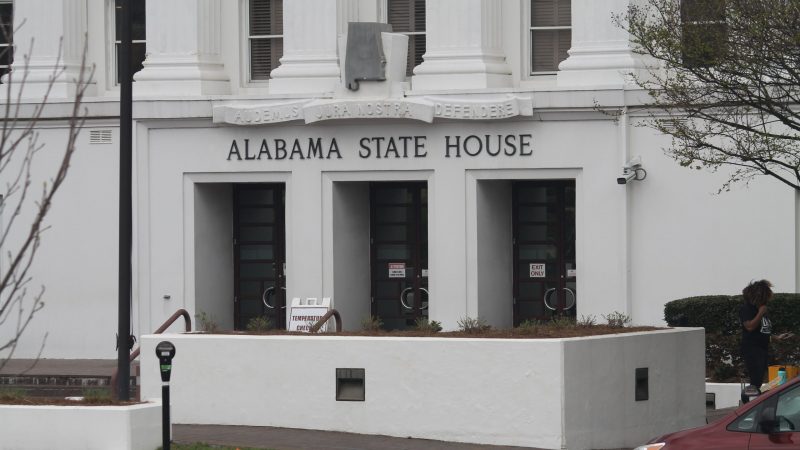
Bill making the Public Service Commission an appointed board is dead for the session
Usually when discussing legislative action, the focus is on what's moving forward. But plenty of bills in a legislature stall or even die. Leaders in the Alabama legislature say a bill involving the Public Service Commission is dead for the session. We get details on that from Todd Stacy, host of Capitol Journal on Alabama Public Television.

My doctor keeps focusing on my weight. What other health metrics matter more?
Our Real Talk with a Doc columnist explains how to push back if your doctor's obsessed with weight loss. And what other health metrics matter more instead.
