
Texas farmers struggle as Mexico and U.S. wrestle with water from the Rio Grande treaty
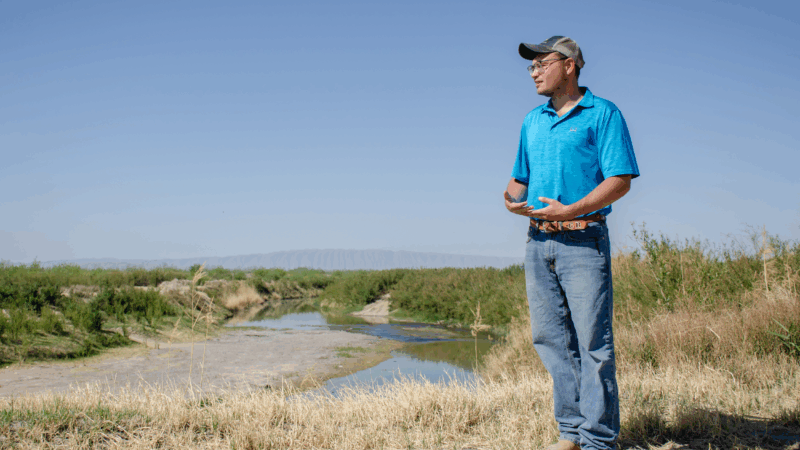
PRESIDIO, Texas– Most of the water that courses through the Rio Grande to reach parched farmlands along the border gets its start here, where the Rio Grande is replenished through Mexico’s Rio Conchos.
This pocket of the border is known as La Junta de los Rios, where the two rivers meet and irrigate what’s believed to be the oldest continually cultivated farmland in Texas.
“This land has been farmed for thousands of years, before even when Christ was born,” said Chris Bell, who’s new to farming in Presidio. “This whole valley’s just been rich forever. It keeps everyone alive.”
This region’s rich soil and access to the river lured Bell here. He’s hoping to grow alfalfa and turfgrass, and bring back what was once a thriving agricultural industry in Far West Texas.
But Bell’s hope isn’t without its challenges: a prolonged drought, growing populations and aging infrastructure on both sides of the U.S.-Mexico border have complicated Mexico’s ability to uphold a nearly 80-year-old agreement that requires it to send billions of gallons of water to the U.S. every five years.
“It’s just been hard on everybody to get enough water,” said Bell. “It’s not raining that much, and there’s just, a lot of things have changed.”

Mexico has historically been behind on delivering that water – and as a result, according to one estimate, Texas farms have lost hundreds of millions of dollars in the last decade.
Recently, to force water deliveries, President Trump has pressured Mexico with the threat of tariffs and has even denied a request from Mexico for water – the first time, the U.S. said, such a denial was made in 81 years.
Rosario Sanchez, a senior research scientist at Texas Water Resources Institute at Texas A&M University, said the state is looking for “predictability and reliability, which is what Mexico has not been able to do over the last 15 years or so.”
And she said that unpredictability is unlikely to change, because the water just isn’t there.
“We’re basically broke,” said Sanchez, adding that no threat or amount of political pressure will change the reality of the water scarcity. “You can impose anything you want, but that’s not going to create water.”
“It’s everybody’s problem,” said Sanchez. “It’s not Texas’ problem, it’s not Mexico’s problem, it’s everybody’s problem.”

With just six months left until the five-year deadline set by the treaty, Mexico has only provided about 30 percent of the water it owes.
In April, Mexican President Claudia Sheinbaum said Mexico will make immediate deliveries, and will do so not because of political pressure, but because it’s what the treaty demands.
Still, those deliveries and the recent agreement might not be enough for Mexico to deliver the total amount of water it owes.
Valentin Sanchez, no relation to Rosario Sanchez, says it’s just a temporary solution. He’s a farmer who’s also growing alfalfa in Presidio.
He thinks the relief brought on by the agreement will last “a month, two months.” “Once that’s over though, the water’s gonna run out all over again,” he said in Spanish.
Valentin Sanchez says the drought has impacted not just crops along the border, but the entire region and state. Just last year, the state’s last sugar mill closed, which officials said was due to the water dispute, and they say the state’s citrus industry in South Texas could meet a similar fate.
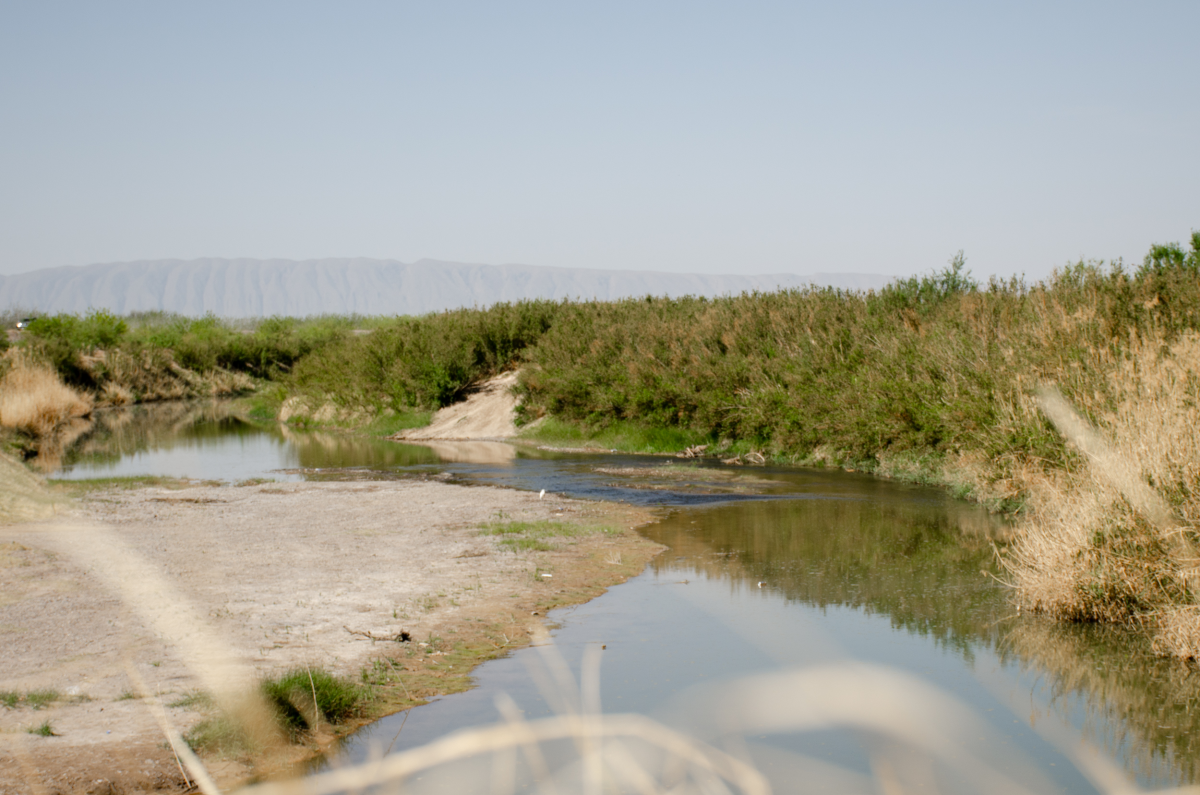
If conditions don’t improve, Valentin Sanchez says, he might have to leave behind growing crops and the fields he’s known most of his life.
“It’s not just affecting the border, it’s affecting everything,” said Valentin Sanchez.
Mexico and the U.S. plan to meet this summer -–just a few months before the treaty’s October deadline-– to evaluate water deposits and rainfall and to see how the changes made so far are working.


Country Joe McDonald, anti-war singer who electrified Woodstock, dies at 84
Country Joe and the Fish's best-known song, "I-Feel-Like-I'm-Fixin'-to-Die Rag," captured the growing anti-war sentiment of the Vietnam era.

OpenAI robotics leader resigns over concerns about Pentagon AI deal
A senior member of OpenAI's robotics team said guardrails around certain AI uses were not sufficiently defined before OpenAI announced an agreement with the Pentagon.
Five key takeaways from an annual briefing by China’s foreign minister
Speaking at a political gathering in Beijing, China's foreign minister Wang Yi outlined his country's positions on the war in Iran and general relations with America.
Police investigate an explosion outside the U.S. Embassy in Oslo
Norwegian police are investigating an explosion outside the U.S. Embassy in Oslo early Sunday, officials said.
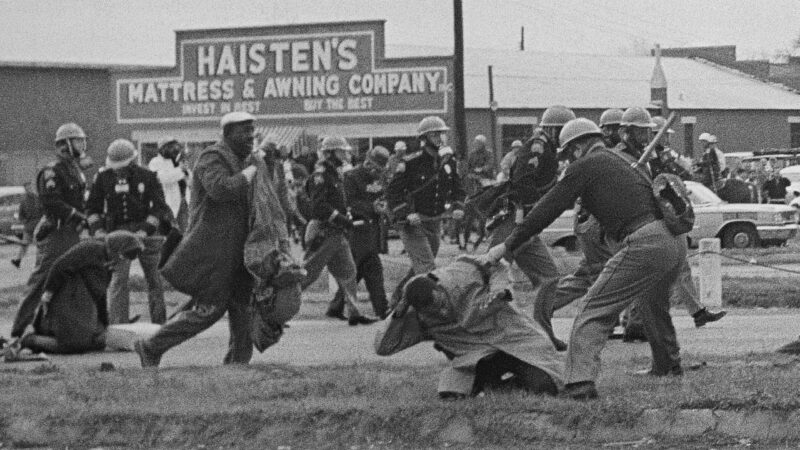
Decades after violence in Selma spurred the Voting Rights Act, organizers worry about its fate
Alabama is marking the 61st anniversary of a key event in the Civil Rights Movement, when state troopers attacked voting rights marchers in Selma. But the celebration come as the U.S. Supreme Court considers a case that could limit a provision of the Voting Rights Act.

Photos: These bold women stand up for justice, rights … and freedom
To mark International Women's Day, we feature portraits and profiles of determined women around the world.
