
Teen artists portrayed their lives — some adults didn’t want to see the full picture

“What is it like to be a teen right now?”
This summer, teen artists explored that question in two separate showings of their work: “The Teen Experience,” currently at the American University Museum at the Katzen Arts Center in Washington, D.C., and at the Smithsonian Folklife Festival, where this year’s theme was “Youth and the Future of Culture.”
In both cases, the teens were told to create honest portrayals of their lives and the issues they face, but they found out that some people didn’t want to see the full picture.
Through paintings, drawings, mixed media and life-size installations, the artists depicted a range of subjects — self-doubt, school lockdowns, protests, living through a pandemic and learning to drive, among them.
The organization that connects these two events is the Museum of Contemporary American Teenagers (MoCAT), which doesn’t have its own physical space but works with artists throughout Washington, D.C., Maryland and Virginia.

Maryland high school teacher David Lopilato founded MoCAT because he saw a void: “So many of our cultural moments were kind of set by teenagers and yet we kind of systematically ignore them.”
Mygenet Tesfaye Harris, a Maryland art educator and one of the show’s co-curators, said art is “a safe place for our students to be themselves, to be authentic.”

The Smithsonian Folklife Festival was both “the coolest thing ever” and discouraging
At this year’s Smithsonian Folklife Festival, high school students created work in real time. Their space on the National Mall included an installation of a school bathroom where anyone could write on the stalls and a mural depicting a range of issues “from the stresses of college acceptance to protests to dealing with the coronavirus pandemic to self-image,” said 17-year-old artist Flair Doherty.
Doherty was one of the four artists who worked on the mural. She grew up visiting Smithsonian museums and said the chance to work with the Folklife Festival was “the coolest thing ever.”

(Bruce Guthrie)
The protesters in the mural hold signs that read “The climate is changing, why aren’t we?” “No human is illegal,” “Protect kids, not guns” and “Free Palestine.”
Mary Beth Tinker was impressed when she saw the mural on her way to speak about free speech. She said she “encouraged the students because they were making this beautiful mural about issues that they cared about. One of the issues featured was Free Palestine. And that’s an issue that I care about.”
Tinker has a long history of advocating for free speech. In 1965, when she was an eighth-grader in Iowa, she and other students were suspended for wearing black armbands to school to protest the Vietnam War. The incident led to the Supreme Court case Tinker v. Des Moines, in which a majority court ruled that students do not “shed their constitutional rights to freedom of speech or expression at the schoolhouse gate.”
Tinker said she often tells students, “You always can be proud of speaking up about the things that you really believe in because that’s a life of integrity.”
Smithsonian officials were not impressed
Flair Doherty said a Smithsonian staff member approached her and the other teen artists and told them she believed the “Free Palestine” slogan was “antisemitic and hateful.” Doherty, who is Jewish, said she told her she disagreed, “We talked for maybe three minutes and did not really get anywhere.”

“We went over the next day and it was completely covered in tarps,” said 18-year-old artist Léda Pelton, who had not yet finished her section of the mural about cars and college acceptance.
Pelton said Smithsonian officials told them they covered it up because they were “afraid that somebody was going to walk by and see ‘Free Palestine’ on our mural and get mad and hurt us. And I’m like, ‘maybe we are not the problem in that situation.'”

“I don’t understand why we are the ones who have to change our behavior because somebody else decided that they were too angry to just walk by something that they didn’t agree with,” said Pelton.
When Tinker found out what had happened, she decried the decision in a video she posted on social media.
MoCAT founder David Lopilato said the incident left him “conflicted.” At one point, he asked the students if they would be willing to paint over the protest signs.
“I was trying to figure out a solution,” he said. “Is a solution to go one step back, cover the part that became an issue, and then everyone at the festival could see the mural versus not see it at all.”
Smithsonian responds
Clifford Murphy, director of the Smithsonian Center for Folklife and Cultural Heritage, said the mural was covered because “The Smithsonian doesn’t promote or endorse individual political statements. And so, because the Smithsonian has ultimate authority and responsibility for its content, we decided to cover the mural.”
Murphy said MoCAT would have received language “about not promoting and endorsing individual political statements” at the festival. Lopilato shared a letter from the Smithsonian with NPR saying as much, but it’s dated July 4, two days after the festival began. The teen artists told NPR they do not recall being told in advance that certain language was off-limits.
Murphy said the decision had nothing to do with political pressure or the White House executive order that claims the Smithsonian had “come under the influence of a divisive, race-centered ideology.”
But Tinker can’t help but think there’s a connection.
“The issue of Palestine is one of the most censored issues right now in schools and really in the country, along with LGBTQ issues and also race and racism,” she said.
Tinker said she’s a longtime fan of the Smithsonian and its Folklife Festival and doesn’t want to see them “harmed in any way.”
Still, she thinks people should pay closer attention to what teens have to say. “There’s no wonder that all through history, young people have been in the lead for speaking up for a better way and a better world,” said Tinker.
Teen artists would like to complete the mural and show it
Artists Léda Pelton and Flair Doherty hope they can retrieve the mural, which is currently in storage at the Smithsonian.
Pelton hopes she and the other artists can finish the mural and show it “fully realized as a completed artwork.”
Doherty agrees, “There are a lot of spaces where teenagers are talked about in culture and very few spaces where teenagers can actually express themselves.”
The mural technically belongs to the Folklife Festival, said Murphy. “Since we’re not a collecting unit of the Smithsonian, we tend to repurpose this kind of thing as materials rather than just fully dispose of them.” But he said he’s open to discussing other options.
Trump looks to turn attention to Western Hemisphere at Americas summit
President Trump is set to gather with Latin American leaders on Saturday at his Miami-area golf club as his administration looks to turn attention to the Western Hemisphere, at least for a moment.
Trump administration’s embattled FDA vaccine chief is leaving for the second time
The FDA's controversial vaccine chief, Dr. Vinay Prasad, is leaving the agency. It's the second time he has abruptly departed following decisions involving the review of vaccinations and specialty drugs.
Family, former presidents and a Hall of Famer give Rev. Jesse Jackson a final sendoff
Several speakers at Jackson's funeral invoked his hallmark catchphrases: "Keep hope alive" and "I am somebody."
Bernard LaFayette, Selma voting rights organizer, dies at 85
Bernard LaFayette, who died Thursday, laid the foundations of the Selma, Alabama, campaign that culminated in the passage of the Voting Rights Act. He was a Freedom Rider and helped found the Student Nonviolent Coordinating Committee.
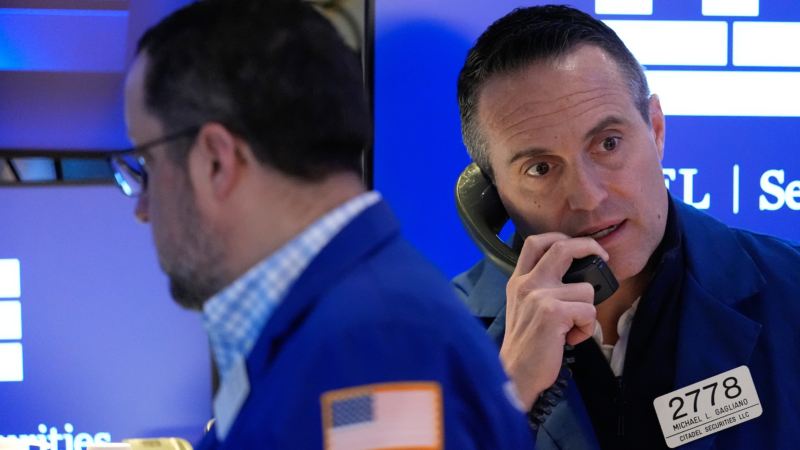
Oil surges to its highest price since 2023, and stocks drop after U.S. jobs report
Stocks fell Friday on worries that the economy could become stuck in a worst-case scenario of stagnating growth and high inflation. Oil prices touched their highest levels since 2023 after surging again because of the Iran war.
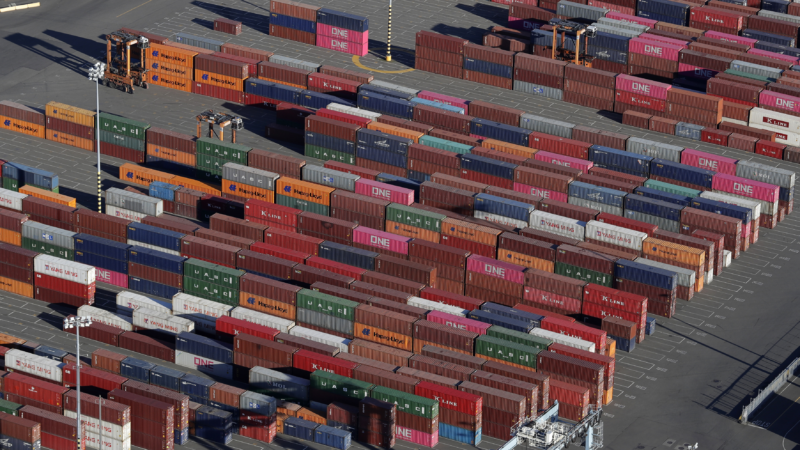
No lawsuits required: U.S. Customs is working on a system to refund tariffs
U.S. Customs told the trade court it aims for a streamlined process in 45 days to return importers' money without requiring individual lawsuits.
