
Supreme Court to hear case that could vastly expand presidential powers

The Supreme Court hears Monday arguments in a case that could end the independence of independent agencies, overturn a 90-year-old precedent, and reshape the balance of power between Congress and the president.
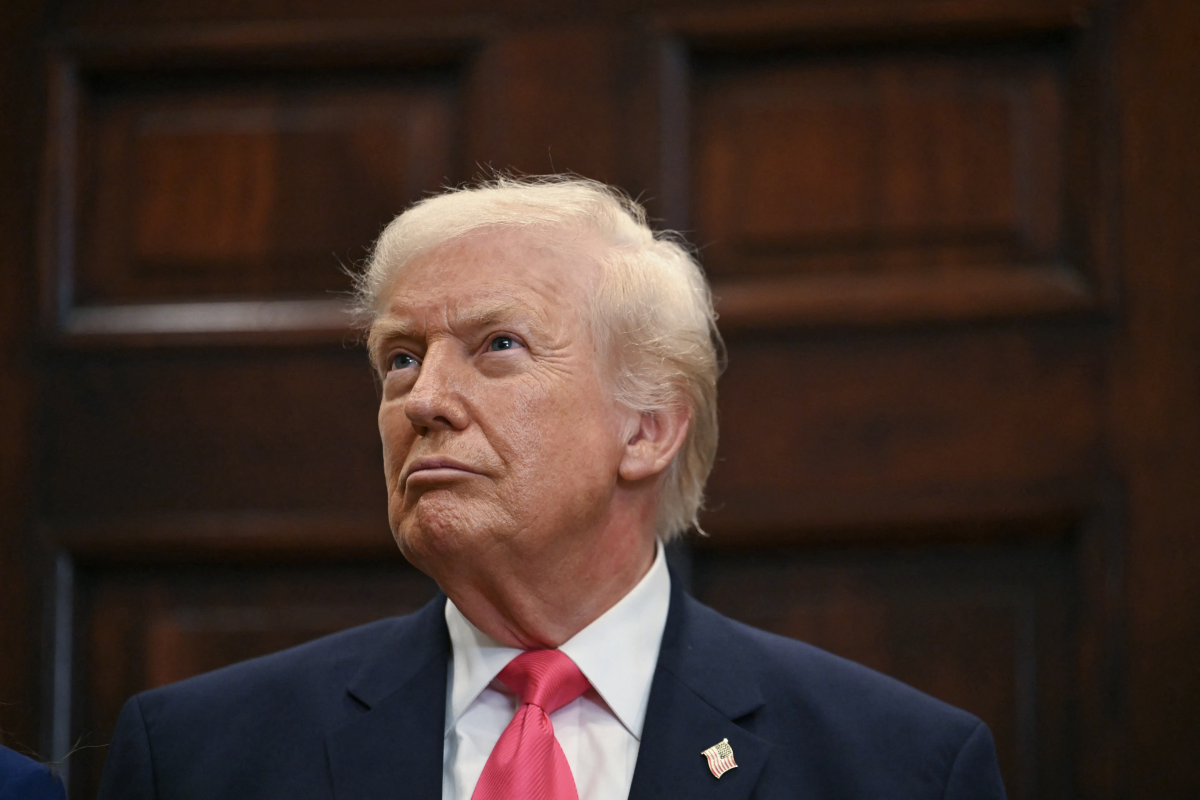
At issue is whether President Trump can fire Rebecca Kelly Slaughter, whom Trump appointed in 2018, during his first term, to fill a Democratic seat on the Federal Trade Commission. President Biden appointed Slaughter to a second term, which was supposed to end in 2029.
Instead, in March, Slaughter received an email from the White House Office of Presidential Personnel informing her that she was being removed from office, effective immediately. She was told her “continued service on the FTC is inconsistent with [the Trump] Administration’s priorities.”
Congress created the FTC in 1914 as a bipartisan, independent agency tasked with protecting the American economy from unfair methods of competition. By law, the five-member commission can have no more than three members of the same political party, and commissioners can only be fired for “inefficiency, neglect of duty or malfeasance in office.”
Slaughter had been given no such reason for her removal, and so she sued. A lower court declared that Slaughter had been unlawfully removed from the FTC and ordered her back to work. The Trump administration appealed that ruling, and in September, the Supreme Court issued an emergency order removing her from her seat until the merits of her case could be heard. Justices voted 6 to 3 along ideological lines to allow her firing to stand — for now.
Reconsidering a 90-year-old precedent

Proving that history does repeat itself, in 1933, President Franklin D. Roosevelt attempted to fire an FTC commissioner over ideological disagreements. In that case, called Humphrey’s Executor, the court unanimously held that while the president has the power to remove purely executive officers for any reason, that unlimited power does not extend to agencies like the FTC, whose duties “are neither political nor executive, but predominantly quasi-judicial and quasi-legislative.”
Following that 1935 decision, Congress went on to create many more multimember, independent agencies whose members likewise can only be removed for cause. Since January, Trump has also removed Democratic members from some of those agencies, including the Equal Employment Opportunity Commission, the Merit Systems Protection Board and the Consumer Product Safety Commission.
In Slaughter’s case and others, the Trump administration argues that the Supreme Court’s decision in Humphrey’s Executor was flawed, due to a misunderstanding of the FTC’s functions at the time. The administration maintains that the FTC did in fact exercise executive power then and says those powers have only grown in the decades since.
During Trump’s first term, the Supreme Court chipped away at Humphrey’s Executor when it permitted Trump to fire the head of another independent agency, the Consumer Financial Protection Bureau. In that case, the Supreme Court held that the firing was permissible because the CFPB is run by a single director rather than a multimember board. Chief Justice John Roberts described Humphrey’s Executor as applying to multimember agencies “that do not wield substantial executive power.”
On Friday, the D.C. Circuit Court of Appeals issued a ruling in line with that guidance. In a 2-to-1 decision, the court said Trump’s firings of Merit Systems Protection Board member Cathy Harris and National Labor Relations Board member Gwynne Wilcox were lawful, citing those agencies’ “significant executive powers.”
A clash of views on independent agencies
Slaughter believes that it is vital for the Supreme Court to preserve the independence of bipartisan multimember agencies and allow her to be reinstated.
“Independence allows the decision-making that is done by these boards and commissions to be on the merits, about the facts, and about protecting the interests of the American people,” she said. “That is what Americans deserve from their government.”
James M. Burnham, an attorney who has served in both Trump administrations, offered an opposing view.
“I don’t think there is such a thing as an independent agency because everything has to be in one of the three branches of government,” he argued. “I don’t think they’ve ever been independent because I think the removal protections have been unconstitutional from the beginning.”
The court will continue its deliberation on Humphrey’s Executor on Jan. 21 when it considers another case involving Trump’s attempted firing of Federal Reserve Governor Lisa Cook.

On her new album, Kacey Musgraves returns home, to the ‘Middle of Nowhere’
Before making her upcoming sixth album, the country star returned to her small-town Texas home and discovered the power of in-between spaces. "I found a lot of clarity there," she says.

How the Iran war is disrupting air travel — and advice if you’re planning a trip
The war in Iran is roiling jet fuel prices and airlines are beginning to hike prices, unsettling travelers far from the Middle East. If you're booking a flight soon, here are things to know.

ChatGPT might give you bad medical advice, studies warn
New research finds AI can point people in the wrong direction. And the quality of health information it imparts depends on how well you prompt the tools.

Greetings from a Shanghai temple where you can ward off bad luck in the Year of the Horse
According to Chinese mythology, those born in the Year of the Horse will clash with Tai Sui, a heavenly general. Luckily, there are ways to appease Tai Sui, including amulets at Shanghai's Jade Buddha Temple.
Countries agree to historic release of stockpiled oil to ease the global disruption
Members of the International Energy Agency have announced a coordinated release of 400 million barrels of stockpiled oil in an attempt to counter the disruption in oil trade triggered by the Iran war.

The 2026 Oscars’ best original song nominees, cruelly ranked
There are two clear frontrunners in this year's best original song race, either of which would be a worthy Oscar winner. Diane Warren is also nominated, for the 17th time.
