
Supreme Court grants DOGE access to confidential Social Security records

The Supreme Court, on Friday, for now gave the DOGE team launched by Elon Musk unfettered access to information collected by the Social Security Administration, data that includes Social Security numbers, medical and mental health records, and family court information.
In an unsigned order, the court, acting at the request of the Trump administration, temporarily overturned actions by two lower courts that had limited the DOGE team’s access to sensitive private information at the Social Security Administration. The high court sent the case back to the Fourth Circuit Court of Appeals in Richmond to rule on the merits.
The vote was 6 to 3, with the conservative super majority ruling in favor of the DOGE team. The court’s three liberals said they would have ruled the other way, temporarily barring the DOGE team’s access to Social Security records while the case proceeds through the Fourth Circuit Court of Appeals.
Justice Ketanji Brown Jackson, writing for herself and Justice Sonia Sotomayor, blasted the majority for giving the DOGE team unfettered access to unredacted personal information “before the courts have time to assess whether DOGE’s access is lawful.” In essence, she said, the government’s so-called “urgency” about gaining this access “is the mere fact that it cannot be bothered to wait for the litigation process to play out before proceeding as it wishes. “
That has not been the way the process has worked in the past, she said.
“Once again the this court dons its emergency responder gear, rushes to the scene , and uses its equitable power to fan the flames rather than extinguish them,” Jackson wrote.
Jackson said that rather than the government suffering from the existing stay in the lower courts, it is the nation’s citizens who will now see their personal data compromised.
“With today’s decision, it seems as if the court has truly lost its moorings,” she said. In the process, she added, the court is creating “grave privacy risks for millions of Americans.”
Friday’s case began on day one of Trump’s second term, when he tasked DOGE, with “modernizing Federal technology and software to maximize governmental efficiency and productivity.” Acting Social Security Commissioner Michelle King initially blocked the DOGE Team from accessing confidential Social Security records. After a short time, she resigned rather than provide full access to the DOGE team. Her replacement, Leland Dudek, then granted DOGE what opponents called “unfettered access to SSA data systems.”
Labor unions and a grassroots advocacy organization sued, concerned that SSA was providing personally identifiable information to unauthorized DOGE personnel. The challengers argued that by providing confidential Social Security information to DOGE, SSA violated the federal Fair Privacy Act.
The 1974 federal law created a code for the “collection, maintenance, use, and dissemination” of personal records and information stored by the federal government. Among other things, the law requires that individuals provide consent before their personal records are shared.
The government contends that disclosing secure Social Security documents is permitted through one of the Privacy Act’s 12 exceptions: agencies can share information internally when doing so is essential to performing “official duties.” Without access to the secure records, the administration argues, DOGE would be unable to “moderniz[e] the federal government’s technology infrastructure” and “detect systemic fraud.”
In April, a federal judge temporarily blocked DOGE from accessing the agency’s records while lower court litigation continues. Judge Ellen Hollander ordered DOGE administrators to delete all Social Security data that they had previously acquired. DOGE team members were subsequently allowed to access records after they completed mandatory background checks, training and paperwork.
The Fourth Circuit Court of Appeals denied the Trump administration’s emergency request to overturn Hollander’s temporary restraining order, which barred access to SSA records. The appeals court said there is no urgent need for DOGE to access Social Security records in the interim. But on Friday the Supreme Court disagreed, allowing DOGE to access to the sensitive documents.
In a second case Friday, the court similarly unblocked DOGE’s access under the Freedom of Information Act, ruling that DOGE is not required to provide internal documents to a Washington watchdog group in advance of larger proceedings regarding a FOIA request.
Again, the court’s three liberals noted dissents.

U.S. gave Ukraine and Russia June deadline to reach peace agreement, Zelenskyy says
"The Americans are proposing the parties end the war by the beginning of this summer," Zelenskyy said, speaking to reporters on Friday.

U.K. leader’s chief of staff quits over hiring of Epstein friend as U.S. ambassador
British Prime Minister Keir Starmer's chief of staff resigned Sunday over the furor surrounding the appointment of Peter Mandelson as U.K. ambassador to the U.S. despite his ties to Jeffrey Epstein.

Trump administration lauds plastic surgeons’ statement on trans surgery for minors
A patient who came to regret the top surgery she got as a teen won a $2 million malpractice suit. Then, the American Society of Plastic Surgeons clarified its position that surgery is not recommended for transgender minors.

What you should know about Bad Bunny’s Super Bowl halftime show
Will the Puerto Rican superstar bring out any special guests? Will there be controversy? Here's what you should know about what could be the most significant concert of the year.

Sunday Puzzle: -IUM Pandemonium
NPR's Ayesha Rascoe plays the puzzle with KPBS listener Anthony Baio and Weekend Edition Puzzlemaster Will Shortz.
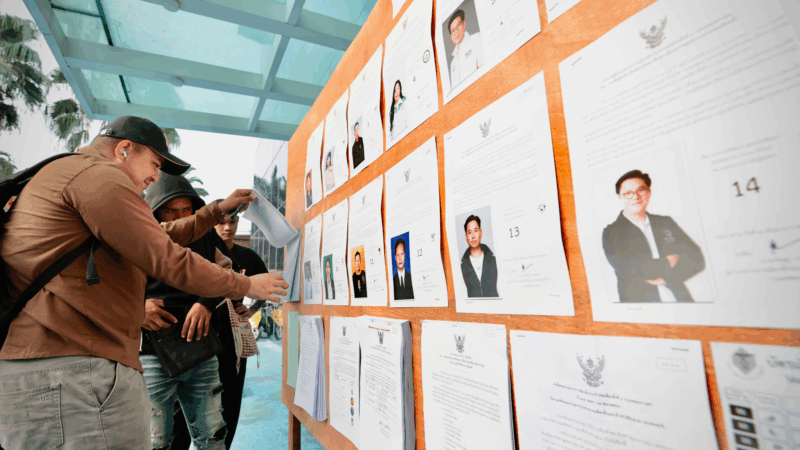
Thailand counts votes in early election with 3 main parties vying for power
Vote counting was underway in Thailand's early general election on Sunday, seen as a three-way race among competing visions of progressive, populist and old-fashioned patronage politics.
