
Supreme Court agrees to hear arguments in birthright citizenship challenge
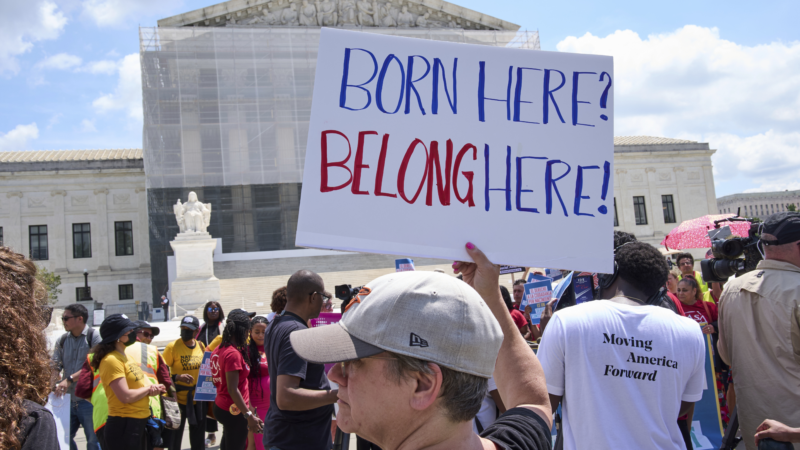
The Supreme Court on Friday agreed to take up one of President Trump’s most contentious policies by reviewing the American legal principle of “birthright citizenship,” potentially upending a 127-year-old understanding of who gets to be a U.S. citizen.
The Trump administration argues that citizenship has been too freely granted to the offspring of non-citizens. On his first day back in office, Trump signed an executive order withholding citizenship from children born to non-citizens “unlawfully present” in the U.S., or non-citizens in the country on a temporary basis, such as tourists. The order would apply only to people born 30 days after the order was signed, on January 20, 2025.
Four federal courts and two appeals courts have blocked implementation of the executive order. Courts cite the 14th amendment, which was passed after the Civil War and grants citizenship to “[a]ll persons born or naturalized in the United States, and subject to the jurisdiction thereof.”
In one of those cases, the Supreme Court earlier this year handed down an important ruling limiting the ability of lower courts to issue universal injunctions. But it did not rule on the constitutionality of Trump’s executive order, or the validity of birthright citizenship in these cases.
Lawyers for the administration say parents in the country temporarily are not “subject to the jurisdiction” of the U.S., and that broad “birthright citizenship” is out of step with what’s done in other countries. The administration also says current practices allow for what they deride as “birth tourism,” in which parents without meaningful ties to the U.S. claim citizenship for their children by giving birth here. This practice is not tracked in government statistics, but the Center for Immigration Studies estimates there are more than 20,000 such cases per year.
Despite the administration’s repeated losses in lower courts on this issue, the high court will now hear its arguments this spring.
“It does say something about how important this issue is to the President,” says César Cuauhtémoc García Hernández, a law professor at Ohio State who specializes in immigration law. He says the Trump administration is playing “the long game.”
“Those skirmishes in the lower courts are skirmishes that they are willing to lose because they have their eyes set on the main prize, and that’s a favorable audience in the Supreme Court,” he says.
But García Hernández says that doesn’t mean the Supreme Court will necessarily agree with the administration’s position.
“Birthright citizenship based on the location of birth is common within our neighbors in North America and throughout the Western Hemisphere, but highly unusual in other parts of the world,” he says. “But what should dictate the way in which citizenship law evolves moving forward is the text of the 14th Amendment, and how that applies in the modern United States.”
Since 1898, the governing case has been United States v. Wong Kim Ark, which affirmed the citizenship of a man born to Chinese citizens in San Francisco.
That case has long been seen as establishing an unambiguous citizenship right for children of foreign nationals, but it has also long been criticized by some for allowing foreign-born mothers to exploit the right by visiting the U.S. expressly for the purpose of giving birth here. As President Trump began his second term in January, he made curbing that phenomenon a central part of his larger immigration enforcement plans.
By agreeing to take the case this term, the Supreme Court may end up highlighting the issue ahead of the 2026 mid-term elections.

Between Megan Moroney and Ella Langley, country women rule the charts
It's a big week for women in country music — and, it turns out, for women whose songs are favored by women in figure skating.
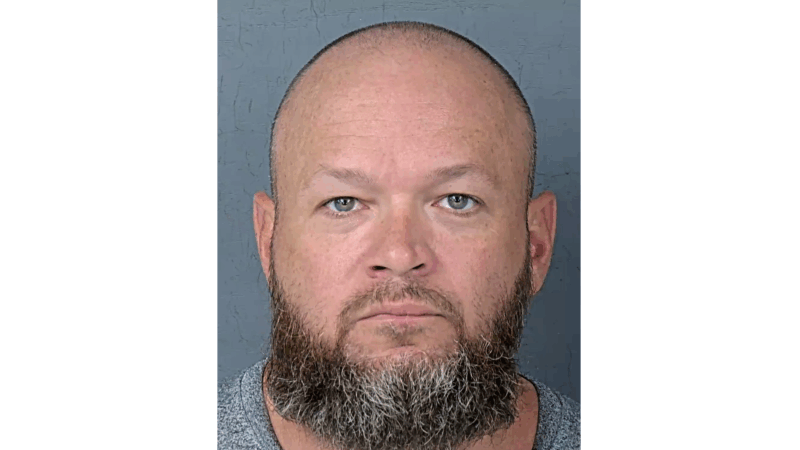
A Jan. 6 rioter pardoned by Trump was sentenced to life in prison for child sex abuse
Since receiving presidential pardons, dozens of former Capitol rioters have gotten into more legal trouble. In Florida, Andrew Paul Johnson was sentenced to life in prison for child sex abuse.
President Trump, Pam Bondi sued over sale of TikTok assets
The case, filed in a federal court in Washington, D.C., accuses the Trump administration of ignoring legislation designed to stop the spread of Chinese propaganda — and instead helping to broker a partial sale to businessmen close to Trump.
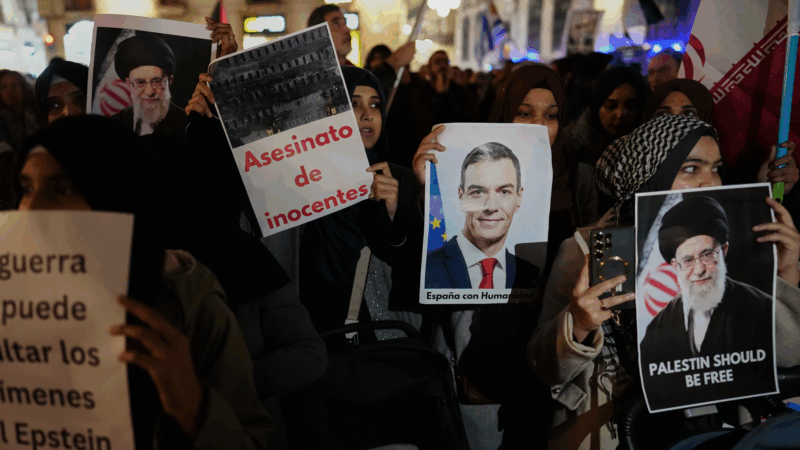
A rift between Spain and Trump widens over Spanish opposition to the Iran war
The Spanish government reiterated it would not let U.S. forces use two joint military bases in Spain as the U.S.-Israeli war in Iran escalates, widening a rift with the Trump administration.
Blackpink, modern K-pop’s trailblazing group, tries to find its way home
A new mini-album finds the world's biggest girl group in a tight spot: competing with its own legacy.
If you loved ‘Sinners,’ here’s what to watch next
So you loved best picture nominee Sinners. What should you watch next? We asked our audience to share their recommendations. They suggested Near Dark, The Wailing and other vampire horror films.
