
Speedy LA fire clean-up hailed as ‘historic’, safety questioned
LOS ANGELES — Diana Lieb was already on the fence about rebuilding after the Eaton Fire swept through her Altadena, Calif., neighborhood and burned down her house on January 7.
There were the still-unresolved insurance claims and economic uncertainty: could she even afford to rebuild? There was also the lingering trauma of going back: her twin daughters’ school was also destroyed.
But when she heard there could still be toxins in the soils even after federal clean-up crews removed all the debris from her lot, it was the last straw.
“It would mean rebuilding a home where my kids are gonna grow up, obviously I don’t want them to be on land that is toxic,” Lieb says. “There has not been much communication about what is healthy to be around.”
Lieb and her husband bought in Altadena nine years ago because it was one of the last affordable places in greater-Los Angeles. Their home was originally built in 1926.
In April in a widely circulated report, Los Angeles County health officials found more than a quarter of properties in the Eaton Fire scraped by federal crews still had toxins above California standards.
Lieb decided to list her lot on the market a few days ago. For now, she and her family will continue to live with her parents in West LA.
She says they’ll stay there until they can find a condo near her daughters’ new school.
“It’s just been so much upheaval. I want peace,” she says.
The removal of fire debris is months ahead of schedule
LA is approaching the five-month mark since January’s wildfires killed 30 people and destroyed more than 16,000 structures, many of them homes. Combined, the Eaton and Palisades fires were among the most destructive fires in California history with an estimated $95 to $164 billion in total capital and property losses, according to UCLA’s Anderson School of Management.
Initially, federal disaster officials said it could take up to 18 months to clear all the debris. An executive order signed by President Trump in late January ordered a fast-tracking of debris removal. And today the clean-up is months ahead of schedule, with predictions that the entire project could be done as early as this July, according to FEMA. There’s political and public pressure to make it easier for fire survivors to rebuild. But a growing number of disaster recovery experts and scientists are questioning whether it’s safe.
“How do we know that soil is safe?” says Andrew Whelton, an engineering professor at Purdue University. “Once a disaster like this happens, a number of things we never thought imaginable show up in our lives.”

Whelton is nationally known for exposing unexpected hazards that crop up after disasters. His work specifically focused on the removal of toxic chemicals from drinking water.
In 2018, his team discovered the water supply in the California town of Paradise was compromised in the aftermath of the deadly Camp Fire. Lately, he’s been in LA pushing for comprehensive testing of soils after the lots in the wildfire zone are cleared, something FEMA is no longer required to do nationally.
“It’s unclear to me why this is different but it clearly is and this is a problem towards a safe and rapid rebuilding,” he says.
On a street in Altadena, residential lots that were recently cleaned up and graded display U.S. Army Corps signs, which indicate it’s ok to start building . But Whelton says after destructive fires, there are often lingering benzenes from exploded propane tanks or burned cars and high levels of lead from home exteriors after the debris is removed.
“They used to be bound up in paint and now they’re released into the soil and the question is should we let our kids play in that soil,” Whelton asks. “How do we know that soil is safe? The only way to do that is by testing.”
FEMA is not testing for lingering toxins
FEMA did not respond to NPR’s interview request. But in a brief emailed statement, a FEMA spokesperson who was not authorized to speak publicly said research on previous fires showed it was sufficient to remove 3 inches of topsoil to address residual contamination. The statement went on to say that as a result, FEMA had decided to remove 6 inches of soil “in the interest of public safety.”
The agency has told other news outlets that the 6-inch rule has replaced more in-depth soil testing unless there’s an immediate hazard.
Whelton disagrees. He says it’s standard protocol to test soils as part of the debris removal process. He notes that sampling was carried out in the aftermath of the Camp Fire, the 2021 Marshall Fire in suburban Colorado and the 2023 blazes on Maui. Members of California’s congressional delegation joined Gov. Gavin Newsom in appealing FEMA’s decision but so far the agency hasn’t budged on its decision not to conduct further testing.
Last week, LA County approved a plan to pay for soil testing in the footprint of the Eaton Fire. And in the Pacific Palisades, LA Mayor Karen Bass says the city is looking for private groups to step in and pay for testing the federal government isn’t conducting. Bass has faced criticism and even calls to resign over her handling of the fires. In an interview with NPR last month, the mayor said the city is working to ensure that people build back fast but also safer.
“Speed cannot mean that rebuilding would be done in a sloppy manner or that we would skip steps,” Bass said.

Thousands of survivors are still in limbo five months later
But no matter how many steps leaders say they’ll take, it’s too late for many survivors who are giving up and making plans to leave the neighborhoods they once called home.
“Every time that they’re cleaning up there, they’re kicking all of that stuff back up into the air as well,” says Kwynn Perry, whose rental home burned in Altadena.
Perry and her husband, an elementary school principal, recently got their teenage son into a new school in another part of the city and found a new condo to rent at double the price they were paying in Altadena.
They didn’t have insurance at the time of the Eaton Fire and now have to pay out of pocket to replace nearly all their belongings.
“Even though we’re in a better place, we still feel like we’re treading water every day,” Perry says.
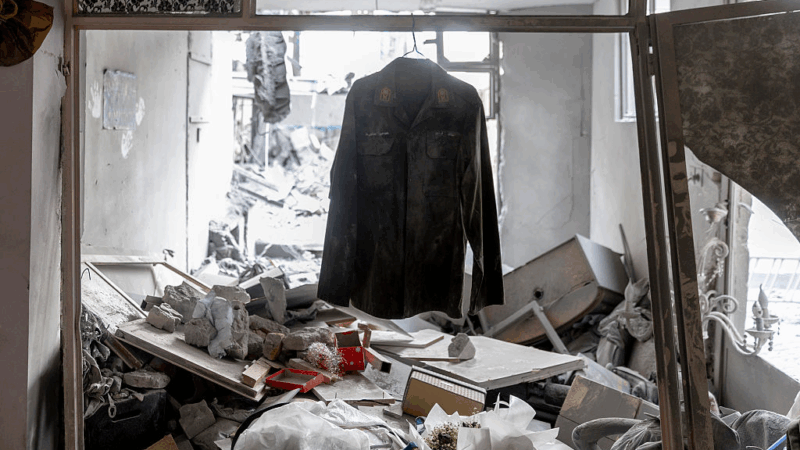
Trump threatens NATO allies over Strait of Hormuz help
With the Iran war entering a third week and the price of oil reaching nearly $105 a barrel on Monday, President Trump again urged NATO countries and China to help the U.S. secure the vital Strait of Hormuz.

As parents clamor for a treatment touted for autism, doctors hesitate to prescribe it
After the leucovorin got public attention as a potential autism treatment, families rushed to get it. Many doctors are torn about prescribing an unproven drug but don't want to lose patients' trust.
75 years ago, a viral TV moment ignited America’s obsession with the Mafia
Crooked contracts, bribery, shady characters. In 1951, millions tuned in to watch the Kefauver organized crime hearings, showing the power of television.
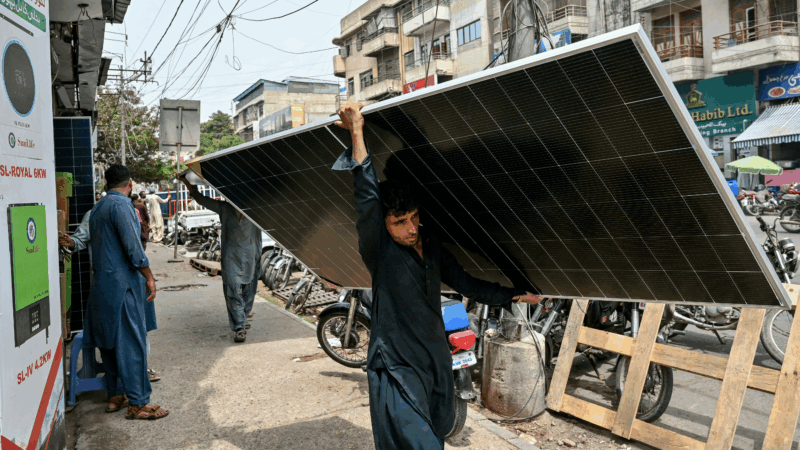
Oil and gas prices are soaring. Some countries are ready with solar panels and EVs
As an energy crisis grows, some countries are more prepared because of renewable energy and electric vehicles. Pakistan reduced its reliance on imported natural gas because of the growth of solar.

Influencers push ‘parasite cleanses’ but doctors say to steer clear
Some people online believe many of us have dangerous parasites in our gut and need to flush them out with herbal supplements. Here's what doctors say about the trend.

Is tech making us too obsessed with our bodies?
All this health tracking might not be actually very...healthy.There's a lot of evidence that health tracking can be good for us. Studies have shown that fitness trackers are effective at increasing physical activity, and can pretty accurately detect issues like arrhythmia. And now they're getting a promotional boost from some very influential people: Secretary of Health and Human Services Robert F. Kennedy Jr., and doctor and wellness influencer Casey Means – President Trump's nominee for surgeon general and founder of Levels Health, a company that analyzes data from continuous glucose monitors. But even as health wearables have benefits – how do they fit into the Make America Healthy Again vision for health? What does all this data really do for us – and who else could access it?Brittany is joined by Adam Clark Estes, senior technology correspondent at Vox, and Lindsay Gellman, a freelance journalist who reports on health and business, to get into it.Want more about modern health? Check out these episodes:Were Americans actually healthier in the past?The difference between losing weight & being "healthy" Exercise is more important than everSupport Public Media. Join NPR Plus.Follow Brittany on Instagram: @bmluseFor handpicked podcast recommendations every week, subscribe to NPR’s Pod Club newsletter at npr.org/podclub.
