
Spanish Flamenco thrives in New Mexico, with its own unique flavor

A lot of folks know New Mexico for green chiles, the largest hot air balloon festival in the world, and the birthplace of the bomb. But it’s also a global center of flamenco—the passionate dance, song and music of the Roma people of southern Spain.
The epicenter is Albuquerque. New Mexico’s largest city boasts a world-famous flamenco festival that’s coming up later this month. The University of New Mexico is the only American university that offers graduate and undergraduate Dance degrees with an emphasis in flamenco. The National Institute of Flamenco is home to a world-class repertory company, and a conservatory that teaches students as young as three, to young adults who want to be professional dancers.
The popularity of flamenco has exploded in the last four decades. You can find its distinctive percussive footwork from Tokyo to Israel to Toronto, throughout Latin America, and in Miami, New York, and San Francisco. But what’s different about flamenco in Nuevo Mexico is that it’s homegrown. New Mexico traces its deeply Hispanic identity to the arrival of Spanish settlers 400-plus years ago.

“Here in New Mexico it’s got to sound like us,” says Vicente Griego, a celebrated singer from northern New Mexico who specializes in cante jondo, the deep song of flamenco. “There’s other people who want to do flamenco exactly the way it’s been done in Spain. But what makes us really special here and what keeps us honest, is that we have our own history. We’ve had our own resistance, our own celebration, our own liberation.”
Says Marisol Encinias, executive director of the National Institute of Flamenco: “I like to think that there’s something in our DNA that ties us to the antecedents of flamenco from way back.”
The renowned dancers, Maria Benitez and Vicente Romero, opened tablaos, or flamenco venues, in Santa Fe in the 1960s. At the same time, the Encinias family was establishing itself in Albuquerque. While there are regular flamenco performances in both cities today, Albuquerque is the hands-down flamenco capital.
Albuquerque’s flamenco founders
Eva Encinias, Marisol’s mother, learned dance from her mother, Clarita, and is considered the grande dame of flamenco in Albuquerque.

“Even though we present all of this very, very high-end flamenco, the rationale behind that is to inspire and cultivate young people,” says Eva, sitting in the costume room of the National Institute of Flamenco that she founded 43 years ago. She’s surrounded by racks of extravagantly ruffled dresses. “We all started as children and we know the impact that flamenco had on us as young people.”
Outreach is a huge part of their mission. Between Eva and her children, Marisol and Joaquin, they’ve taught thousands of flamenco students at the Institute and at UNM.
To that end, the Institute sends teachers into public schools across the state.
“We’re gonna clap along to the music, in 4/4 time, which means that we count 1-2-3-4,” intones Sarah Ward, a Canadian who became enthralled with flamenco and now teaches. She’s leading a class of fourth-graders at the Taos Integrated School of the Arts. Fifteen kids happily stomp their sneakers to the count.

“New Mexico is the best place to access flamenco outside of Spain,” Ward says in an interview. “It has such a rich cultural heritage here. We have grown it in the earth here as well and so it’s very much a part of the New Mexican experience.”
One of her bright-eyed students is 10-year-old Cypress Musialowski.
“I feel an opportunity to let out anger,” she says. “I really like stomping my feet. But I also feel like I can just flow and be me.”
She adds, “I love it, because in class I can’t just stomp my feet. I’ll get in trouble.”
Flamenco has been called performed aggression—the pounding wooden heels, the feral singing, the baroque guitarwork. The Spanish poet Federico Garcia Lorca defined duende, the spirit of flamenco, as “tragedy-inspired ecstasy…a poetic emotion which is uncontrolled.”
And it’s really hard to learn, says Marisol Encinias, who is also an assistant professor of flamenco dance at UNM.
“It’s a really, really challenging artform,” she says. “I had a guitarist friend who said you spend your whole life trying to be mediocre.”
Evelyn Mendoza, the 27-year-old education manager at the Institute, says, “I mean, you sweat your heart, soul, tears, blood and everything into any dance form that you do.”
While she has a bachelor’s degree in contemporary dance from UNM, it was flamenco that captured her soul. “But flamenco is so different because it’s fierce.”
The fierceness, poetry and passion of flamenco will be celebrated June 20-28 at Festival Flamenco Alburquerque (the festival puts an extra R in Albuquerque to honor its original Spanish spelling), which is now in its 38th year. This year, fourteen of the world’s best flamenco companies will perform on stages throughout Albuquerque for what is called the most celebrated flamenco festival outside of Spain.
“We’re super blessed that they bring in these phenomenal artists from Spain,” says Noelia Encinias, the 30-year-old granddaughter of Eva. Now a rising professional dancer, Eva says she’s been dancing flamenco “since I was potty trained.”
“Just being in Albuquerque you have such a vast knowledge base to pull from—the amazing artists from Spain, my peers, or watching kids taking beginning dance and remembering my basics.”
She adds, “My cousin refers to it as the Disneyland of flamenco.”
British Columbia to make daylight saving time permanent
The Canadian province is permanently ending the biannual time shifts for more light at the day's end. But research shows daylight saving increases health risks.
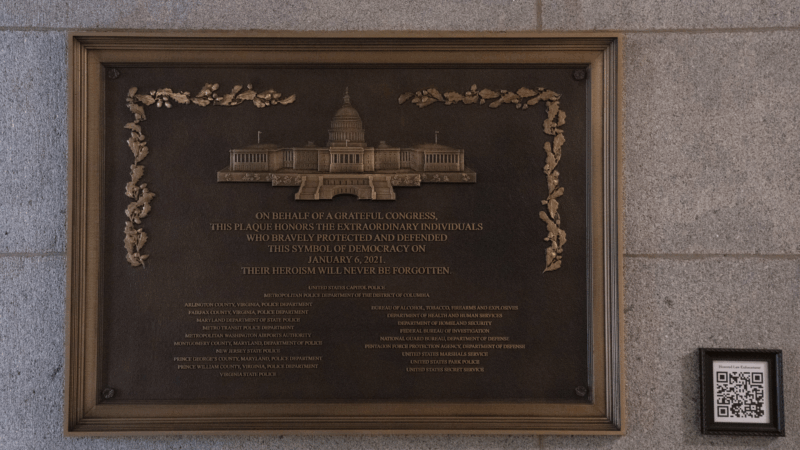
Jan. 6 plaque honoring police officers is now displayed at the Capitol after a 3-year delay
Visitors to the Capitol in Washington now have a visible reminder of the siege there on Jan. 6, 2021, and the officers who fought and were injured that day.
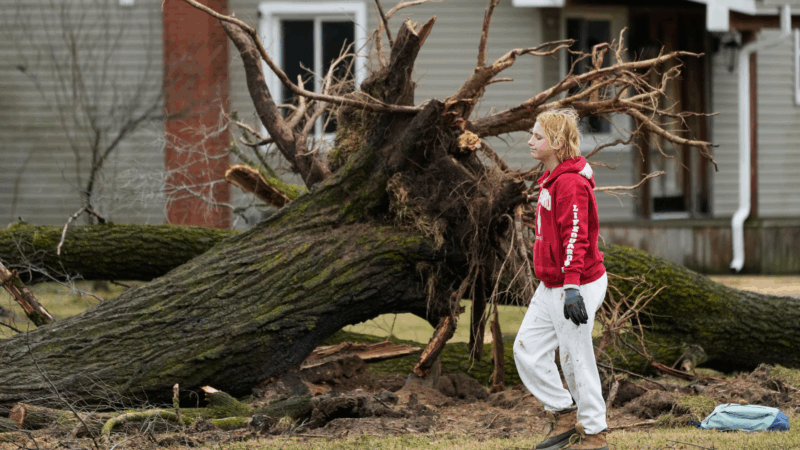
Authorities searching debris after suspected tornadoes kill 6 in Michigan, Oklahoma
A 12-year-old boy is reported to be among the dead following powerful storms that stretched across the middle of the country.
Opinion: The immorality of betting on war
Traders on prediction markets bet on nearly anything. One made more than half a million dollars betting on the U.S. strike against Iran. But should people wager on human suffering?
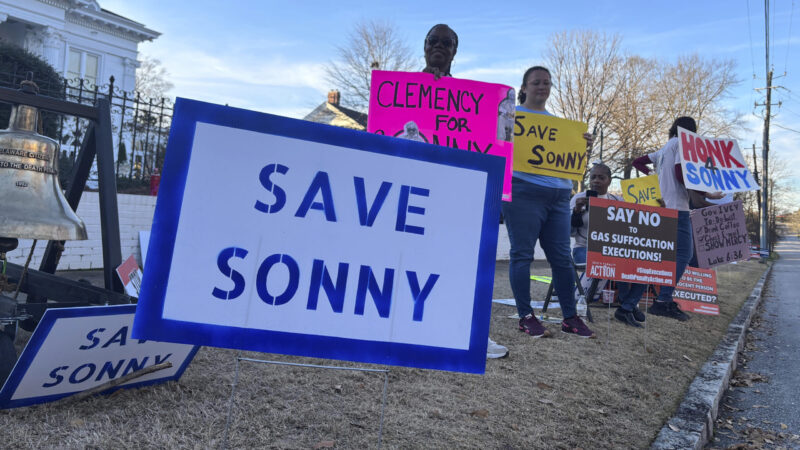
Alabama man facing execution for deadly robbery asks for clemency as he didn’t kill victim
Charles “Sonny” Burton is scheduled to be executed March 12 for his role in a 1991 robbery in which a man was fatally shot. His supporters and attorney are asking the governor for clemency, arguing that his life should be spared because Burton didn’t fire the gun or witness the killing.
One week into the Iran war, the fallout is global
The war is no longer just about the U.S., Israel and Iran. More countries are getting caught in the political crossfire or being drawn into the fighting themselves.
