
‘Sorry, Baby’ is a story about pain and healing you haven’t heard before
In 2019, Eva Victor began starring in a series of online comedy videos — short, absurdist riffs and rants, with titles like “when my husband gets me a Peloton for Christmas” and “me explaining to my boyfriend why equal pay makes actually no sense AT ALL!”
In these videos, several of which went viral, Victor played hilariously loopy characters who, in their fits of anxiety and anger, cleverly dismantled stereotypes about women. Now, Victor, who uses both “she” and “they” pronouns, has written, directed and starred in a thoughtful and tender first feature, Sorry, Baby. And although it’s very much a drama, their offbeat comic smarts are all over it. That’s all the more remarkable, considering that Victor’s character, Agnes, is a woman trying to make sense of life after experiencing a sexual assault.
The movie consists of several chapters, told out of chronological sequence; each one unfolds during a different year of Agnes’ life. When we first meet Agnes, she’s an English lit professor at a small New England university, living in a house in a woodsy area near campus. She’s visited by her friend Lydie — a terrific Naomi Ackie — who lived with her in this house, years ago, when they were grad students.
Lydie now lives in New York and is expecting a baby with her partner. But she and Agnes are still super-close, and beneath their bubbly and sometimes bawdy banter, we can sense unspoken depths of trust, but also tremors of unease. They don’t talk much about the past, but it’s there in almost every conversation, every hug and every lingering pause.
We learn what happened in the next chapter, which is set four years earlier, during their grad-school days. Agnes is a brilliant student, and her mentor, Preston Decker, effusively praises the thesis she’s writing. But then one afternoon, Decker asks Agnes to meet him at his home. Victor keeps the assault offscreen, parking the camera outside Decker’s house and letting the darkening sky tell the story.
From this point on, Sorry, Baby remains minutely focused on Agnes and how she responds in the immediate and long-term aftermath. Right after it happens, Agnes tells Lydie about the assault in unsparing detail. Lydie accompanies Agnes to a medical exam, where they wryly push back against an insensitive doctor, in a sequence laced with acid humor.
It’s not the only time Victor will coax rueful laughs from painful situations, like when two administrators inform Agnes that Decker has already left the school for another job and so there’s nothing they can do. Adding insult to injury, they tell her they know what she’s going through because they’re women — one of a few instances in which Victor lampoons faux-feminist solidarity.
One night, Agnes impulsively decides to burn down Decker’s office and hits up her neighbor, Gavin (played by a goofily appealing Lucas Hedges), for some lighter fluid. Agnes wisely doesn’t burn down Decker’s office, but she and Gavin eventually become friends with benefits. Their scenes together are funny and poignant. And they beautifully dismantle assumptions about how Agnes might or might not experience sexual desire.
Victor knows how often trauma is exploited and trivialized in movies. And in Agnes, they’ve given us a character who sidesteps the clichés of trauma at every turn.
Sorry, Baby dismantles a lot of other assumptions, too. Victor knows how often trauma is exploited and trivialized in movies. And in Agnes, they’ve given us a character who sidesteps the clichés of trauma at every turn.
Victor’s performance is a marvel — full of delicacy and nuance, yet firmly rooted in comedy. Humor is Agnes’ natural way of engaging with the world; even when good things happen, like when she lands a coveted teaching job or learns that Lydie is pregnant, she can’t help but punctuate her excitement with a joke.
The other defining aspect of Agnes is her brilliant literary mind, which, the movie suggests, gives her a unique perspective. In one pointed scene, Agnes calmly teaches Lolita, a book that seems to trouble her students far more than it troubles her. They’re disturbed by the content; she understands, but asks them what they think of the writing specifically.
It’s a question you could also ask of the movie, which is itself superbly written. Victor knows that when it comes to confronting a difficult subject, language has its limitations but narrative still has unexplored possibilities. If Sorry, Baby has a thesis of its own, it’s that pain and healing come in many different forms — our stories should, also.
Iran’s president defies U.S. demands while apologizing for strikes on neighbors
President Masoud Pezeshkian said Saturday that a demand by the U.S. for an unconditional surrender is a "dream that they should take to their grave." He also apologized for Iran's attacks on regional countries.
What the Trump administration says about why it went to war with Iran
The Trump administration says it is "laser focused" and mission driven, but the messaging has been varied. The range of cited motivations for striking Iran now are sometimes at odds with each other.

Trump looks to turn attention to Western Hemisphere at Americas summit
President Trump is set to gather with Latin American leaders on Saturday at his Miami-area golf club as his administration looks to turn attention to the Western Hemisphere, at least for a moment.
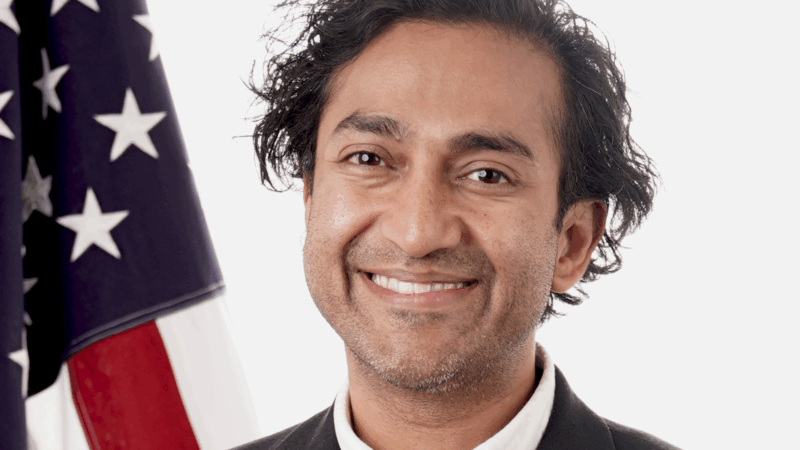
Trump administration’s embattled FDA vaccine chief is leaving for the second time
The FDA's controversial vaccine chief, Dr. Vinay Prasad, is leaving the agency. It's the second time he has abruptly departed following decisions involving the review of vaccinations and specialty drugs.
Family, former presidents and a Hall of Famer give Rev. Jesse Jackson a final sendoff
Several speakers at Jackson's funeral invoked his hallmark catchphrases: "Keep hope alive" and "I am somebody."

Bernard LaFayette, Selma voting rights organizer, dies at 85
Bernard LaFayette, who died Thursday, laid the foundations of the Selma, Alabama, campaign that culminated in the passage of the Voting Rights Act. He was a Freedom Rider and helped found the Student Nonviolent Coordinating Committee.
