
Six questions about the capture of Maduro
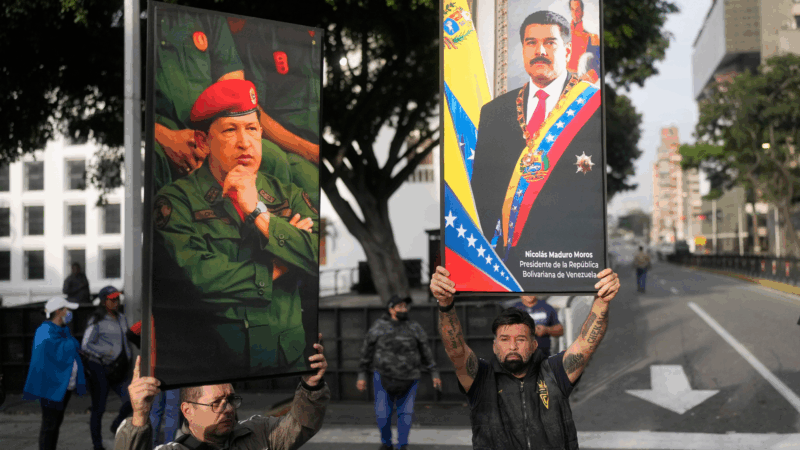
This is a day for gathering facts. Anyone who tells you today that they know where this is heading loses credibility. It’s better to pose questions.
Here are some initial ones:
Who is in charge of Venezuela today?
The initial answer seemed to be Venezuela’s vice president and interior minister, both of whom made statements overnight. Sen. Mike Lee, R-Utah, quoted Secretary of State Marco Rubio that the U.S. strikes are over, which would imply leaving the current government in place for now.
During a midday news conference, President Trump said Vice President Delcy Rodriguez was just “sworn in” as Venezuela’s new president. Rodriguez has spoken on state television, but has yet to be seen in public and her location remains unknown.
Who will be in charge in a month?
Trump added, “We’re going to run the country now.” He left it unclear how, if at all, the U.S. would accomplish that. He also talked of seizing control of Venezuela’s oil production.
Trump also said that the U.S. has communicated with Rodriguez about the U.S. plans.
Rodríguez said Saturday that Maduro was her country’s only president, adding Venezuela was ready to defend its natural resources.
“We’re ready to defend Venezuela,” she said.
Trump suggested the next president would not be María Corina Machado, the Nobel prize-winning opposition leader. He also did not offer support to Edmundo González, the opposition candidate who, according to the United States, won the 2024 presidential election.
Machado has issued a statement saying that González should take office as the “legitimate president.”
Can the U.S. force a change of government?

Clearly, the U.S. can capture a president. Trump said he was “not afraid of boots on the ground,” meaning the deployment of U.S. troops, though it was not clear if he meant a willingness for a larger invasion.
Trump was elected on a promise to avoid such entanglements.
Some history is pertinent here. In 1989, the U.S. sent forces into Panama to capture Manuel Noriega, the president of Panama. At the time, Panama had a population of about 2.5 million, was closely aligned with the United States, and was the home of U.S. military bases. All of this made a military incursion possible. Venezuela has a population of 28 million and few connections to the U.S., making it closer to the size of Iraq when the U.S. invaded in 2003.
If the current Venezuelan government agreed to remain in place while taking U.S. orders, that would be one thing. Eliminating that government is a much larger task, as the U.S. learned during its long war in Iraq.
What do the Venezuelan people do?
Many opponents of the long-running socialist government have fled the country. González, the opposition candidate who the U.S. says won the 2024 election, is in exile. Machado, the Nobel Prize-winning opposition leader, had long been in hiding and was recently seen in Norway to pick up the Nobel Peace Prize awarded to her this year.
Do Venezuelans inside the country rise up against the government—or do more of them head for the borders? Colombia is already preparing for more refugees, sending troops to its border with Venezuela.
On a visit to Venezuela in 2013, I witnessed Nicolás Maduro’s first election campaign. It was just after the death of his long-serving predecessor, Hugo Chávez. Hundreds of thousands of people gathered in the streets clamoring for change, only to see Maduro declared the winner. They have endured more than a decade of additional suffering since then; a middle-income country has become a wreck, but a full-blown uprising has not yet come.
How do Russia and China use this example?
Other nations are condemning the U.S. strike, but some governments may not mind the precedent. That is one reason some U.S. lawmakers are criticizing the move.
Sen. Mark Warner, D-Va., among others, outlined the logic. If the U.S. can take out Maduro, why can’t Russia take out Ukraine’s Volodymyr Zelenskyy, or the inconvenient leader of any other former Soviet republic? Why can’t China capture the president of Taiwan? We can say that these situations are different, of course—that Maduro was indicted in the U.S.—but others will overlook this.
Realistically, the U.S. may not worry about the precedent, simply because few other nations have the ability to swoop in and capture a president. Russia tried a lightning capture of Kyiv in 2022 and utterly failed. China has spent an enormous amount on its military, but they have not been seriously tested in years.
For the record, Russia and China condemned the U.S. strike on a country with which they have been aligned.
Does this signal a new focus for the United States?
Rubio spoke of wider consequences for Latin America—specifically in isolating Venezuela’s ally, Cuba.
Trump himself referred to the Monroe Doctrine, the historic U.S. determination to keep European powers out of the Western Hemisphere. He referred to it as the “Donroe Doctrine,” a nod to the nickname commentators had given the president’s increasingly aggressive foreign policy decisions.
Some foreign policy analysts worry about a U.S. administration that would focus on the Western Hemisphere while leaving other regions to other powers.
The concern is that Trump would show even less interest in defending Europe, and raises questions for the whole constellation of U.S. allies in East Asia and the Pacific. The administration has said it simply wants to secure the United States’ backyard.
China and Russia would certainly welcome a U.S. shift toward home—and China is also contesting the Western Hemisphere, having invested heavily throughout Latin America. But we don’t know to what extent President Trump’s policy goals point in that direction. What’s certain is that Trump’s overseas actions remain far more complex than campaign slogans.
NPR’s Eyder Peralta contributed to this report.
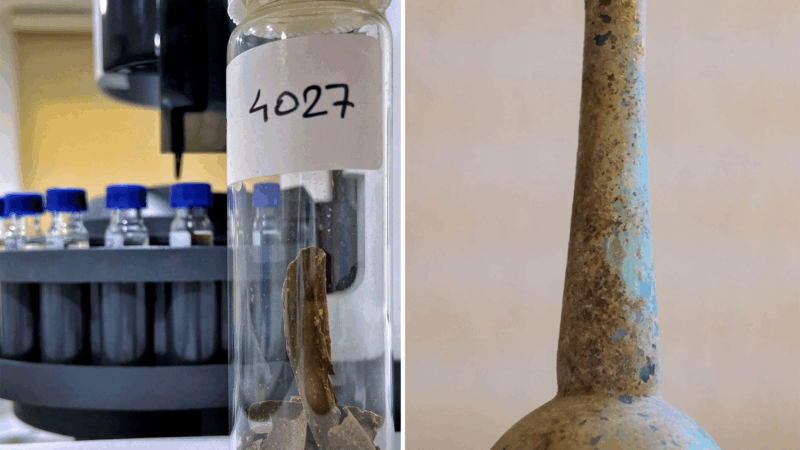
That ain’t perfume! Ancient bottle contained feces, likely used for medicine
Researchers found a tiny bottle from ancient Rome that contained fecal residue and traces of aromatics, offering evidence that poop was used medicinally more than 2,000 years ago.
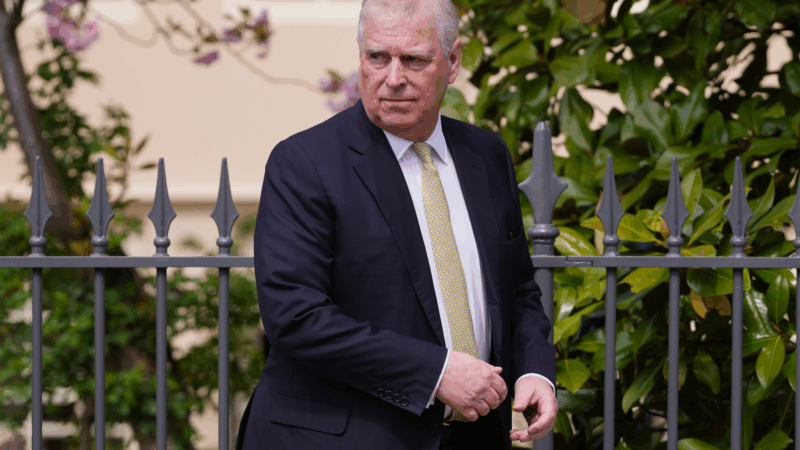
Britain’s former Prince Andrew arrested on suspicion of misconduct in public office
Andrew Mountbatten-Windsor, formerly Prince Andrew, has been arrested on suspicion of misconduct in public office.
Urban sketchers find the sublime in the city block
Sketchers say making art together in urban environments allows them to create a record of a moment and to notice a little bit more about the city they see every day.
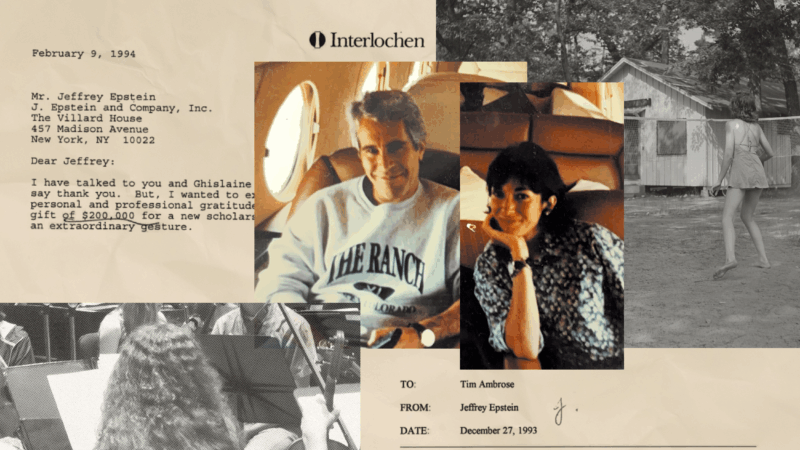
Epstein once attended an elite arts camp. Years later, he used it to find his victims
Jeffrey Epstein and Ghislaine Maxwell lavished money on the Interlochen Center for the Arts to gain access, documents show — even funding an on-campus lodge they stayed in. In the process, two teenagers were pulled into their orbit.
An unsung hero stepped in to help a newly widowed mom in a moment of need
Barbara Alvarez lost her husband in 2017, just before their daughter went off to college. Her unsung hero helped her find the strength to be a single mother to her child at a key moment in their lives.
How a recent shift in DNA sleuthing might help investigators in the Nancy Guthrie case
DNA science has helped solve criminal cases for decades. But increasingly, investigative genetic genealogy — which was first used for cold cases — is helping to solve active cases as well.
