
Should the U.S. model its vaccine policy on Denmark’s? Experts say we’re nothing alike

Health Secretary Robert F. Kennedy Jr., a long-time vaccine critic, has made it clear he thinks American children get too many vaccines.
Earlier this month, President Trump issued a memorandum directing Kennedy and the acting director of the CDC to align the U.S. with best practices on childhood vaccine recommendations from peer nations, and it specifically mentioned Denmark. That could mean fewer shots against fewer diseases.
But critics say you can’t simply adopt another country’s vaccine schedule in the U.S., which has a very different population and different health risks.
“It’s like fitting a square peg in a round hole when our goal is to prevent disease,” says Josh Michaud, associate director for global and public health policy at KFF.
Denmark recommends routinely vaccinating all children against just 10 diseases. In the U.S., the immunization schedule calls for routine universal vaccination against 16 diseases. It was 17 diseases until last week, when the Centers for Disease Control and Prevention officially dropped the recommendation to vaccinate all newborns against hepatitis B.
But Denmark has created its immunization schedule in a very different context than that of the U.S., notes Dr. Sean O’Leary, chair of the Committee on Infectious Diseases for the American Academy of Pediatrics.
“It’s like comparing a cruise ship to a kayak,” says O’Leary, a professor of pediatrics and infectious diseases at the University of Colorado School of Medicine.
Different populations, different health systems
For starters, Denmark’s population is about 6 million people – roughly that of Wisconsin – compared to more than 343 million people in the U.S. Denmark also lacks the racial and ethnic diversity and wide income disparities that are prevalent in the U.S. Denmark also has a highly unified health system, with a national health registry that basically tracks everyone from birth to death, Michaud says.
“And so if there are outbreaks or if there are cases of these diseases, they can easily identify them,” Michaud says. “They can treat them, get them into care, and also track down contacts, if that’s needed for the particular disease we’re talking about.”
What’s more, Danish families get about a year of paid parental leave — between the two parents — so they can stay home with their babies, who potentially aren’t exposed to as many diseases. Plus, Denmark has free, universal health care. So for example, if an infant is hospitalized with RSV – a disease which Denmark does not routinely vaccinate against but the U.S. does – then the system will absorb the cost, so it’s not a barrier to getting care.
That’s very different from the U.S., where many people struggle to access health care, says Dr. Jake Scott, an infectious disease specialist at Stanford University School of Medicine.
“We have fragmented insurance, we’ve got millions uninsured, we don’t have a national health registry and we’ve got enormous gaps in the continuity of care,” Scott says. “And we use broader vaccine recommendations because our system can’t reliably identify and follow up with every person at risk.”
The U.S. also has higher rates of childhood obesity and asthma than Denmark, Scott notes, which puts those kids at higher risk of some diseases.
“What diseases do they want to bring back?”
All of these complex differences have led the U.S. to create a different immunization schedule than Denmark’s – one that puts a greater emphasis on disease prevention rather than management, says Dr. William Moss, an epidemiology professor at the Johns Hopkins Bloomberg School of Public Health and director of the school’s International Vaccine Access Center.
“The reason why countries, particularly in Europe, have different vaccination schedules is not because they consider the vaccines not to be safe or that the vaccines don’t work,” Moss says. And I think it’s very important that people understand that.”
Scaling back America’s vaccine schedule to model Denmark’s in this very different context puts America’s children at real risk, O’Leary says. “It’s like, what diseases do they want to bring back to the U.S.? Which diseases do they want kids to be hospitalized for that they’re not protected from? I simply don’t get it.”
Which country is the outlier?
In his presidential memo, Trump called the U.S. “a high outlier in the number of vaccinations recommended for all children” compared to peer countries.
But when you look at the 30 countries that are part of the European Center for Disease Prevention and Control, the U.S. is very much in line with them, says Michaud of KFF.
“In fact, it is Denmark that seems to be the outlier here in terms of recommending very few vaccines,” he says. “In the case of Germany, France and Italy, we might be talking about 15 or more vaccines.”
Even compared to other Nordic countries with similar health systems, Denmark is “unusually minimalist,” says Scott of Stanford. “Sweden, Norway, Finland – they all cover more diseases.”
It’s unclear what Kennedy might do next. The Health and Human Services Department notified the press last Thursday that it was going to make “an announcement regarding children’s health” with the CDC the next day. But HHS canceled the press conference hours later. Media reports suggest the administration had planned to announce an overhaul of the childhood vaccination schedule. HHS spokesperson Andrew Nixon declined to discuss the matter.
In an email to media, the HHS said the announcement had been postponed until after the first of the new year.
Experts say it’s legally murky whether the health secretary could overhaul vaccine policy by simply announcing it in a press conference, without going through the usual process for deliberating such changes.
Kennedy technically has broad authority in setting vaccine policy, says Dorit Reiss, a law professor at the University of California, San Francisco whose research focuses on legal and policy issues related to vaccines. But simply announcing such a major change via press conference — rather than going through the CDC’s Advisory Committee on Immunization Practices — could open up the Trump administration to legal challenges, she says.
“The process makes them very vulnerable to legal challenges,” Reiss says.

HUD proposes time limits and work requirements for rental aid
The rule would allow housing agencies and landlords to impose such requirements "to encourage self-sufficiency." Critics say most who can work already do, but their wages are low.
Paramount and Warner Bros’ deal is about merging studios, and a whole lot more
The nearly $111 billion marriage would unite Paramount and Warner film studios, streamers and television properties — including CNN — under the control of the wealthy Ellison family.
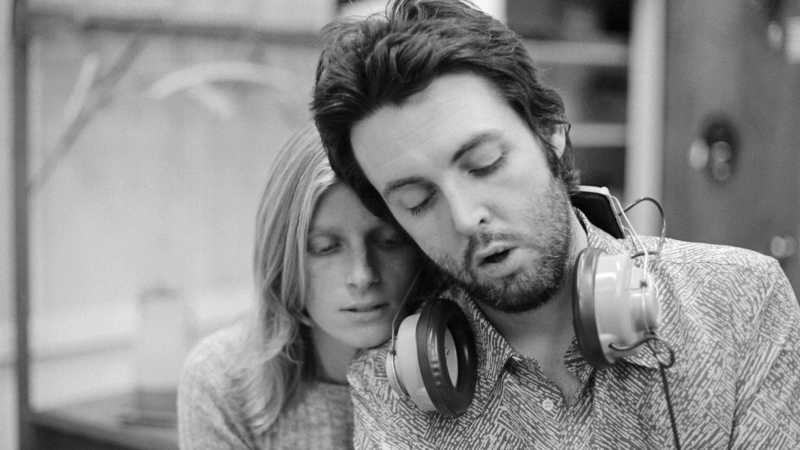
A new film follows Paul McCartney’s 2nd act after The Beatles’ breakup
While previous documentaries captured the frenzy of Beatlemania, Man on the Run focuses on McCartney in the years between the band's breakup and John Lennon's death.

An aspiring dancer. A wealthy benefactor. And ‘Dreams’ turned to nightmare
A new psychological drama from Mexican filmmaker Michel Franco centers on the torrid affair between a wealthy San Francisco philanthropist and an undocumented immigrant who aspires to be a dancer.

Bill making the Public Service Commission an appointed board is dead for the session
Usually when discussing legislative action, the focus is on what's moving forward. But plenty of bills in a legislature stall or even die. Leaders in the Alabama legislature say a bill involving the Public Service Commission is dead for the session. We get details on that from Todd Stacy, host of Capitol Journal on Alabama Public Television.
My doctor keeps focusing on my weight. What other health metrics matter more?
Our Real Talk with a Doc columnist explains how to push back if your doctor's obsessed with weight loss. And what other health metrics matter more instead.
