
Scientists say NOAA cuts by Trump undermine improvements in hurricane forecasts
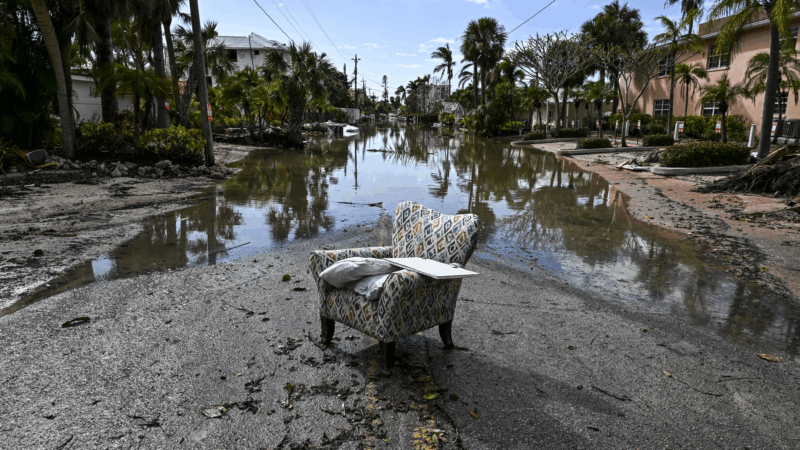
MIAMI — Weather and climate research are among the programs seeing big cuts by the Trump administration.
Hundreds of employees at NOAA — the National Oceanic and Atmospheric Administration — who work at offices and research centers have been fired. The administration also wants to cut hundreds of millions of dollars in funding for everything from weather satellites to climate research.
Andy Hazelton is one NOAA employee who lost his job. In February, probationary employees, people who were recently hired or promoted, were fired and then quickly rehired and put on administrative leave following a federal court order.
But after a Supreme Court ruling this month, the employees, including Hazleton, were fired again. Hazelton, a physical scientist with NOAA in Miami, loved his job, he says, “Because I’m passionate about the work we do. I’ve been a part of the success that’s happened over the last five to 10 years in terms of protecting lives and property.”
Until his job was terminated, Hazelton worked to help understand, track and forecast hurricanes at NOAA’s Environmental Modeling Center. The model he worked on, the Hurricane Analysis and Forecast System (HAFS) contributed to a marked improvement in forecasting.

HAFS, along with other models developed by NOAA scientists, has greatly improved the ability to forecast a hurricane’s track and intensity. Human-driven climate change makes hurricanes more intense. That means people are experiencing more severe storm surge, rain and wind. Research shows that dangerous storms are getting more common.
The deputy director of the National Hurricane Center, Jamie Rhome, says because of the models, scientists now can do something impossible just a decade ago: forecast when a storm may rapidly intensify into a major hurricane, saving lives by giving residents more time to evacuate. “There have been several cases where forecasters have aggressively forecast and communicated that rapid intensification was not just a possibility but in all likelihood was going to occur,” Rhome said.
Last year, the HAFS model Hazelton worked on helped meteorologists accurately forecast the rapid intensification of both Hurricanes Helene and Milton. He’s one of some 20 people fired from the Environmental Modeling Center and the Geophysical Fluid Dynamic Lab, another important NOAA research facility.
All the cuts, Hazelton says, may slow or end the progress that’s been made in developing weather and climate models. “Certainly, if the level of investment goes down, you will lose these improvements,” he says. “We were already in a situation where we needed more investment.”
While most job terminations were ordered in the name of downsizing and government efficiency, other recent funding cuts and recommendations appear to be ideological.
President Trump’s Commerce Secretary, Howard Lutnick, recently announced the withdrawal of $4 million in grants to Princeton University for climate research, saying it promoted “exaggerated and implausible climate threats” and narratives that don’t “align with the priorities of this administration.”
Also, this month a NOAA budget proposal leaked to several news organizations, including NPR, outlined massive cuts that would eliminate most of the agency’s scientific research programs.
Congress would have to approve the draft budget. But it also includes a plan to cancel contracts for the next generation of geostationary satellites. Mary Glackin, a former NOAA undersecretary says those satellites, which stay in one place and track weather in a region in real time, are crucial tools in understanding and forecasting the weather.
“If we didn’t have (them) we’d have to wait until the polar satellites cross a couple of times a day,” Glackin says. “You’ll miss … developing storms for example in the Midwest, tornadoes or how hurricanes are evolving.”

Glackin is concerned not just about the cuts in research, but also about those affecting the more than 120 National Weather Service field offices across the nation. At a recent Congressional forum, she warned, “Lives are at risk. People will die from this.” In an interview, she said, “In the Midwest where they have sirens, if the siren doesn’t go off, then you’re going to be caught unawares. That’s what I’m worried about.”
Because of staffing shortages, field offices are now conducting fewer weather balloon launches. And NOAA recently suspended the contract of a company that provided automated translation of weather alerts into Spanish and other languages. On Thursday, it backtracked and said it would reinstate them next week.

‘Hamnet’ star Jessie Buckley looks for the ‘shadowy bits’ of her characters
Buckley has been nominated for a best actress Oscar for her portrayal of William Shakespeare's wife in Hamnet. The film "brought me into this next chapter of my life as a mother," Buckley says.
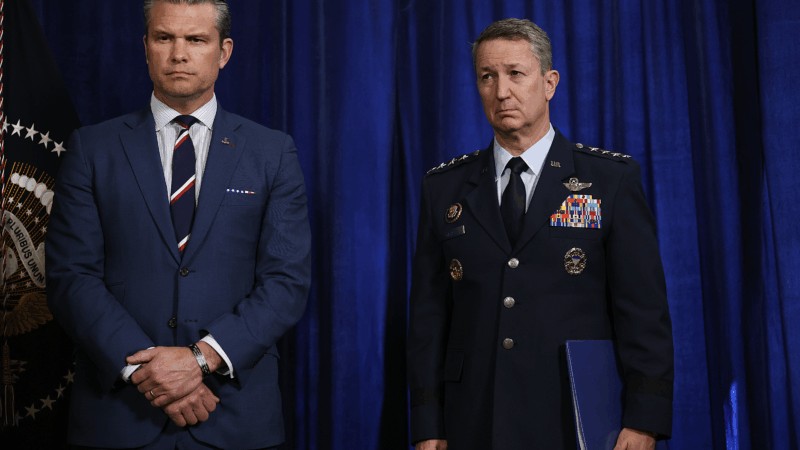
Hegseth: ‘We didn’t start this war but under President Trump we’re finishing it’
The remarks are the first to reporters since the U.S.-Israeli military operations against Iran began Saturday despite weeks of talks designed to stave off a conflict.
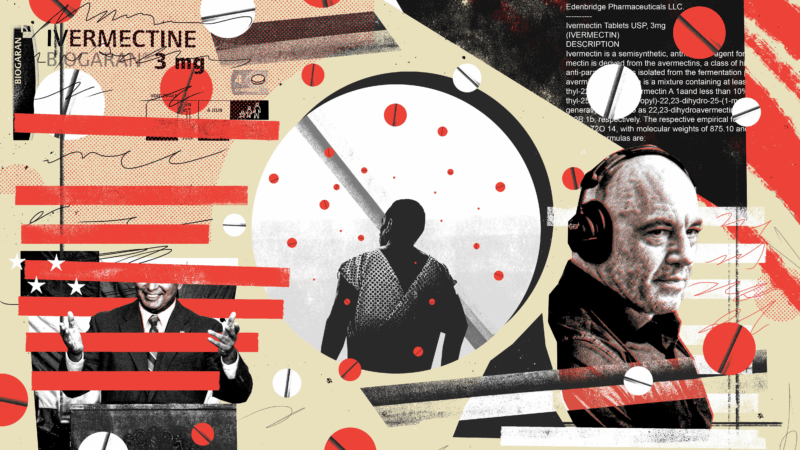
Ivermectin is making a post-pandemic comeback, among cancer patients
The anti-parasitic drug became a household name during the COVID-19 pandemic, and it is now being embraced as an alternative treatment for cancer. It is as politically polarizing as ever.
Rep. Adam Smith on the U.S. strikes on Iran and the debate over Trump’s war powers
NPR's Leila Fadel asks Democratic Rep. Adam Smith of Washington, the ranking member on the House Armed Services Committee, about President Trump's unilateral authorization to strike Iran.
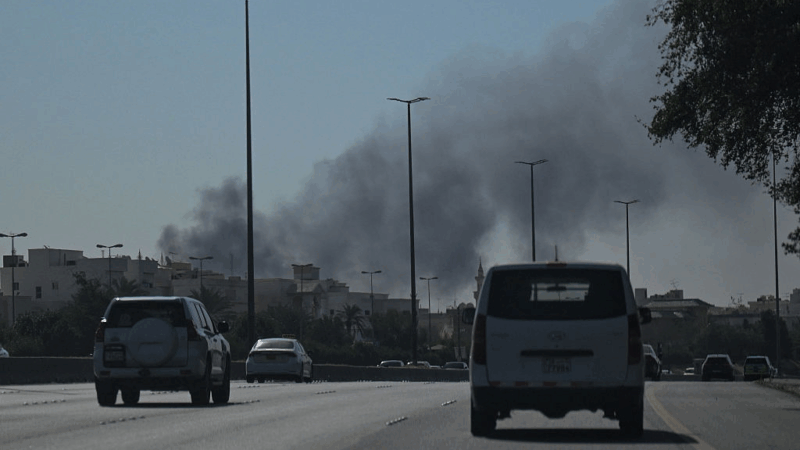
Iran war widens, threatening to engulf Lebanon
The war over Iran engulfed more of the Middle East and beyond on Monday as Lebanon's militant group Hezbollah responded to the killing of Iran's spiritual leader with its first attack on Israel in more than a year.
Peer pressure can make this clownfish change its stripes
Tomato clownfish, in response to an unpredictable world, appear capable of adjusting when they lose their stripes based on cues from other fish and their habitat, a new study in PLOS Biology finds.
